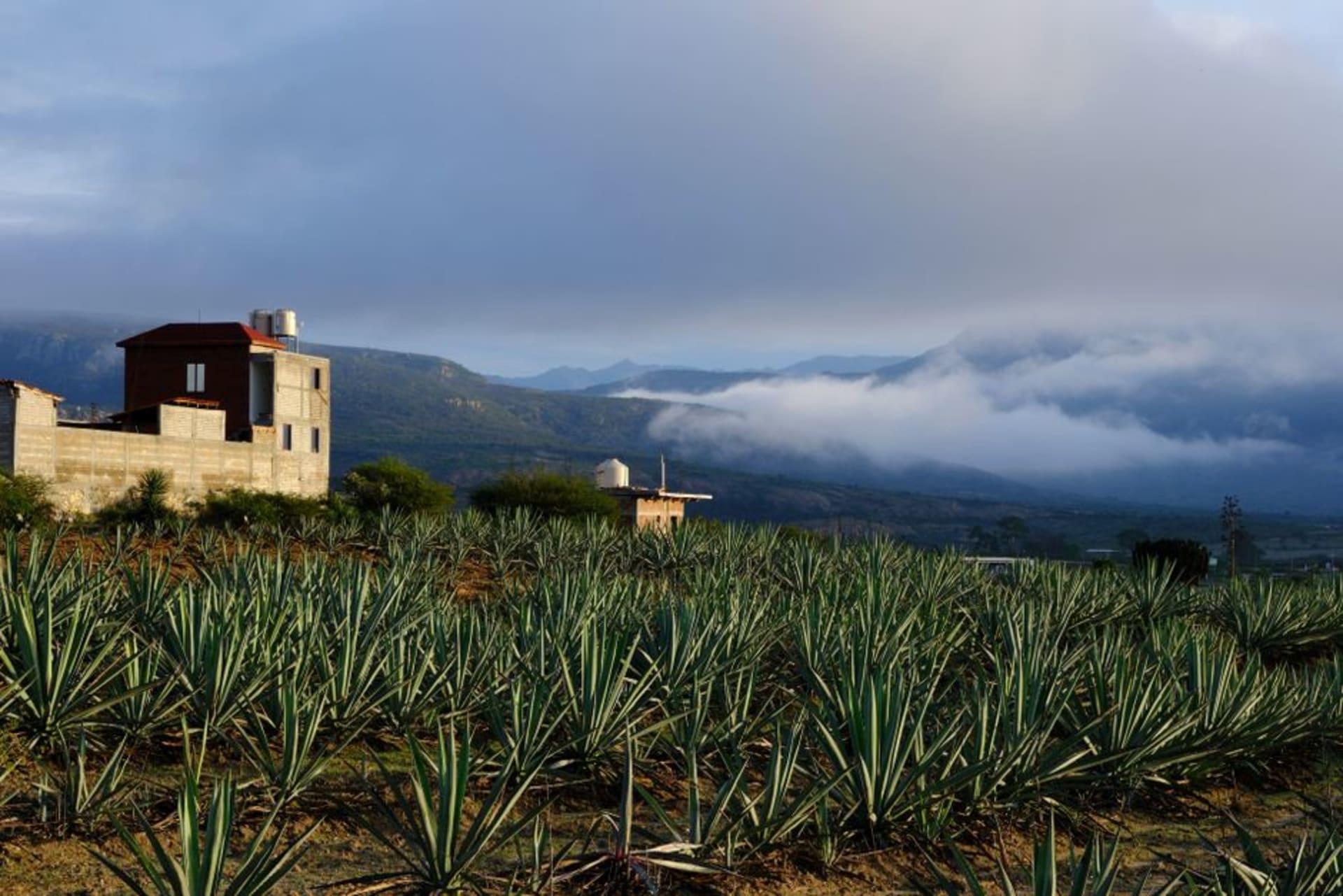
There’s a particular kind of quiet you only get on the plains of southwestern Hidalgo, and I went looking for it on purpose. I’d been in Mexico City too long, my head full of traffic, and a friend who grew up near here said the only cure was flat country and a bottle of pulque. So I drove out to Nopala de Villagrán — Nopala, everyone calls it — and found exactly what he’d promised: fields to the edge of sight, a big indifferent sky, and a town moving at the pace of the cattle in its pastures. I stood in the plaza, breathed, and felt the city start to drain out of me.
The maguey plains
Nopala is pulque country to the bone. The plains around town are ruled by the maguey — the great grey agaves planted in ranks that run straight to the horizon and then keep going in your imagination. I walked out among them in the morning while the dew still sat in the hearts of the plants, and met a tlachiquero, a maguey-scraper, at work — a man drawing the sweet aguamiel from a hollowed plant with a long gourd, the same tool and the same gesture used here for centuries.
He offered me a taste, then a taste of the finished pulque, thick and sour and faintly alive, poured from a bucket he kept in the shade. I’m not going to pretend I loved the texture — it takes some getting used to — but I loved everything around the drinking of it: the field, the hour, the man’s easy pride in a craft the cities have half-forgotten. This is where pulque actually comes from. Not a trendy bar. A field like this one.
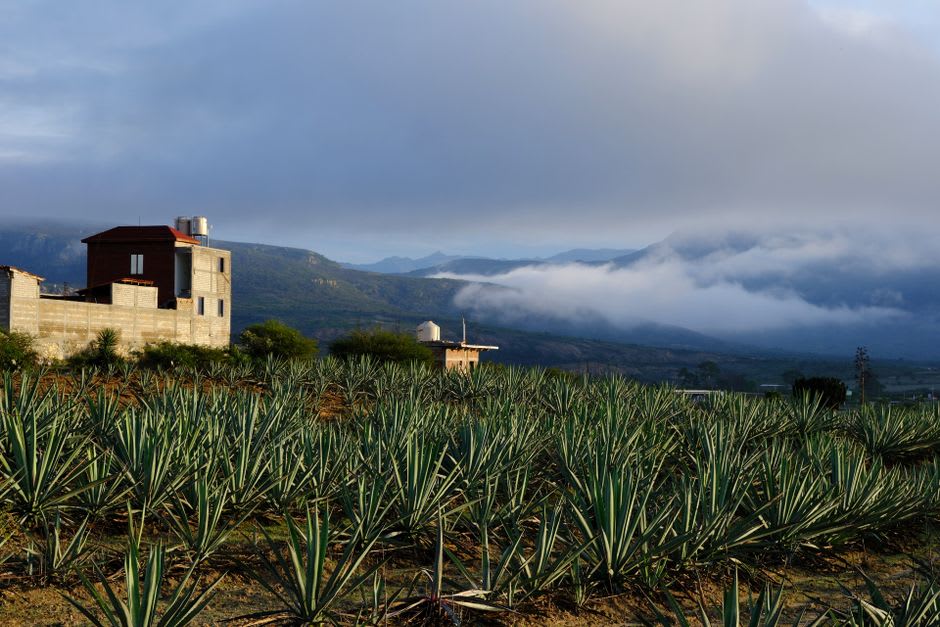
The parish church and plaza
The town gathers, as these towns do, around its church and its plaza. Nopala’s old parish church holds the centre with the solid, unshowy presence of rural Hidalgo faith — thick walls, a plain façade weathered by the dry wind, a bell that marks the hours for people who mostly work by the sun anyway. I sat in the plaza through the middle of the day when the heat pressed everyone into the shade, and watched the small population of a small town pass through: a farmer, a teacher, a knot of kids sharing a single bag of chips.
Nobody was in a hurry. Nobody is, out here. The plaza had that flat-country stillness where an hour can pass and you’d swear it was ten minutes, or the reverse. I bought a paleta from a cart, sat back down, and let the church shadow crawl slowly across the tiles toward me.
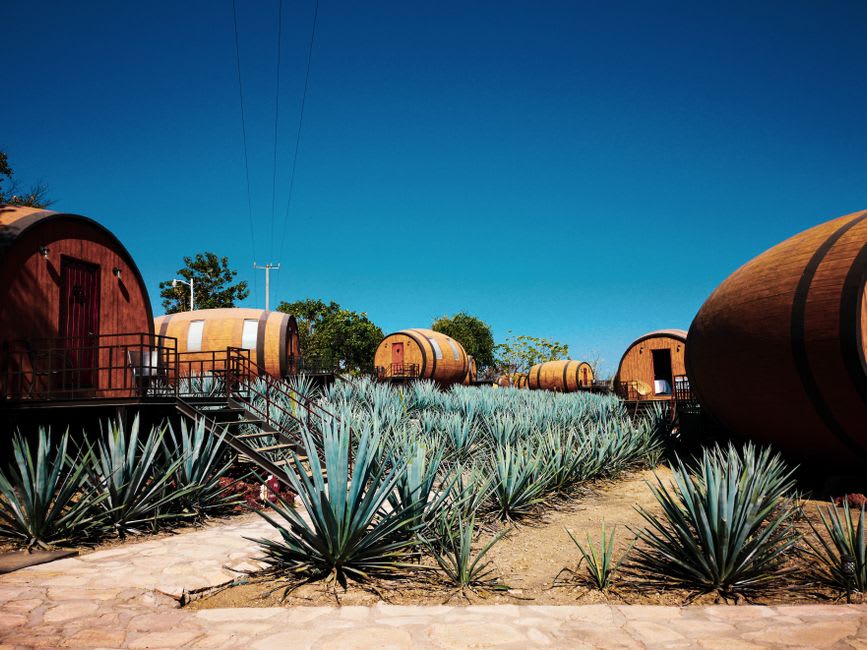
The big flat horizon
What I’ll remember about Nopala is the horizon. This is farm country stripped to its essentials — fields, sky, the long grey lines of maguey, and a flatness that lets you see the weather coming from an hour away. In the late afternoon I drove out on a dirt track between the fields and stopped just to watch clouds build over the far edge of the plain, huge and slow, dragging their shadows across the crops. It’s the kind of landscape that makes you feel pleasantly small.
I’ve come to treasure these unhurried, un-famous stretches of Mexico more than any headline destination. Nopala doesn’t want anything from you. It has no monument to tick off, no viewpoint with a queue. It just offers a plain, a sky, and the time to look at both, and after a few years in this country I’ve decided that’s one of the finer things it gives.
Getting There
Nopala de Villagrán lies on the plains of southwestern Hidalgo, a couple of hours north of Mexico City by road, reached via the highways toward Tula and the Hidalgo pulque country. Buses run from Mexico City and from regional hubs like Tula, though service is modest — this is farm country, not a tourist route. A car is the honest way in, letting you pull off onto the dirt tracks between the maguey fields where the real quiet lives. Come in the dry season for the hard clear light and the biggest skies, and don’t leave without tasting the pulque where it’s actually made.