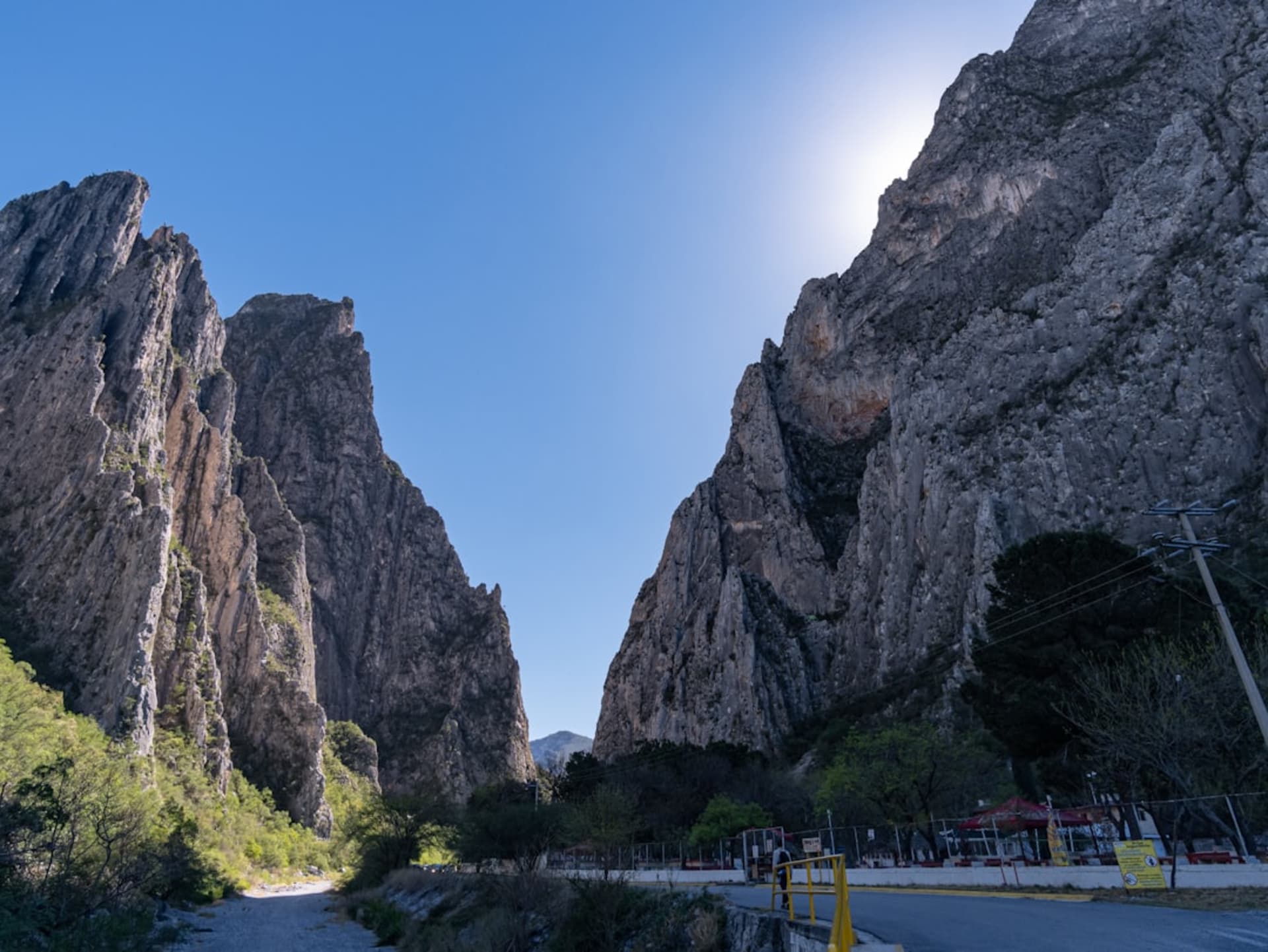
Chapulhuacán
"You can leave the cold pine highlands with your jacket on and arrive an hour later peeling it off in the citrus heat."
I drove into Chapulhuacán almost by accident, chasing a shortcut off the highland road toward the Huasteca, and within an hour I’d gone from a cold grey plateau where I wanted a second jacket to a green humid slope where I wanted a cold beer. That transition — the sheer speed of it — is the whole story of this town. It sits right on the seam where one Mexico ends and another begins.
The Road Between Two Worlds
The descent into Chapulhuacán is one of those Mexican drives that reorganizes your sense of the country. Above, the Hidalgo highlands are cool, dry-ish, pine and oak, the light hard and thin. Then the road tips over an edge and starts falling, and the vegetation thickens with every switchback — bananas appear, then coffee bushes under shade trees, then the first citrus, and the air goes soft and warm and smells of wet green things.
I stopped at a mirador where a family was selling bags of oranges and mandarins from a truck. The father told me, laughing at my obvious sweatiness, that up top it had frozen the week before. Down here it never does. You can stand at that overlook and see the whole subtropical Huasteca opening below you like a different country, hazy and vast, and behind you the cold sierra you just left. I stood there far longer than I meant to.
Citrus, Coffee, and the Smell of the Slope
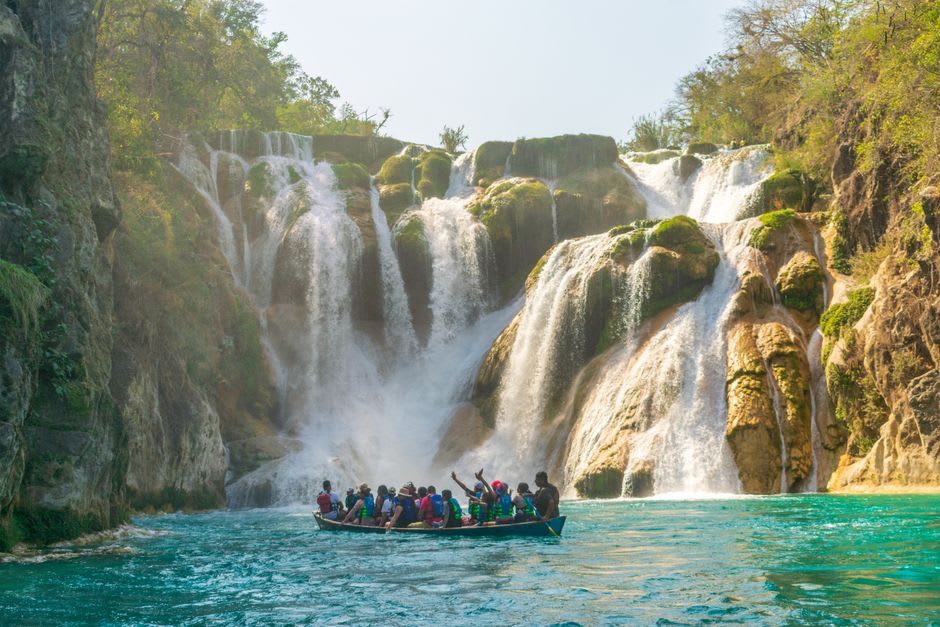
Chapulhuacán is citrus country, and in season the whole place smells faintly of orange. Trucks come up loaded, stalls line the road, and the town’s economy runs on the fruit and the coffee grown on the shaded lower slopes. I bought a net bag of mandarins for almost nothing and ate them, embarrassingly, one after another on a bench in the plaza while an old man watched with open amusement.
The town itself is unpretentious — a working hillside place of steep streets and tin roofs, a plaza, a church, comedores serving the hearty food of the Huasteca. I had zacahuil talked about but settled for enchiladas and a good bitter coffee that a woman assured me came from just below the town. There is nothing curated here for visitors. It is simply a place that happens to sit at a spectacular hinge in the landscape, doing its ordinary work of growing fruit on a mountainside.
Water Everywhere
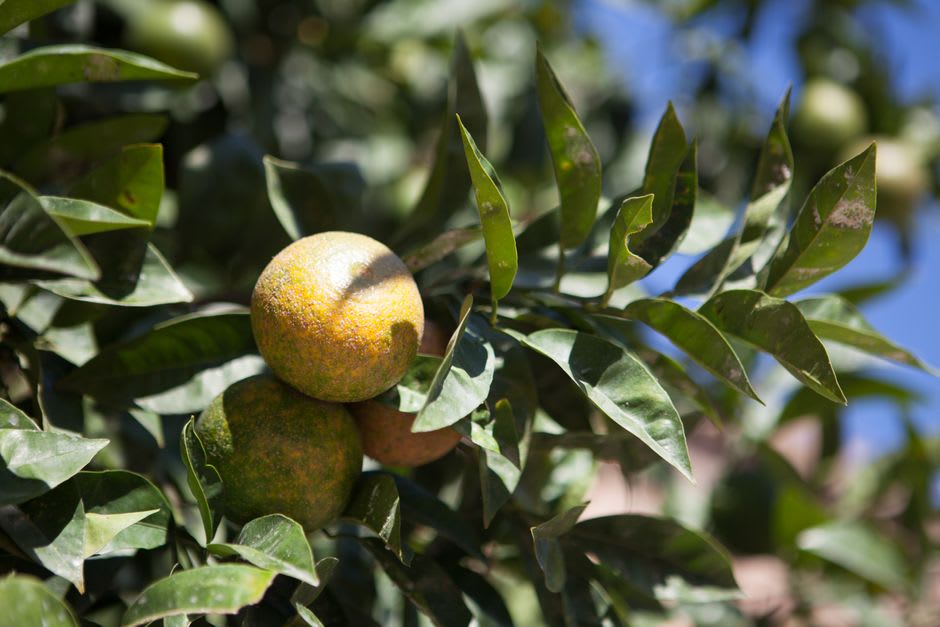
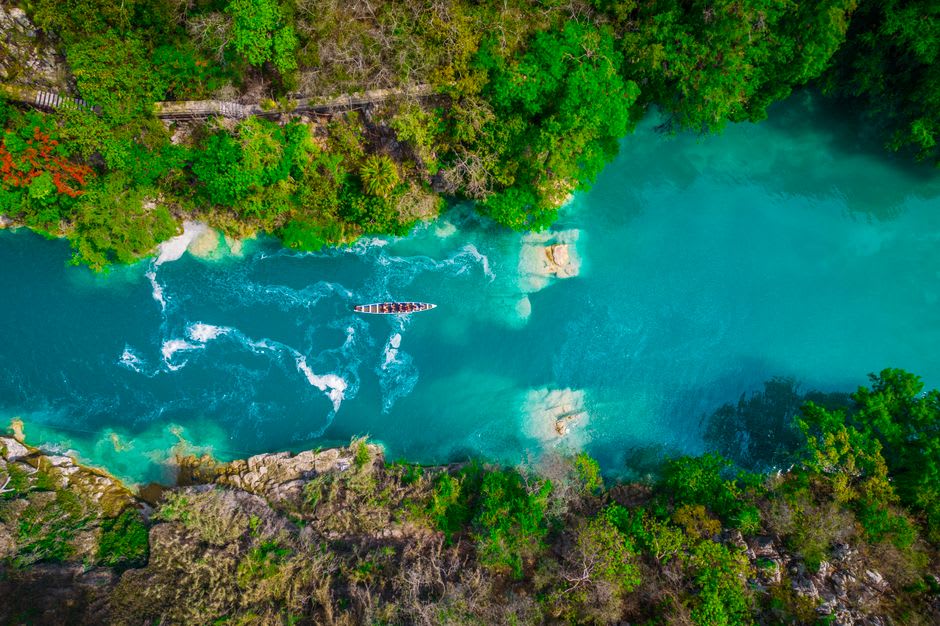
What the highlands lack and the Huasteca has in abundance is water, and around Chapulhuacán it shows. Rivers run green and fast in the ravines, and there are waterfalls tucked into the folds of the hills that locals will point you toward with a wave and vague directions. I found one down a muddy track, a cold clear drop into a pool, and swam alone with the forest dripping around me and the temperature exactly right after the heat of the descent.
This is the great luxury of the transition zone: the highland cool is only an hour behind you, but here everything is wet and warm and alive. I sat on a rock afterward letting the sun and the humidity dry me and thought that Chapulhuacán is less a destination than a threshold — a place you pass through and feel the whole country change around you.
Getting There
Chapulhuacán lies in the far north of Hidalgo, on the descending road toward the Huasteca, roughly two to three hours from Pachuca or from the Huasteca Potosina side around Tamazunchale, depending on the route and the fog. Buses and shared vans run along the main highland-to-Huasteca corridor and stop here. Come by car if you can, purely for the pleasure of driving the transition slowly — stop at the miradores, buy the citrus, feel the air change. Drive it in daylight; the mountain fog can drop visibility to nothing without warning.