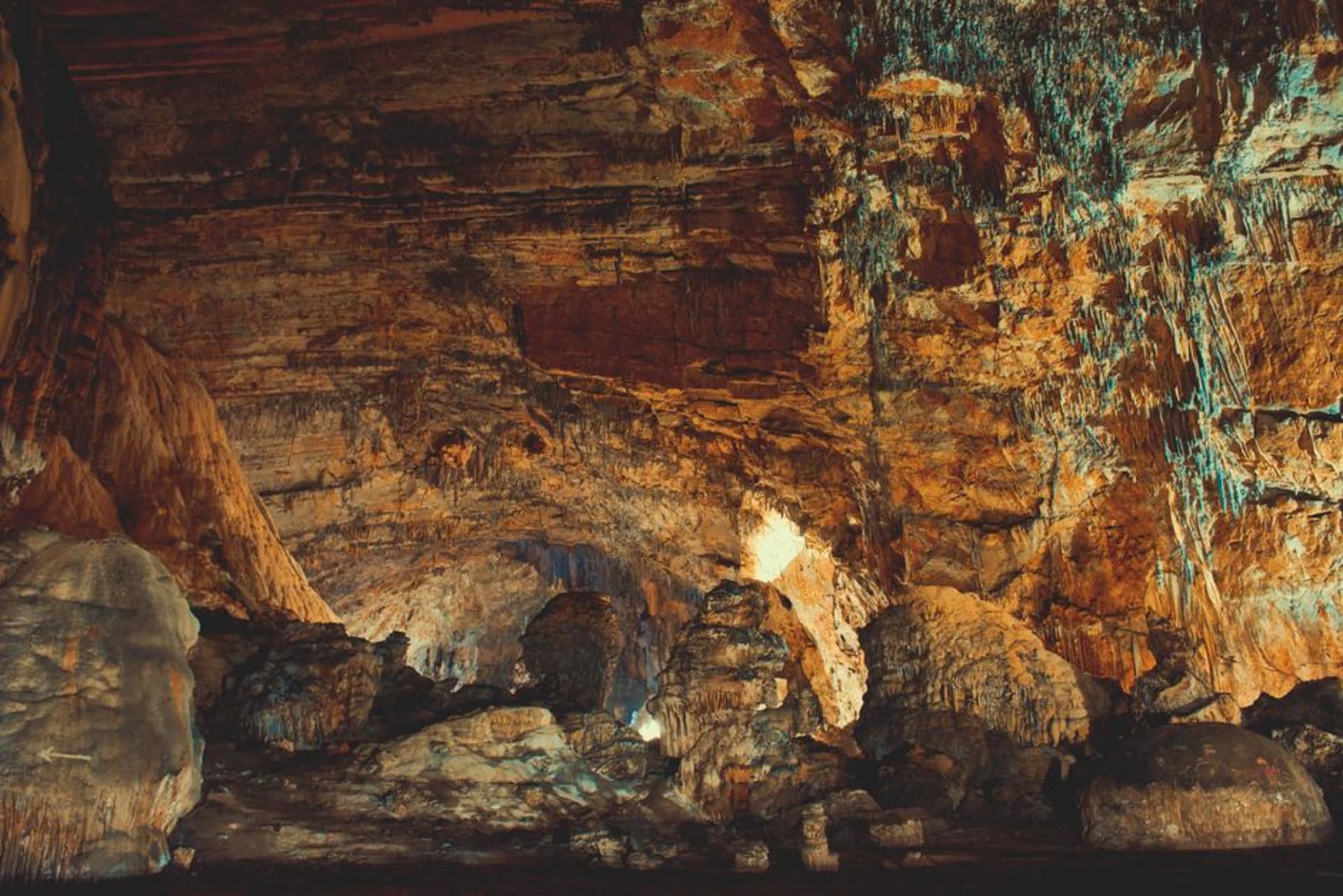
Grutas de Juxtlahuaca
"Three thousand years of silence broken only by your headlamp — nothing in Guerrero quite prepares you for Juxtlahuaca."
The road to Colotlipa from Chilpancingo takes about an hour and a half, and for most of it you’re climbing — the Sierra Madre folding up around you, the temperature dropping in increments, pine trees replacing the dry scrub of the valley. I arrived on a Thursday morning with two other visitors and a guide named Rodrigo, and we stood outside the cave entrance for a few minutes while he organized the lanterns. The mouth of the mountain was already cold.
Three Kilometers Into the Dark
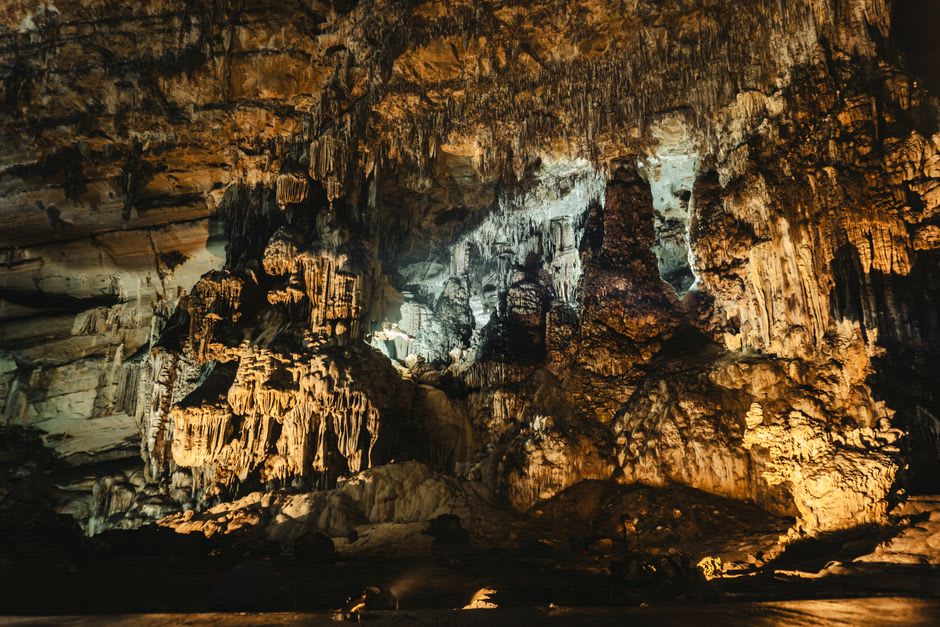
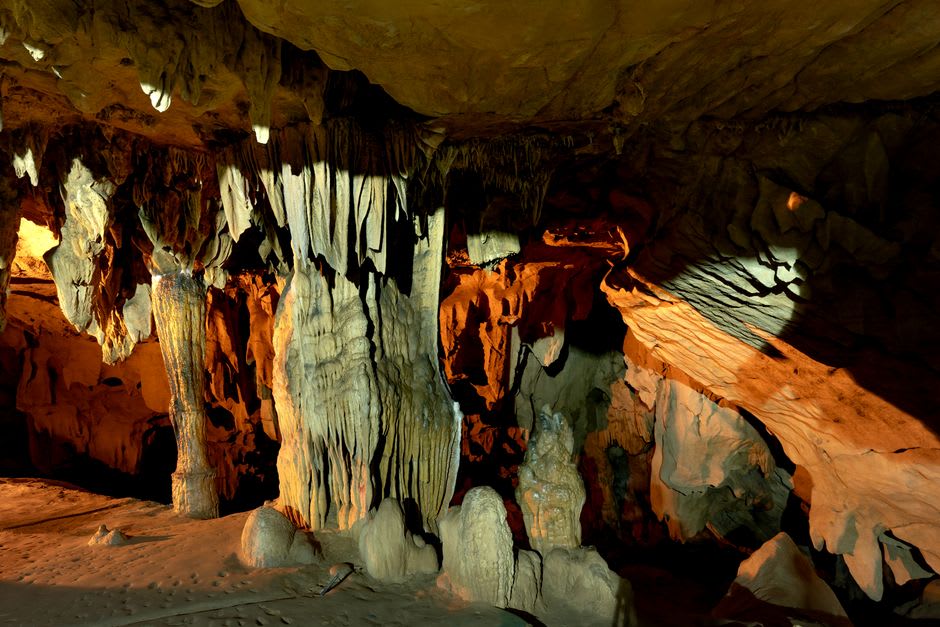
The Grutas de Juxtlahuaca extend for roughly ten kilometers, but the visitor route covers about three — enough to lose your sense of direction, depth, and, toward the end, time. Rodrigo led us past formations that have been accumulating since before the Olmec arrived: stalactites the color of old ivory, columns that have taken hundreds of thousands of years to meet in the middle, and at one point a lake so still it reflected our headlamps back at us like a second ceiling. The path is narrow in places, low in others. I crouched under a formation that Rodrigo called the curtain — a thin mineral sheet, translucent at the edges, that had been growing since before the Roman Empire existed. Nobody was in a hurry.
The Paintings
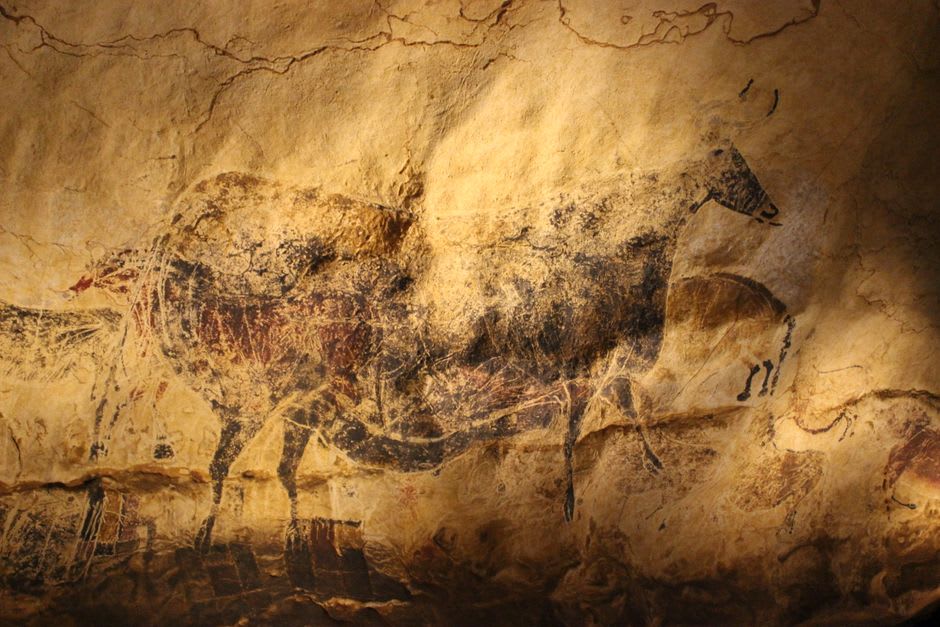
The Olmec figures appear about two and a half kilometers in, behind a locked gate that Rodrigo opened with a key on a lanyard around his neck. They date to roughly 1000 BCE — which means they predate the fall of Troy, predate the construction of most Greek temples, predate nearly everything I associate with the word ancient. The pigments are red ochre, yellow, and black: a jaguar, a figure in a headdress, a serpent-like form whose exact meaning remains contested among researchers. The paintings are not large. They are not dramatic in the way that Lascaux or Altamira are dramatic. They are simply there, on a limestone wall three kilometers inside a mountain, perfectly composed and entirely without explanation. I stood in front of them for longer than I expected to.
Before You Descend
The guided visit is mandatory, which is the right call — the route is unmarked and the formations are fragile. Tours leave from the entrance when there are enough visitors, typically starting around 10 or 11 in the morning. Bring a jacket regardless of the season; the cave holds a constant twelve degrees Celsius, which is refreshing for about twenty minutes and then quietly cold. I wore a cotton shirt from Puerto Escondido and spent the last hour mildly regretting it. There is a small food stand at the entrance serving quesadillas and atole, and I ate there after the visit because the emergence into daylight requires some kind of ceremony.
Getting There
From Chilpancingo, take the road toward Petaquillas and continue south toward Colotlipa — about 80 kilometers, roughly an hour and a half by car. There is no regular colectivo service that goes directly to the caves, so most visitors drive or arrange a taxi from Chilpancingo. The entrance fee is modest and paid on-site; plan to arrive before noon to catch an early tour.