Barra de Potosí
"The boat tour was offered for a price that seemed too low for what it involved. I paid it and didn't mention this."
I had been told Barra de Potosí was a beach. This is technically accurate — there is a long Pacific beach on one side of the village, and it is good, and if a beach is what you need, it delivers. But the reason I kept thinking about the place for weeks afterward had nothing to do with the beach.
Forty-five minutes south of Zihuatanejo on Highway 200 and then down a road through a small community and past palm trees and along a narrow isthmus, Barra de Potosí sits between the lagoon on one side and the Pacific on the other. It is small — perhaps a few hundred residents, a handful of palapa restaurants, a scattering of basic cabañas for the visitors who come, who are not many.
The Lagoon
The Laguna de Potosí is an estuary, a place where the freshwater of the Río Potosí meets and negotiates with the saltwater of the Pacific. The transition zone creates the conditions that estuaries create: a biologically rich border country, warm and shallow, with mangroves on the margins and wading birds working the shallows in numbers that make you stop and count before giving up.
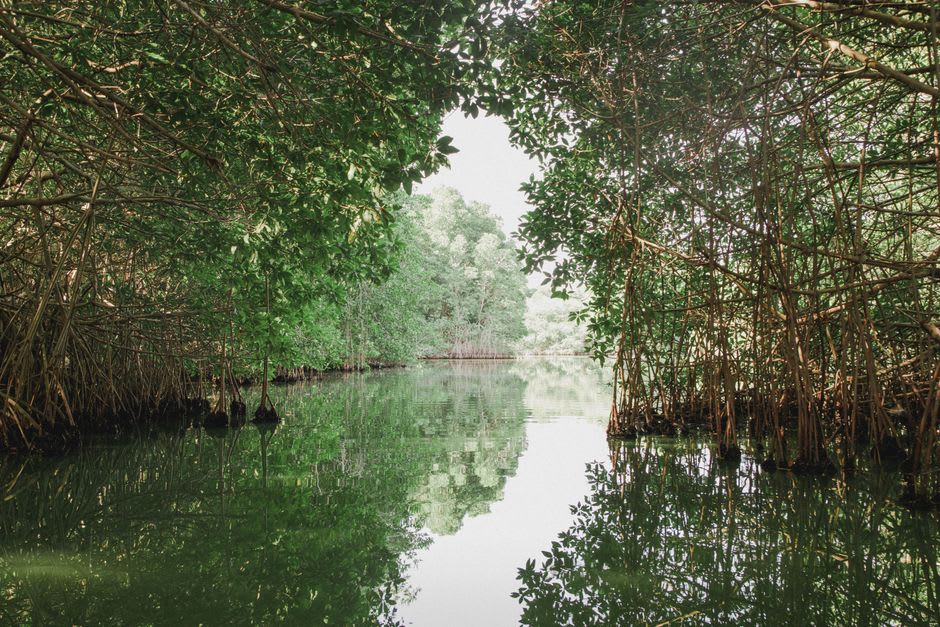
I walked to the lagoon in the early morning. The light was low and the water was still and the frigatebirds in the mangrove canopy were enormous and black against the sky. A heron stood in the shallows and did not move for the entire time I watched it, which was long enough that I eventually stopped watching it and it remained unimpressed.
A man named Beto, who had been watching me watch the heron, offered a boat tour of the mangroves for a price that seemed too low. I have enough experience of situations like this to know that the appropriate response is not to negotiate or to verify the price against some imagined market rate, but simply to accept and pay and let the thing happen as it was offered.
The boat was a small wooden lancha with an outboard. We went into the mangrove channels, which narrow gradually until the motor comes up and you proceed by paddle, pushing off the roots. Frigatebirds. More herons. Egrets working the margins. A section where the channel opened into a wider pool and the reflected sky made it impossible to judge depth. Beto pointed out a section of bank where the turtles had nested earlier in the season — it was late November when I was there, and the season had ended — and described the process of the females coming up in the night with the patience of someone who had been watching it for years without the experience becoming routine.
The Palapa Restaurants and What to Eat
The restaurant infrastructure in Barra de Potosí is minimal in the way that restaurant infrastructure should sometimes be minimal: three or four palapa establishments on the beach side, tables on the sand, handwritten menus on boards, food that corresponds to what the boats brought in that morning.
I had pescado zarandeado — the Pacific coast preparation where the fish is butterflied and slow-cooked over wood coals with a chile and butter marinade. The Guerrero version differs slightly from the Nayarit version I have had farther north: less sweet, more smoke, the chile presence more direct. It is one of those preparations that is difficult to reproduce away from the coast because half of what you taste is the context — the open air, the sand, the specific smell of wood smoke mixing with the salt.
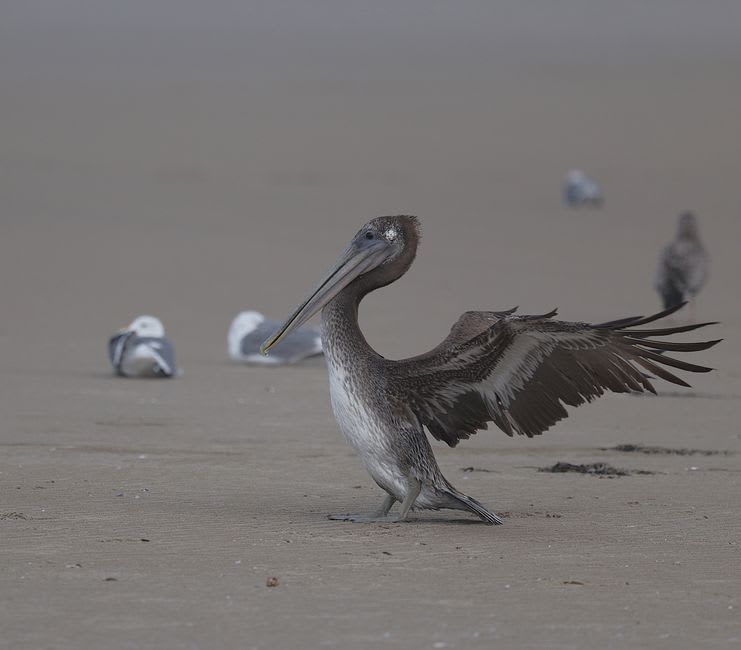
The cook at the place I chose worked alone, managing three dishes simultaneously over an open fire with the equanimity of someone for whom this was simply how afternoons went. The fish took forty minutes. I watched the pelicans on the beach while I waited. This was not a hardship.
Olive Ridley Turtles and When to Go
From June through November, olive ridley turtles come to the beach at Barra de Potosí to nest. They arrive at night, come up above the tide line, excavate nests, lay clutches of approximately a hundred eggs, and return to the sea. The hatchlings emerge at night several weeks later and move toward the light of the water.
The community runs a turtle protection program — residents patrol the beach during nesting season to mark and guard the nests from predators. If you visit between June and November, ask about the program. The nighttime watches that have been organized in the past are low-key enough to feel like something shared rather than something packaged.
Getting here from Zihuatanejo: colectivos run along Highway 200 toward Petatlán and will drop you at the Barra de Potosí turnoff, from which it is a short mototaxi or walk to the village. By car, allow 45 minutes from central Zihuatanejo. There is no reason to rush here and no obvious reason to stay less than two nights if you have the time. Bring cash; there are no ATMs in the village.