Guanajuato City
"Getting lost in Guanajuato is not a failure of navigation. It is the correct approach."
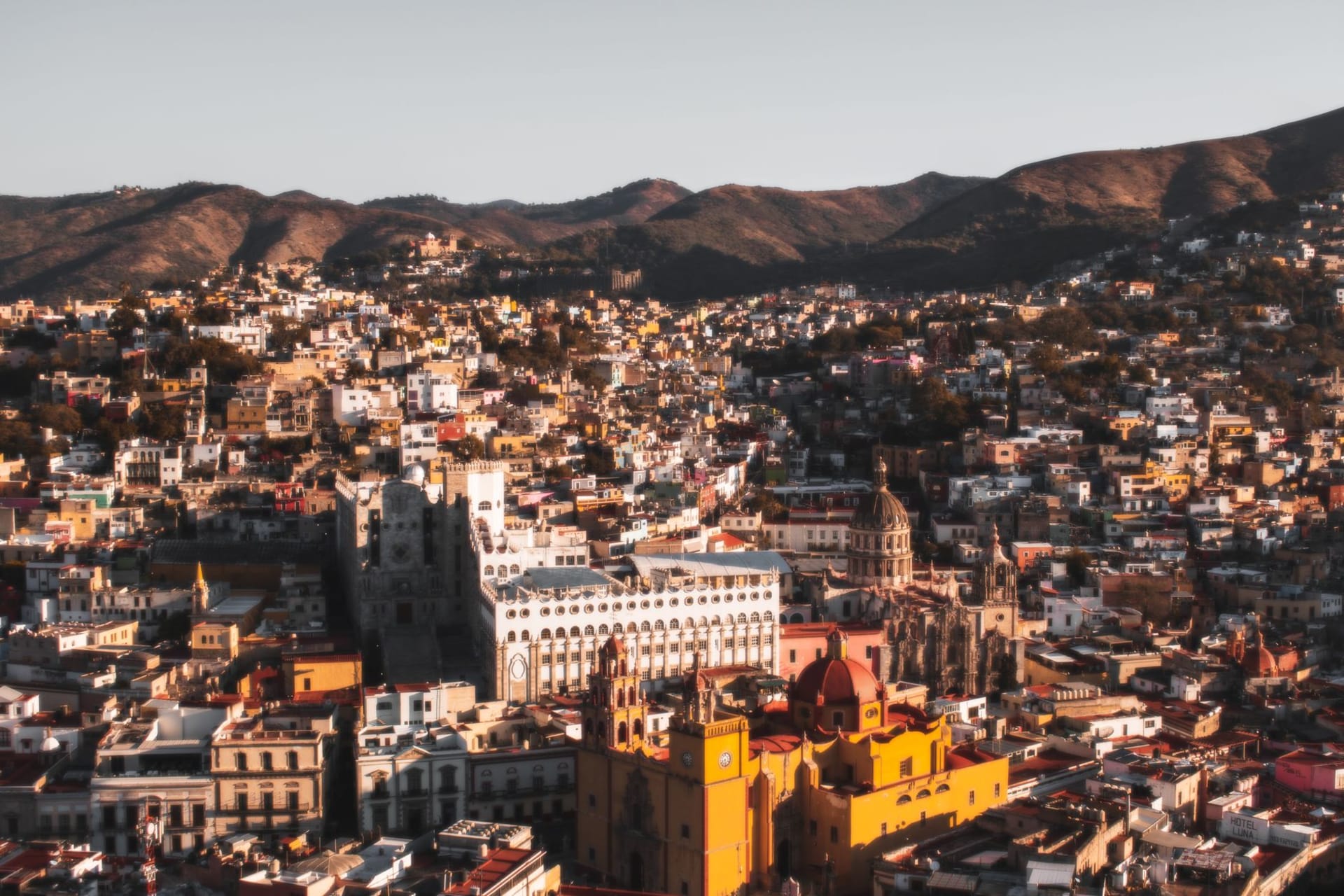
I have been to Guanajuato four times and gotten lost every single time. The fourth time I got lost on a street I had been on three times before, having approached it from a slightly different angle, and for a full ten minutes had no idea where I was in a city I thought I knew. I found this more amusing than distressing, which is either personal growth or a sign that Guanajuato had finally taught me the right posture toward itself. The city does not punish disorientation. It rewards it. The callejones — the narrow stepped alleys that run between the main streets at odd angles, connecting things that should not connect — almost always lead somewhere worth arriving.
The city was built into a ravine in the seventeenth and eighteenth centuries by silver money, and the ravine gave it no choice but to grow vertically and intricately. Streets climb, double back, narrow to single-person width, pass under archways, and emerge into plazas you were not expecting. The Jardín de la Unión, the main social plaza, is ringed by laurel trees clipped into geometric shapes, by the Teatro Juárez (an entirely different Teatro Juárez than the one in El Oro, though both Porfirian, both making the same bet on culture), and by cafés that stay open until two in the morning. On my last visit I sat at an outdoor table at eleven at night and a student ensemble — estudiantina, the formal name, a musical tradition that Guanajuato maintains as a living practice rather than a folkloric performance — passed by in their black-and-gold costumes, playing and singing for tips. The table next to mine was a group of engineers attending a conference. Everyone stopped talking to listen.
Getting Lost on Purpose
The Callejón del Beso — the Alley of the Kiss — is the most photographed spot in Guanajuato, and the legend is genuinely charming: two balconies so close that lovers from feuding families kissed across the gap, Romeo-and-Juliet style, though in the Mexican version the ending is more specifically tragic in ways that I will not spoil. The reality of the callejón on a weekend afternoon is a narrow passage jammed tight with people trying to photograph each other on the second step (the specific step associated with good luck in romance, as per a tradition that has been commercially formalized to a degree that I find impressive). Go at seven in the morning. Or go to any of the other callejones that have no legend attached and are therefore completely empty.
The callejones I prefer: the Callejón del Patrocinio, which climbs steeply past houses of such vivid yellow that the light bouncing off them turns everything warm; the Callejón del Calvario, which passes through a neighborhood of university students and usually has someone playing guitar from a window; and any of the unnamed ones on the south slope of the ravine, where the houses are older and the stairs are worn smooth and there are cats sleeping on windowsills at every hour of the day. The city rewards sustained wandering. The tourist circuit covers maybe a third of it.
The Alhóndiga de Granaditas is a building most visitors skip in favor of the mummy museum, which is their loss. It was a grain warehouse in the colonial period, then the site of a decisive battle in 1810 during the War of Independence (a mining worker named El Pípila, the story goes, strapped a flagstone to his back to protect himself from enemy fire and burned the building’s door, allowing independence forces to take it), and is now a regional history museum with extraordinary murals by José Chávez Morado covering the full span of Guanajuato’s history from the pre-Hispanic period through the revolution. The murals alone are worth an hour.
The Museo de las Momias — the mummy museum — I visited once and that was sufficient. The naturally mummified bodies are genuinely arresting in a way that is hard to explain rationally: the faces are expressive, the poses preserved, the skin leathery and detailed. Mexico’s relationship with death is different from France’s, and the mummy museum is perhaps its most direct expression: death on display, examined closely, neither sanitized nor sensationalized. I found it compelling and also glad to be outside when it was over.
Underground and Aboveground
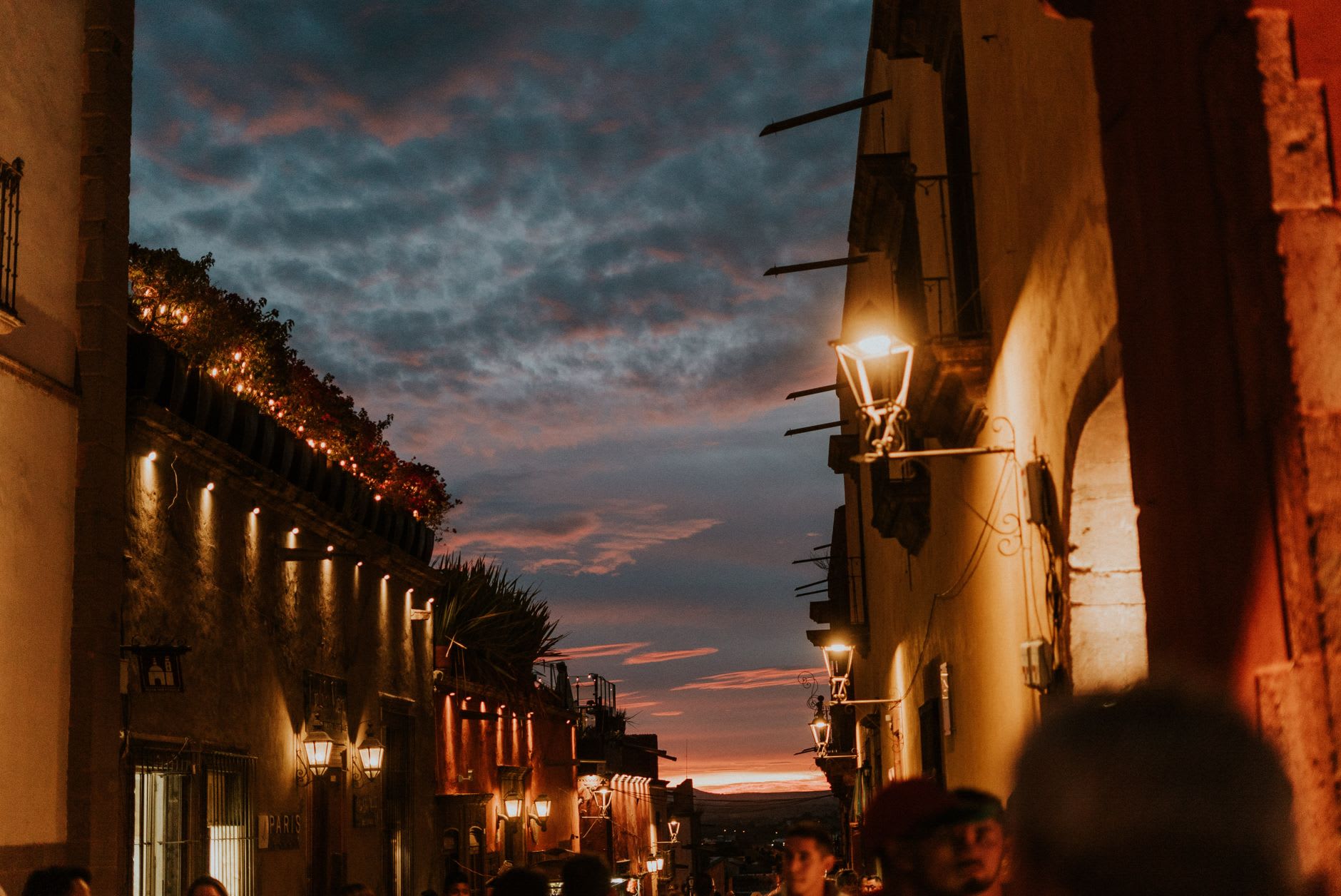
The underground road system of Guanajuato is one of those things that sounds implausible until you are driving through it. The city sits in a ravine that was originally bisected by a river. When the river was diverted and eventually channeled, the old river tunnel became a road. Additional tunnels were dug over subsequent decades to allow vehicle traffic to move through the city without crossing the pedestrian center. The result is a network of tunnels that run under large portions of the old city, with roundabouts underground and ramps that emerge into plazas or parking structures or just open streets, sometimes surprising passengers who were not tracking where they went.
I have driven through the tunnel system twice. The first time I was a passenger and the second time I was driving a rental car, following instructions from someone who assured me the route was straightforward. It is straightforward in the sense that there is only one way to go inside a tunnel. What is not straightforward is knowing which tunnel to enter or when to expect the exit. There is a stretch where you drive for what feels like several minutes in complete darkness under the city, passing intersections lit by bare bulbs, with pedestrians walking along the side passage, and it feels exactly like what it is: a car driving through a mine. Above you, people are walking the callejones in sunlight. Below you, earlier travelers diverted a river. It is a geological and historical sandwich of extraordinary density.
Eating
The Mercado Hidalgo is one of the finest market buildings in Mexico: an 1910 iron-and-glass structure in the Porfirian mode, with an arched roof that floods the interior with light, two stories of food stalls and vendors, and the sustained low roar of commerce that good markets generate. The food downstairs is what matters. Enchiladas mineras — the signature dish of Guanajuato — are tortillas passed through guajillo sauce, filled with cheese, topped with potato and carrot, the whole thing served with pickled vegetables and crema. They are substantial, slightly spicy, not subtle. I have eaten them three times in Guanajuato and once at a restaurant in Mexico City that claimed to make them correctly and did not.
The café scene is strong and university-driven. Guanajuato has a serious coffee culture that developed alongside the student population, and the best cafés take their sourcing seriously. The Jardín de la Unión area has options ranging from tourist-oriented to genuinely good. The mezcal bars in the callejones above the main plaza are small, serious, and dim in a way that suggests they are not trying to attract casual drinkers.
The Festival Internacional Cervantino, held every October, is a performing arts festival of real significance — theater, dance, and music from across the Spanish-speaking world, staged in the city’s plazas and theater spaces. The city at Cervantino is very different from the city at any other time: full, loud, expensive, electric. It is worth planning around if your dates allow it.
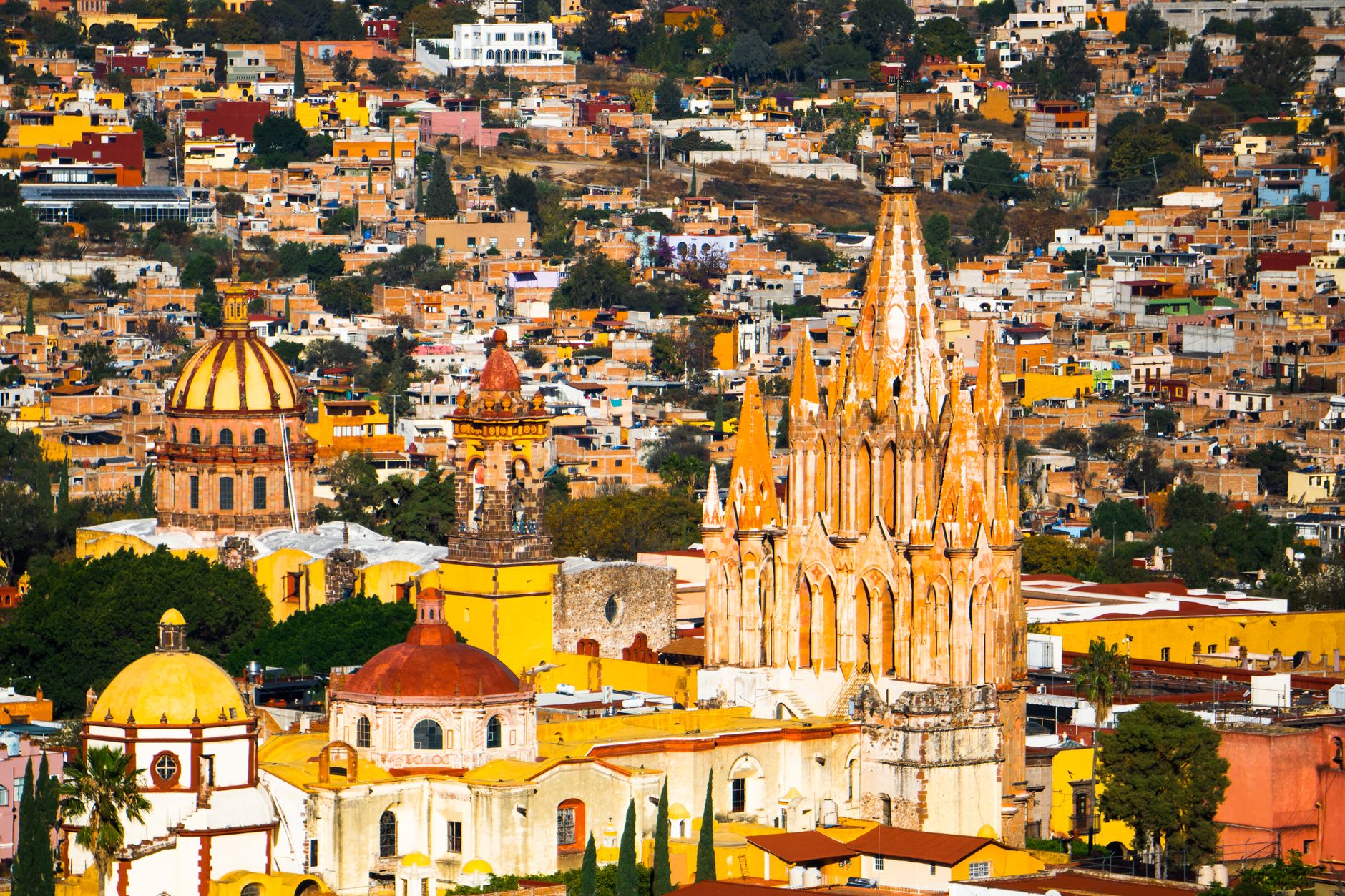
Getting there: Guanajuato has its own airport (BJX, shared with León) with connections from Mexico City, Monterrey, and various US cities. By bus, frequent ADO and ETN services connect Guanajuato to Mexico City (4h), Guadalajara (3h), San Miguel de Allende (1h30), and Querétaro (2h). The bus terminal is outside the city center; take a taxi or local bus into the centro.
When to go: October for the Cervantino (book accommodation months in advance). November through April for dry weather and mild temperatures. The city is lively year-round due to the university; it is never truly quiet, but January-February are the slowest months if you prefer space in the callejones. The altitude (2,000 meters) keeps temperatures moderate — warm days, cool evenings, year-round.