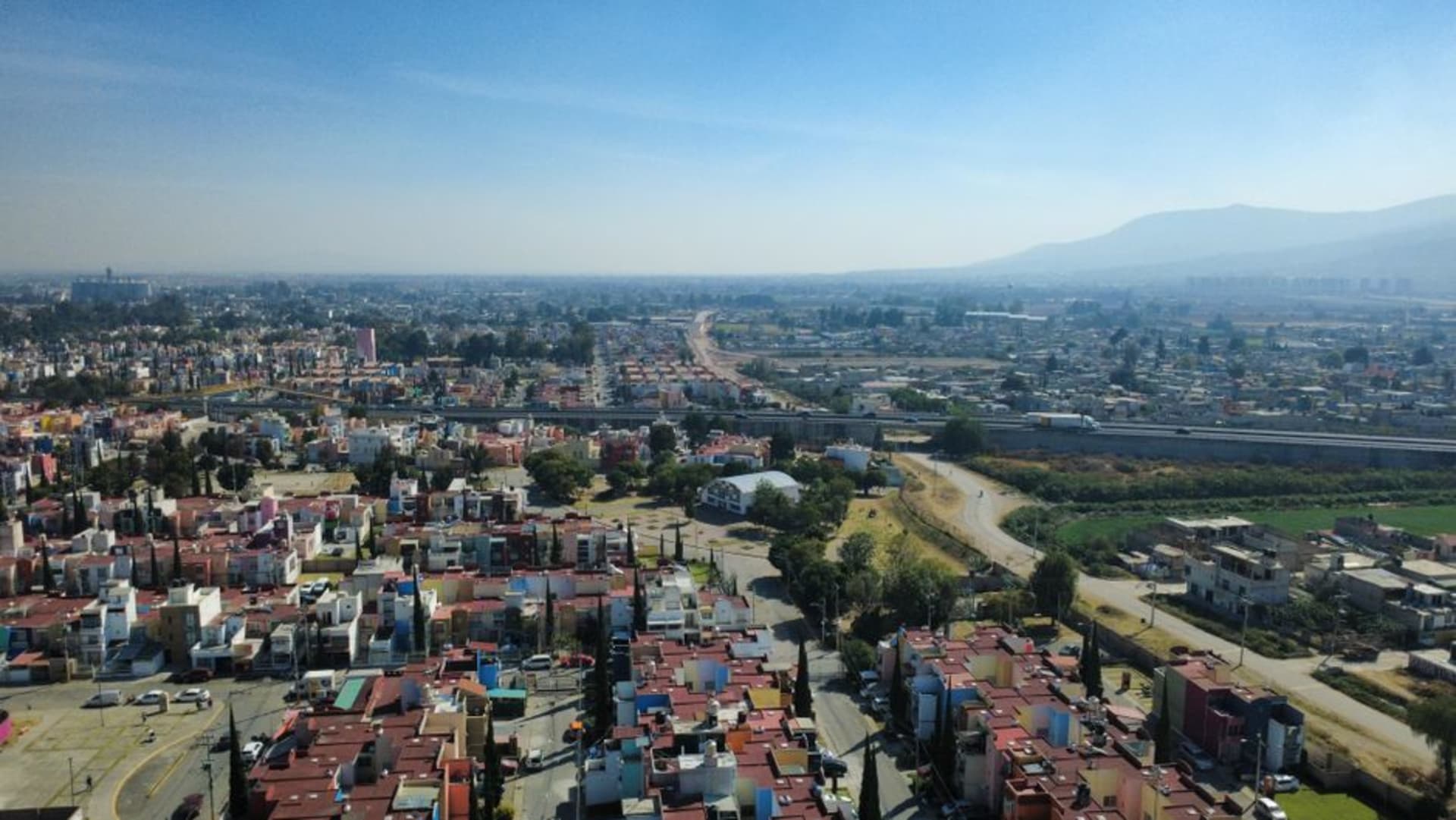
Tultepec
"The air smells faintly of gunpowder at all hours, and I mean that entirely as a compliment."
I arrived in Tultepec on a Wednesday afternoon in late February, a week before the Feria, when the town was still in that focused pre-event state that often feels better than the event itself. A pickup truck idled outside a workshop on Calle Hidalgo with an enormous paper bull strapped to the flatbed. Two men in their fifties were arguing, calmly and at length, about something I couldn’t make out. The smell reached me before anything else — sulfur and something sweeter underneath it, chemical but not unpleasant. I stood on the sidewalk and breathed it in.
When the Castillos Burn
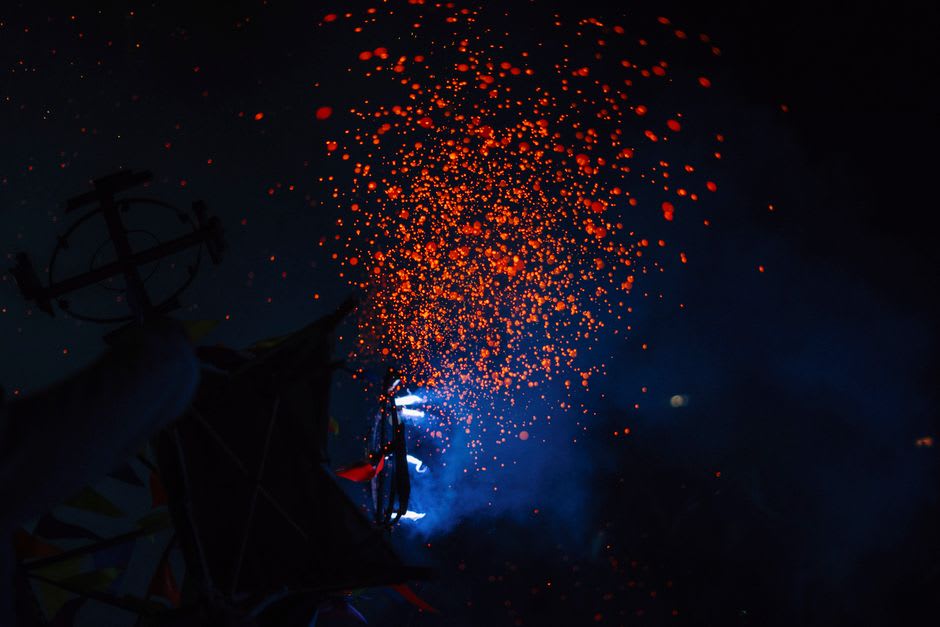
The Feria Nacional de la Pirotecnia runs for about a week in early March, organized around the feast of San Juan de Dios on the seventh — the patron saint of pyrotechnicians, which is the kind of professional-specific religious detail that Mexico does better than anywhere. What happens each night is difficult to describe without sounding hyperbolic, so I will be precise. A castillo is a twenty-meter tower of welded steel hung with successive rings of pyrotechnic devices that ignite from bottom to top, erupting into spinning wheels of color that throw sparks across the field. The finale detonates from every tier simultaneously. A torito is a papier-mâché bull mounted on a wooden frame that a man carries through the crowd while it throws sparks and noise in every direction; the crowd runs, laughs, and comes back for more. I have seen fireworks on Bastille Day in Paris and on New Year’s in Sydney. Neither prepared me for an evening in Tultepec.
The Talleres
What makes Tultepec genuinely strange, beyond the spectacle, is the ordinariness of it the rest of the year. Families here have been making fireworks for generations, passing the craft from parent to child with the same matter-of-factness that a family in Lyon might pass down cheesemaking. On Calle 5 de Febrero and the streets fanning out from the central market, workshop doors stand open — talleres where men sort chemical powders into careful piles, wrap paper around cardboard tubes, and assemble the wire armatures that will eventually become castillos. The work is methodical and slow; a single competition piece can take months to build. The 2006 market explosion that killed dozens hangs over the town’s history — locals mention it the way people mention any formative catastrophe, with a heaviness that does not prevent them from continuing. The craft is who they are.
What to Do With the Other Hours
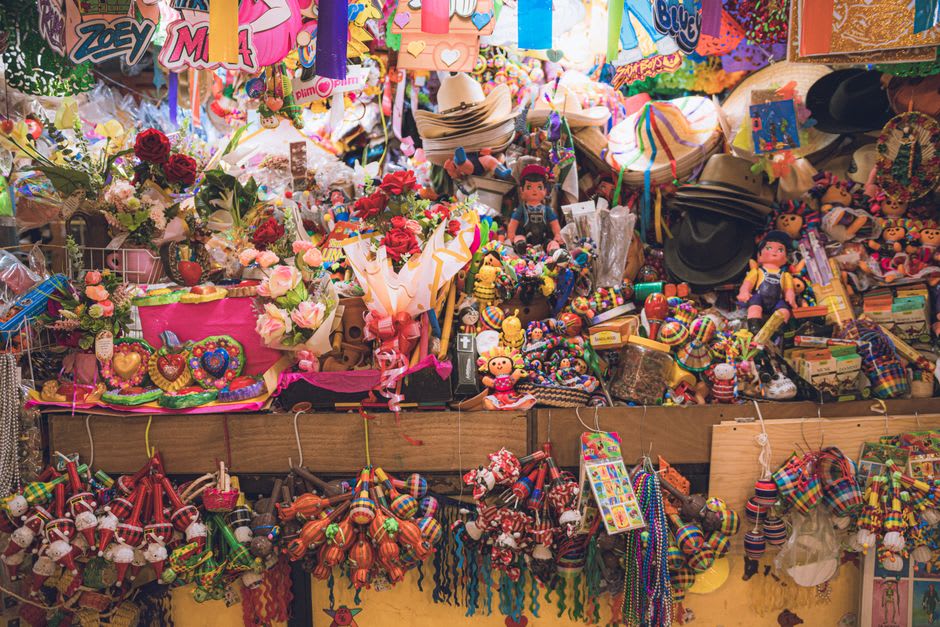
If you come during the Feria, arrive by late afternoon and position yourself near the main stage before dark — the crowd builds quickly and the sight lines matter. Outside of March, the Museo de la Pirotecnia on the central plaza gives a decent account of the trade’s history, including the competition pieces and the tools behind them. I ate quesadillas de flor de calabaza and a bowl of caldo tlalpeño at a comedor on the market’s north side — nothing remarkable except that it was exactly what I wanted. The market itself is worth an unhurried hour: produce stalls, hardware vendors, and at least two people selling spent fireworks casings as souvenirs, which struck me as either very optimistic or very practical.
Getting There
Tultepec sits about 40 kilometers north of central Mexico City. The most practical route is MEXIBUS from Cuatro Caminos metro station, with a colectivo connection into town — allow around an hour. By car from Tlatelolco, traffic permitting, figure 40 minutes. The Feria runs in early March; main events start after dark, so plan for a late return or book transport back to the city in advance.