Ixtapan de la Sal
"I circled the parking lot for twenty minutes, gave up, parked on a grass verge three blocks away, and walked in to find several hundred people entirely happy about being there."
The road to Ixtapan de la Sal on a Sunday morning is the road to a Mexican family destination, which means it moves at the pace of collective decision. I counted three families eating at a roadside taco stand from their parked cars, one truck towing a trailer with bicycles, and a minibus full of teenagers. By the time I reached the town itself I had been in traffic for forty minutes and the town was not large.
France has thermal spa culture — Vichy, Évian, the Pyrénéan thermes — but the French tradition tends toward the clinical and the prescribed. You take the waters for your liver. You follow a protocol. The spa is attached to a hotel whose aesthetic leans severe. Ixtapan is nothing like this.
The Balneario
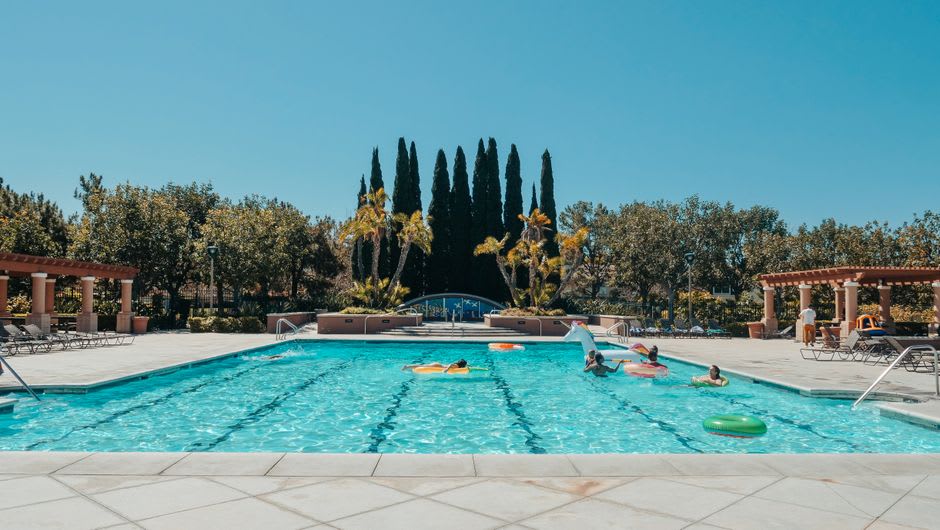
The thermal water complex — there are several different facilities, but the main public balneario is the one worth knowing — is a large outdoor park of pools, slides, and artificial river channels. The water is warm year-round, drawn from natural thermal springs, and slightly mineral. It has the faint sulfurous smell that thermal water tends to have, which you stop noticing within twenty minutes.
The social structure of a Mexican balneario is specific and worth describing. Grandmothers sit in the shallow end watching grandchildren who cannot yet swim. Couples float on inner tubes, feet intertwined. Fathers launch children off their shoulders in the deep section. Teenagers form clusters near the slides and have the same elaborate social negotiations teenagers have everywhere near slides. Men of a certain age stand in the warm water up to their chests and appear to be genuinely at peace.
I rented an inner tube for a nominal fee and joined the artificial river circuit, which is a canal-like channel that loops around one section of the complex with a gentle current. You float. You turn corners. You occasionally push off a wall. Other floaters bump gently into you and apologize or don’t. One elderly woman was asleep in her tube in a way that suggested she had been doing this for decades and had the technique perfected. I floated for two hours.
The Town Itself
Ixtapan de la Sal is a small town built substantially around its spa economy. The main street has hotels with their own thermal pools — the better ones let you use their pools on day-pass rates — and restaurants that serve the kind of food designed for families who have been in the water since morning: grilled meats, rice, gorditas, aguas frescas in large plastic cups.
The town itself is not a cultural destination in the way Taxco or Malinalco nearby are cultural destinations. There is a plaza, a church, the ordinary infrastructure of a Mexican market town. What Ixtapan offers is something different from and in some ways more useful than culture: the experience of doing something that people have been doing here for generations, in a context that has not been redesigned for outside consumption.
I ate lunch at a table under a corrugated metal roof with a family who had arranged six plastic chairs in a semicircle around a portable speaker and were managing a very elaborate playlist. We nodded at each other. They offered me a tortilla from their basket. I declined and then reconsidered and accepted. It was a good tortilla.
When to Go and How to Get There
Ixtapan de la Sal is about two hours from Mexico City by car via Toluca. By bus, connections run from the western Mexico City terminals via Toluca or direct from Observatorio; expect two to two and a half hours. The town is small enough to navigate entirely on foot once you arrive.
Avoid Sundays if you want fewer people. A Friday morning or a Tuesday has the same warm water and significantly more pool space. But if you go on a Sunday and find yourself circling the parking lot and then floating in a ring for two hours surrounded by several hundred people who have been doing this all their lives, that is not the inferior version.
The entry price to the main balneario is low enough that it is not a significant decision. The inner tube rental is additional and worth it. Bring a change of clothes and something to read for afterward, when you are sitting in the shade having done nothing productive for several hours and feeling better for it.