Manzanillo
"Manzanillo claims to be the sailfish capital of the world. The sailfish tournament record has been held here for decades. The fish run close to shore in winter."
Manzanillo is the Pacific port that international tourism forgot. The town was briefly on the itinerary in the 1970s and 80s — when Las Hadas, the fantastical Moorish resort built by Bolivian tin magnate Antenor Patiño on the Santiago peninsula, made Manzanillo synonymous with a certain kind of outrageous wealth — and then the resort focus of the Pacific coast moved to Los Cabos and Puerto Vallarta and Manzanillo was left to be what it actually is: a major Pacific container port and agricultural export hub with two excellent crescent bays, a working-class Mexican seafront culture, and the best sailfish fishing on the coast.
The combination is unexpectedly good. The container ships at anchor in the outer harbor and the sport fishing fleet at the Santiago marina exist three kilometers apart, the commercial port invisible from the resort side of the double bay. The food is the food of a port city that feeds dockers and fishermen rather than a resort town optimized for international tourists.
The Twin Bays
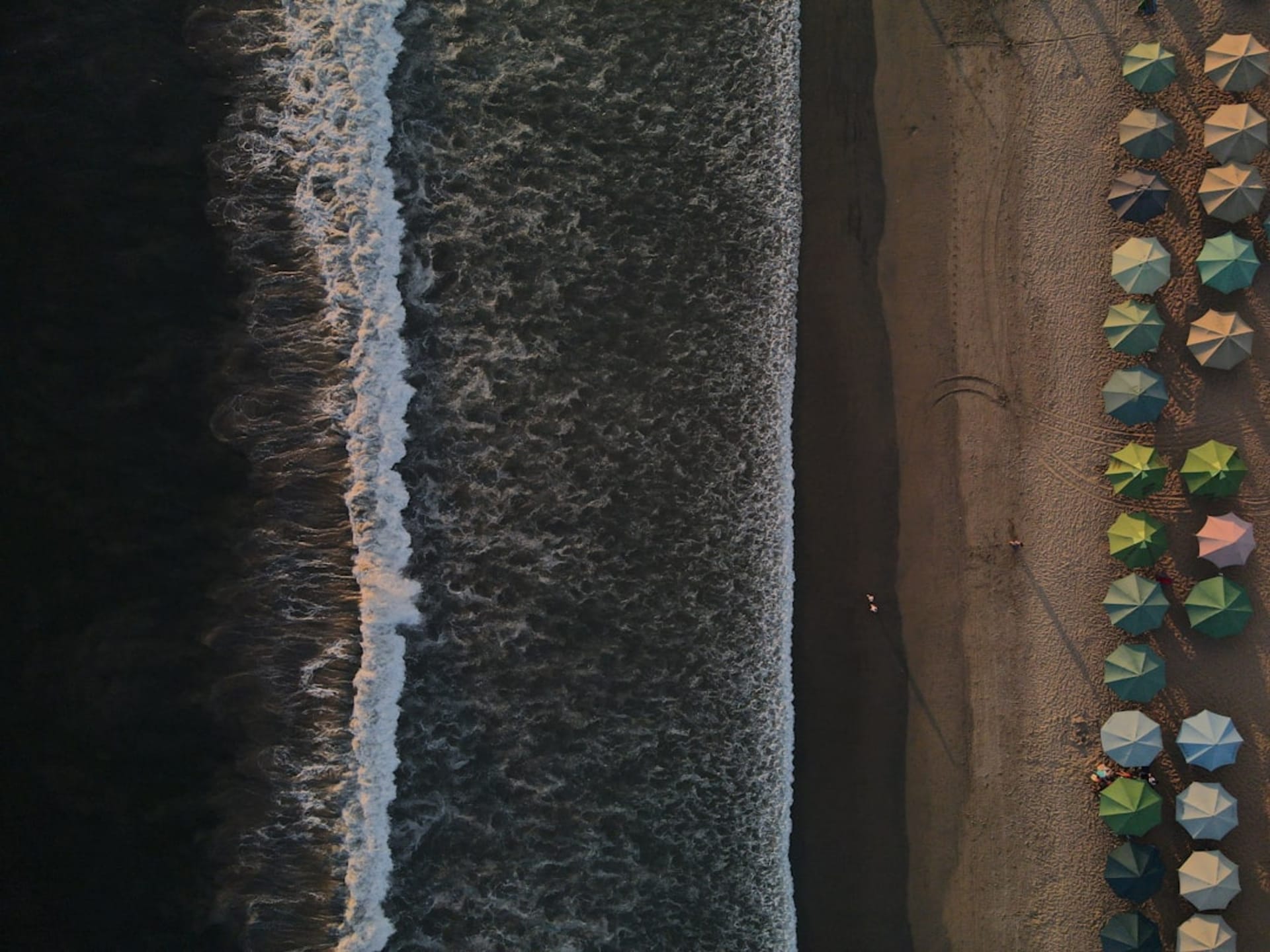
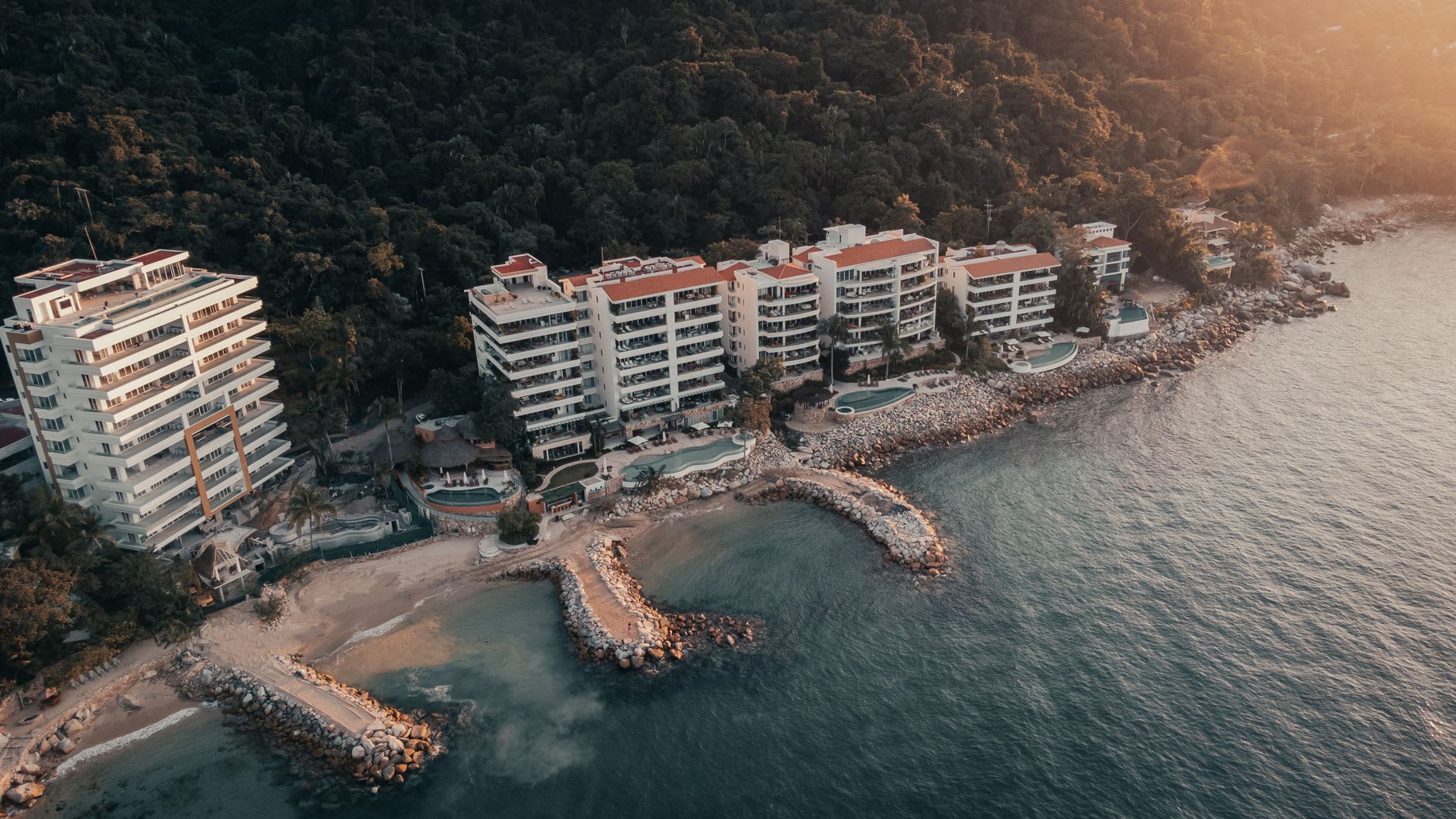
Manzanillo occupies a double peninsula — the Bahía de Manzanillo (the inner bay, containing the commercial port) and the Bahía de Santiago (the outer bay, where the resort beaches are) separated by the Punta Manzanillo headland. The Santiago bay has the resort infrastructure: Playa Las Brisas and Playa Azul on the inner curve, Playa Audiencia on the Santiago peninsula itself, and the curved bay of Playa Miramar at the far end, where the surf picks up and the beach hotels thin out.
Playa La Audiencia — inside the Santiago peninsula, protected by the headland — is the calmest water in the bay: a small crescent of fine sand with a rocky bottom clear enough for snorkeling, the resort behind it managed. The sea turtles that nest on the Colima coast come ashore here occasionally at night during nesting season (July-November).
Playa Miramar — at the end of the Santiago zone, where the residential neighborhoods begin — has the Pacific swell unimpeded by the headland, consistent surf, and almost no tourist infrastructure. The palapa restaurants here serve the working residents of Santiago and price accordingly.
The Sailfish
The Torneo Internacional de Pez Vela (International Sailfish Tournament) has been run from Manzanillo since the 1950s and gave the city its international sporting identity. The eastern Pacific sailfish (Istiophorus platypterus) aggregates in the offshore waters between Manzanillo and Cabo Corrientes (to the north, near Puerto Vallarta) from November through March, following the schools of baitfish that the seasonal current changes bring close to shore.
The tournament record for sailfish caught and released in a single day — held by a Manzanillo boat since the 1980s — is the evidence for the “sailfish capital of the world” claim. Whether this title is still accurate against the competition from Cabo San Lucas and Los Sueños (Costa Rica) depends on the data year; the fishing is genuinely exceptional.
Sport fishing boats depart from the Marina Puerto de Abrigo in Santiago; the captains offer half-day and full-day trips year-round, with November through March the peak season for sailfish and late summer for dorado and yellowfin tuna.
The Downtown and the Food
Manzanillo’s downtown — the historic center around the main Plaza de Armas and the malecón facing the inner bay — is a working port town with a working port town’s energy: the malecón doubles as the commercial waterfront, with the shipping company offices and the fish wholesale market on one side and the cafés and seafood restaurants on the other.
The Mercado de Mariscos near the port entrance sells the morning catch from the local fleet: Pacific snapper, yellowtail, tuna, mahi-mahi, and the sailfish bycatch that becomes smoked fish in the surrounding stalls. The tostadas de atún (tuna tostadas with avocado and salsa) from the market stalls cost a fraction of the resort restaurant price for the same ingredient from the same source.
Sopa de lima — the Colima coast version of the lime soup, made with chicken and the key lime (lima) variety that gives the soup its name — is the canonical lunch of the Manzanillo waterfront restaurants. The version at the covered market comedores uses fresh ingredients and the specific sourness of the small Colima lime that the restaurant versions elsewhere substitute with the more available Persian lime.
Getting there: Manzanillo has an international airport with direct flights from Mexico City, Guadalajara, and Los Angeles. The airport is at the far end of the Santiago zone (40 minutes from downtown). Buses from Guadalajara (5h), Colima (1.5h), Puerto Vallarta (5h).
When to go: November through April for sailfish season, dry weather, and sea turtle nesting complete (the nests hatch October-December). May through October has humidity and the occasional Pacific tropical storm; the fishing shifts to dorado and tuna.