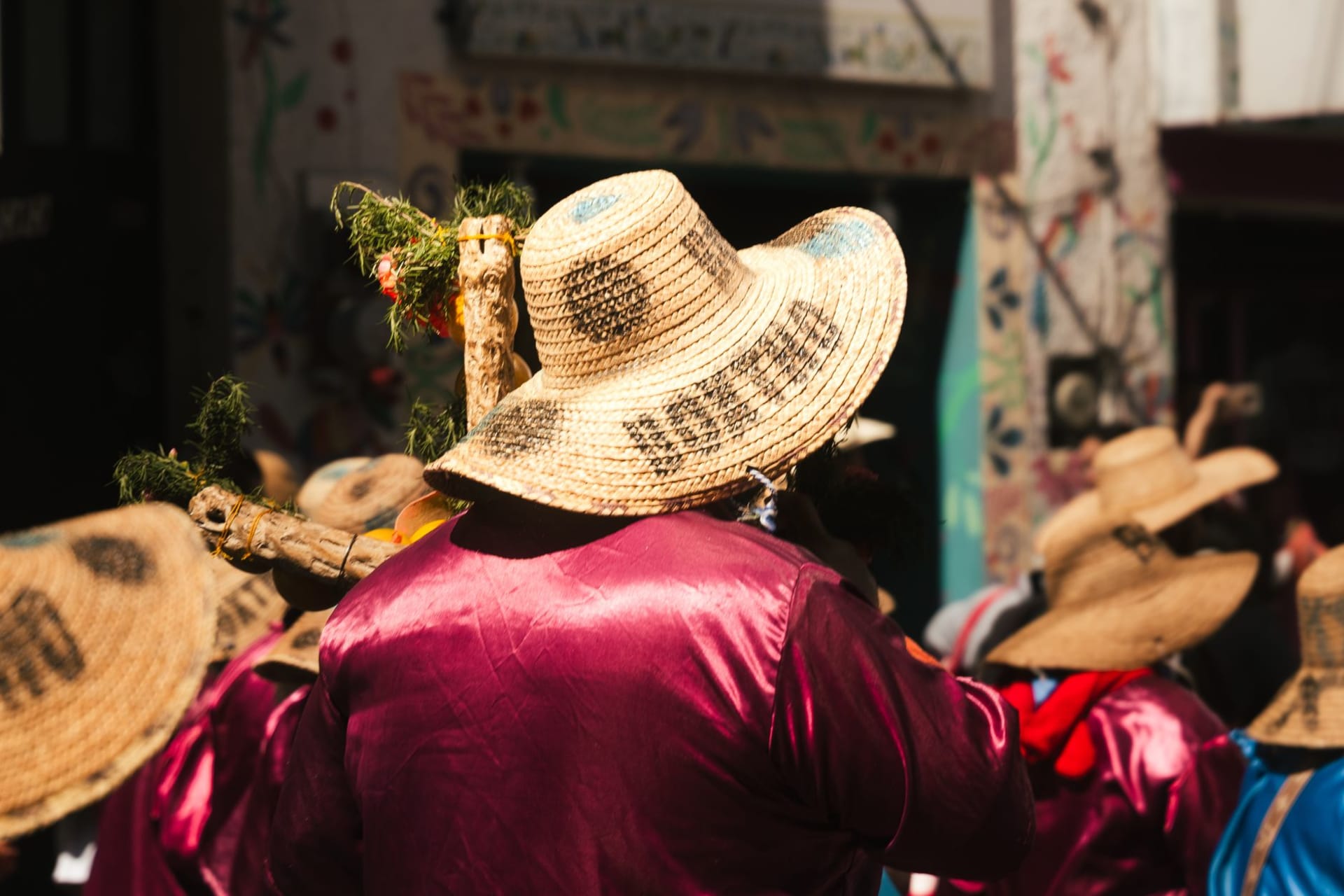
Cofradía de Suchitlán
"The wood was still damp when he started. By the time he showed me the finished face, it already smelled different. Like something that had become itself."
Comala is famous in the Colima state, and somewhat beyond it, for its white colonial plaza — every building whitewashed, the effect particularly striking in morning light — and for being the town whose atmosphere inspired Juan Rulfo to write Pedro Páramo, the novel about a man who travels to his father’s town and finds it inhabited entirely by ghosts. Whether you’ve read Rulfo or not, Comala has the quality of a place that knows it has been noticed, which affects the atmosphere in ways that are hard to pin down. The cafés on the plaza are good. The cream-based liqueur called ponche de Comala is excellent and dangerous in equal measure. I was there for two days.
On my second morning I drove up into the foothills above Comala looking for Cofradía de Suchitlán, which someone at my guesthouse had mentioned in passing as the kind of place you could miss on the way to somewhere else.
The Road Up
The road from Comala to Cofradía de Suchitlán climbs through coffee plantations for most of its length — the Nevado de Colima’s slopes in this zone are classic coffee-growing country, cool nights and adequate rainfall, the kind of terrain where the plants grow to chest height in dense rows under shade trees. The road is narrow and the turns are frequent. Past the coffee zone, avocado groves begin, which is another thing the Colima foothills do extremely well. The combination of altitude, humidity, and volcanic soil produces coffee and avocados and presumably other things that grow well in these conditions, though those were the two dominant presences on the drive up.
I almost missed the turn for the village. The sign is not large. I caught it, braked, reversed, and turned up a dirt track that led into the village about two hundred meters from the main road.
The Workshops
Three workshops were open when I arrived: two at ground level on the main street, one down a side path that I found because its door was open and I could smell the wood from the path. The wood smell is specific — fresh-cut wood from a local species I didn’t know the name of, with a greenness to it that comes from recent felling rather than seasoning. The man in the third workshop was working on a jaguar mask when I arrived, using a small curved gouge and a mallet, and he continued working while I came in and looked at the pieces on display.
The masks are the serious work. The jaguar masks, in particular, are carved with a depth and muscularity that takes skill to produce — the facial structure not flat but three-dimensional, the features rendered with an accuracy that is not photographic but is clearly the result of someone who has looked carefully at a jaguar. Which I suppose at some point in the tradition someone did. The painted versions use pigments that the carver told me were natural-based — mineral and plant-derived — applied after the wood is dried and sealed. The result is color that sits on the surface of the wood rather than covering it, which allows the grain to show through the paint.
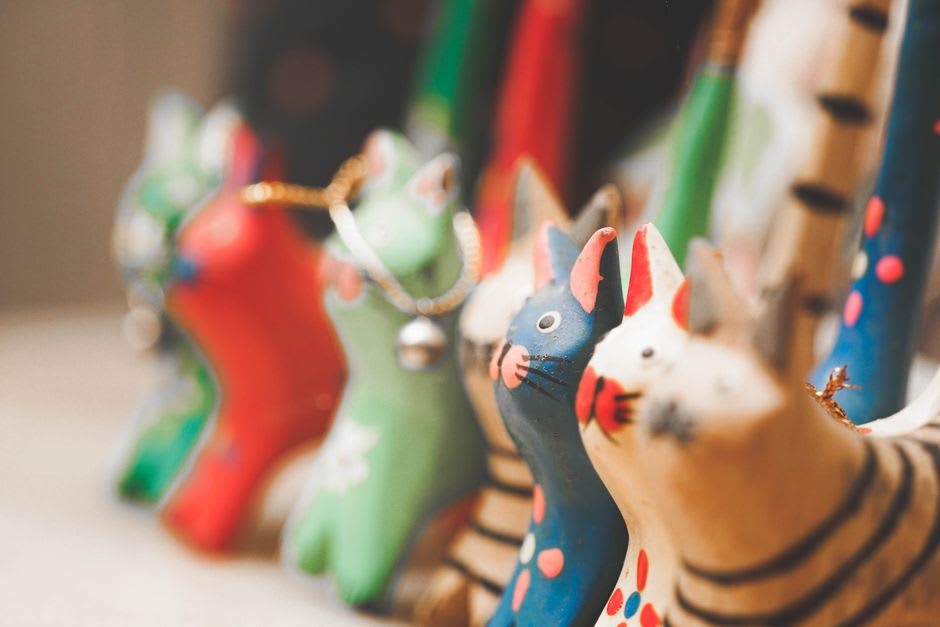
The toys are less serious as objects but more immediate as pleasure: small painted animals, carved vehicles in primary colors, birds on wires that flap when you move them. They are made for children and designed accordingly — thick enough to survive handling, simple enough to hold a child’s interest, jointed and connected in ways that produce motion. They reminded me of toys I have seen in Provençal markets, the santons tradition of small carved figures, though the aesthetic is entirely different.

Watching the Work
The carver in the third workshop worked without appearing to be performing for me, which I appreciated. He was shaping the eye socket of the jaguar mask with a series of small cuts, each deliberate, removing chips of pale fresh wood that fell to the floor around his feet. The fresh wood was visibly damp at the cut surfaces. I asked him how long it would take to finish the mask. He said three or four days for the carving, then drying, then painting.
I asked how many masks he made in a year. He thought about it. Thirty, maybe forty. Some were commissioned; some he sold at the Comala market on weekends; some were ordered by buyers in Colima City. He had made masks since he was a teenager — his father had taught him, his father’s father had taught his father. The tradition in the village is familial in this way: not an institution but a transmission, one generation to the next, with the result that each family has its own slightly different approach.
The jaguar mask he was working on would eventually be painted in the traditional black and yellow with red accents. He would fire the pigments to seal them. It would sell for a price that seemed modest to me, expensive perhaps to someone on a local income, and worth it by any reckoning of the labor involved.
I bought a small painted toucan on a perch and a bird-on-a-wire mechanism in blue and green. I have no wall space for them. I wrapped them in my spare shirt and put them in my bag and have not regretted this.
Getting There and Combining with Comala
Cofradía de Suchitlán is fifteen minutes from Comala by car, up the road into the foothills — watch for the turn sign on your left as the road climbs. Without a car, it is a difficult visit; the road is not served by regular transport. The combination of Comala for lunch and Cofradía for the afternoon is a reasonable day: Comala’s plaza in the morning, the ponche at midday, the workshop visit in the afternoon when the carvers are at work. Comala itself is twenty minutes from Colima City.