Parras de la Fuente
"I bought six bottles and had them wrapped carefully for the bus back to Saltillo. I had not expected that."
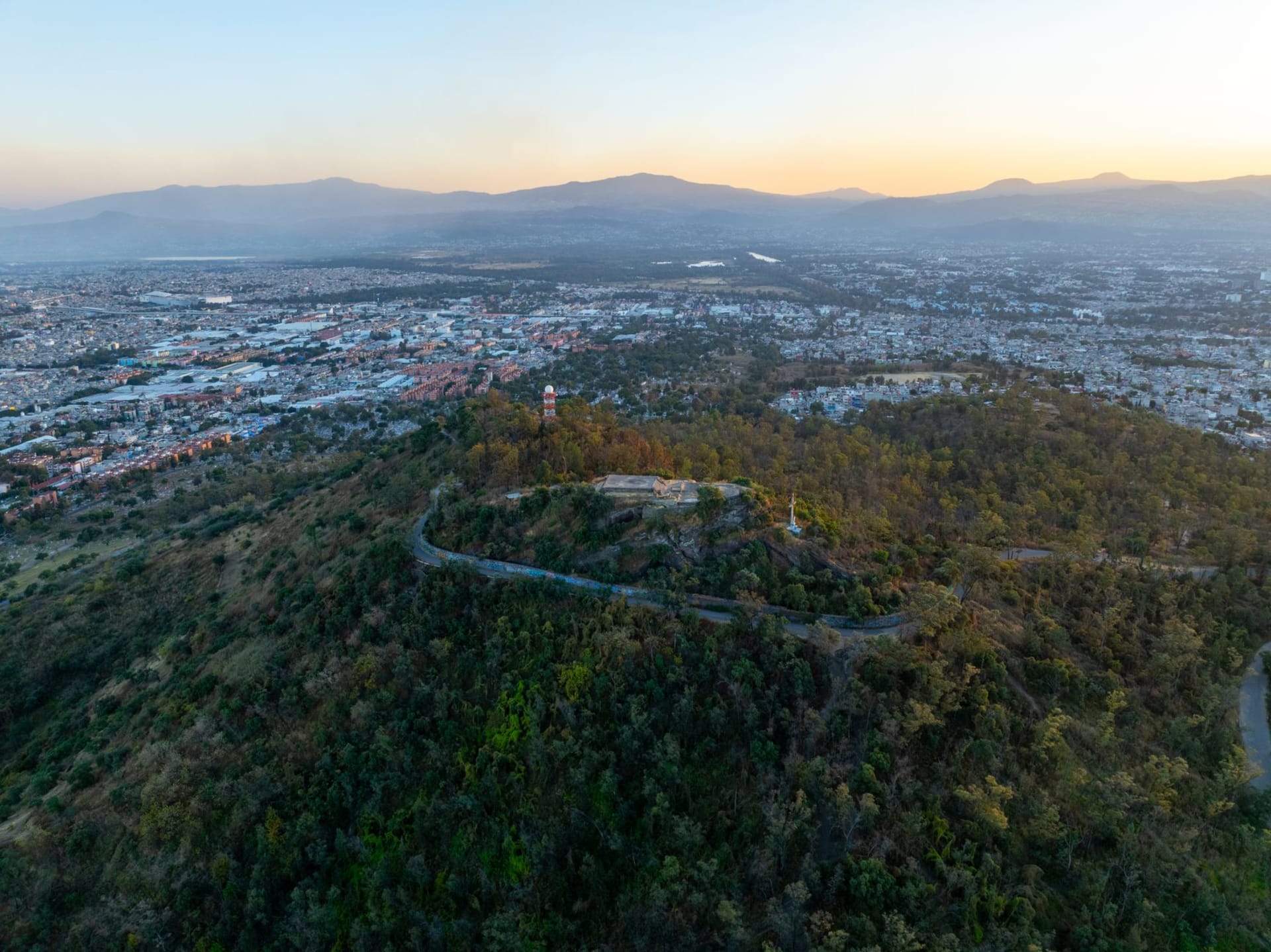
The approach to Parras does what good arrivals always do: it makes you doubt, and then it pays off.
Driving from Saltillo through the Chihuahuan Desert takes about two and a half hours on a federal highway that is monotonous in the precise way that great deserts are monotonous — which is to say, not unpleasant if you are paying attention, but without interruption. Flat scrubland. Isolated ranches. The occasional truck stop. The sky at full width with nothing to interrupt it. I had a feeling for about the last hour that I might have miscalculated — that the wine region I had read about was a fantasy, or at minimum an exaggeration, and that what waited at the end of the road was simply a small hot town in a flat desert.
Then the road drops into a valley. The scrubland stops. There are trees — real trees, not cactus, not scrub — and then rows of vines in the afternoon light, and then the first colonial facades of a town with a fountain in the central plaza and bougainvillea running up every wall. Parras appears like an oasis, because it is, structurally and literally, exactly that: an underground spring system in the Chihuahuan Desert, flowing since before the Spanish arrived, around which a town and its vineyards have organized themselves for four hundred years.
Casa Madero and the Oldest Vines
Casa Madero was founded in 1597 as the Hacienda de San Lorenzo, which makes it the oldest winery in the Americas by a margin long enough that the runners-up don’t feel competitive. The Spanish planted vines here because the spring water and the south-facing valley slopes and the altitude — around 1,500 meters — produced growing conditions that weren’t available on the coast, and because wine was liturgically and culturally essential to colonial life in a way that meant every serious settlement eventually needed its own production.
The bodega tour takes about an hour and includes the underground aging cellar, which is the temperature of a good cave — around 14 degrees Celsius regardless of the outside heat — and smells of damp stone and oak and the particular organic sweetness of wine in long slow movement. There are stainless steel fermentation tanks from the last renovation and, alongside them, enormous wooden vats from the 1800s still in active use. The guide explained that the wooden vats give certain wines a character that the stainless doesn’t replicate; I believe him, because the wine I tasted from the wooden tank production was different in a way I could taste but not quite articulate.
The wine itself was the real surprise. I had come prepared to appreciate novelty — wine in the Coahuila desert, four hundred years old, interesting as an artifact. I was not prepared to actually enjoy it. The Cabernet Sauvignon was structured and not overripe, which is harder to achieve in a hot-climate region than it sounds. The wine labeled Prieto — made from an old variety called Prieto or occasionally referred to in the literature as a Zinfandel relative brought over in the colonial period — was more interesting still: darker, earthier, with a faint rusticity that felt honest rather than flawed. I drank two glasses in the cellar tasting room. I went back the next day for more.
The Old Vines and the Man Who Kept Them
Casa Madero has a block of old vine Muscat that dates to the colonial planting — the age is documented, if not to the exact year, then to the general period, which is enough. The vines are gnarled and thick-trunked and low to the ground in the way that very old vines are: not ornamental in any conventional sense, not photogenic in the way of a well-maintained French vineyard, but possessing a physical density that communicates time in the same way that a two-hundred-year-old oak communicates it. You are looking at something that has been continuously alive and producing since before the French Revolution. I am French. This is not a comparison I make lightly.
The man tending the block on the afternoon I visited had worked those vines for forty years. His father had worked them before him. He was not interested in talking to me at length — he had things to do — but he answered my questions through the guide with a directness I found reassuring. The vines get what they need and nothing extra. They know what they’re doing. He checked the foliage, adjusted a stake, and moved on.
The Town and the Oasis
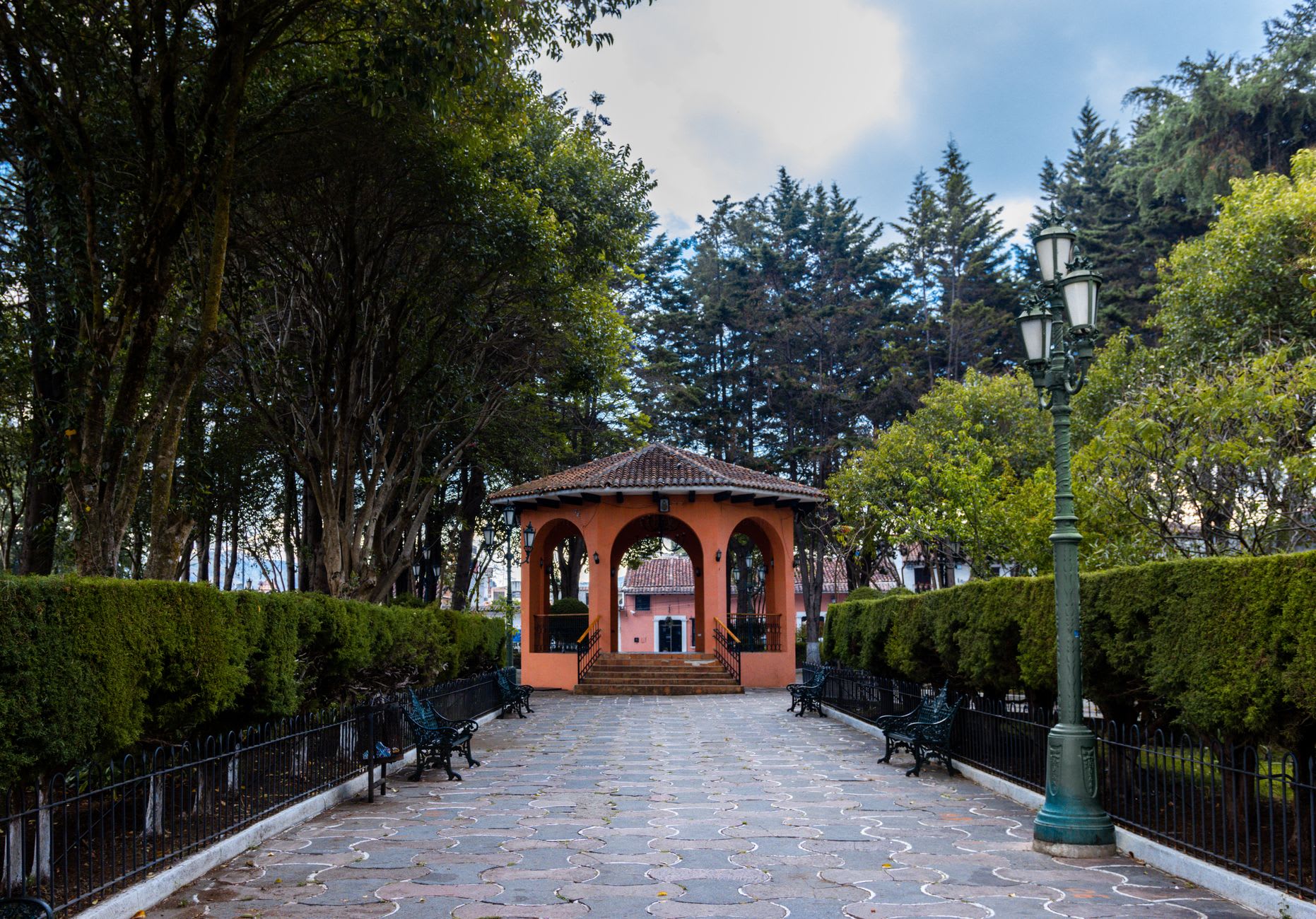
Parras itself has about 45,000 people and operates at the pace of a town that has been in the same place for four centuries and is not surprised by this. The streets around the central plaza are arcaded in the colonial style, which provides shade in a way that the town clearly arranged itself around long before air conditioning was an option. The Templo de Santo Madero is a modest colonial church on the main square — not architecturally spectacular but genuine, the way churches in towns that have had them for four hundred years tend to be.
The natural spring that made everything possible — the manantial — still flows. It surfaces in a small park on the edge of town, channeled now into a visible stream that feeds into the irrigation system for the vineyards and groves. The water is clear and cold in a way that feels incongruous with the surrounding desert, which is the point. The Spanish who chose this location in 1597 understood what a reliable water source in the Chihuahuan Desert was worth.
The pecan groves on the edge of town are a secondary surprise. Coahuila is one of Mexico’s primary pecan-producing regions, and the old groves around Parras are enormous — trees with trunks you can’t put your arms around, canopies that shade a significant area of ground below them. I walked through the groves on my first afternoon, in the long golden light of late afternoon when the shadows ran the length of the rows. Pecans were already falling in August; I picked up several off the ground, cracked them with a rock against a stone wall, and ate them warm. A man selling bags of them from a folding table near the grove entrance looked at me doing this and appeared entirely unsurprised.
The Vendimia
I happened to be in Parras for the Vendimia — the annual harvest festival in August, which the town has been running since 1966, though the harvest itself has been happening for 430 years before that without the festival infrastructure. The population roughly doubles for the long weekend: the main plaza fills with regional food vendors and wine stalls, there is a blessing of the grapes ceremony that has the comfortable authority of a ritual that actually means something to the people performing it, and the hotels and private rooms are full months in advance.
Lia, who was with me that year, got into a long conversation with a winemaker’s daughter near one of the Casa Madero tasting tables. The winemaker’s daughter was about twenty-five, working on a natural wine project in a rented plot outside the main bodega, and had strong opinions about skin-contact whites and whole-cluster fermentation that she was articulating in rapid and technically specific Spanish. Lia’s wine vocabulary in Spanish is considerably better than mine — she has been pursuing this education with a focus that impresses and occasionally intimidates me — so I mostly stood nearby and listened to a conversation I was following at about 60% comprehension, which was enough to understand that she was not being agreed with on every point and was not backing down.
We bought six bottles before we left. I had them wrapped in newspaper by the Casa Madero shop, then wrapped again in a sweater in my bag, for the bus back to Saltillo. They survived intact. I drank the last one about four months later, on a different evening, in a different city, and it was still good.
There is nowhere in France quite like this, and I want to be precise about why. It is not like Bordeaux, or Burgundy, or the Rhône. It is not even like Languedoc or the Roussillon, the regions of France that have the closest climate analog. The combination of Chihuahuan Desert landscape, colonial Mexican architecture, and 400-year-old continuous viticulture is genuinely its own thing. What it has in common with the wine regions I know from childhood is the feeling of a place that has organized itself around a crop for so long that the relationship has become identity. That is not a French monopoly. It is, apparently, also a Coahuila thing.
Getting There and Practical Notes
Getting there: Parras is about 2.5 hours from Saltillo by car or direct bus. There are several daily bus departures from Saltillo’s central terminal. The town has no train service and the nearest major airport is in Torreón (about 1.5 hours away) or Saltillo.
Where to stay: A handful of small hotels in the centro and one or two boutique options in restored colonial houses. Book months ahead if visiting during the Vendimia (August), when the town fills completely.
Touring Casa Madero: Tours run daily and include the cellars, the old vine blocks, and a tasting. Book ahead during harvest season. The tasting room is open year-round; the full bodega tour is the better experience.
When to go: The Vendimia in August is the event, but August is also the hottest month and the most crowded. October, November, March, and April offer a quieter visit when the heat is manageable and the vineyards are either resting or beginning to bud. Any time of year is valid for the wine.