Boquillas del Carmen
"I paid one dollar to cross the Rio Grande on a wooden rowboat, and on the other side a woman was selling wire roadrunners she had made herself — the whole transaction felt like it existed outside of any legal or economic system I had ever encountered."
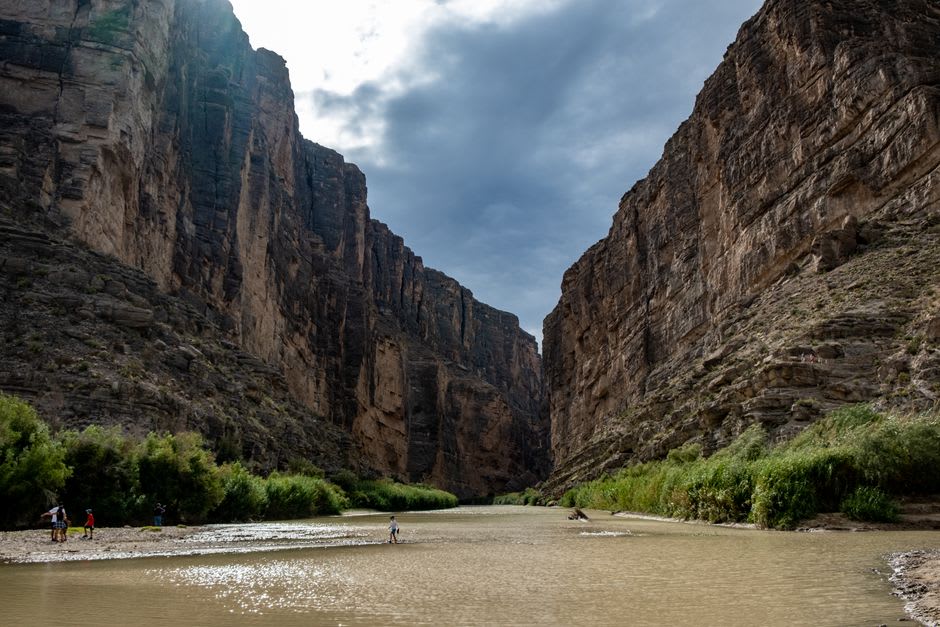
The road from Múzquiz turns to dirt well before you expect it to, and stays that way for long enough that you start doing the math on your fuel gauge. I arrived in Boquillas del Carmen late morning, the canyon walls across the river still catching full sun, and parked in the loose dust near what I eventually understood was the village center — a small plaza, a few houses, a dog sleeping with institutional commitment. Someone pointed me toward the river. That was the logical first step, apparently. On the other bank was Texas.
The Ninety-Second Crossing
The rowboat is run by a villager — on the day I was there, a man who gave his name as José — who charges three dollars round trip and has the composure of someone who has made this crossing several thousand times. The Rio Grande at Boquillas is narrow enough that you could throw a stone across it, and the ride takes about two minutes. A Park Service ranger on the American bank checks your passport and waves you through.
What nobody mentions is the sculpture situation. Villagers leave handmade wire animals, painted rocks, and embroidered pieces on rocks along the Big Bend trail, each item tagged with a name and a price, a jar set out for payment. No vendor is present. You take what you want, leave the money, walk on. I spent fifteen minutes in front of someone’s arrangement of wire roadrunners and scorpions, trying to work out if this was the most trusting commerce I had ever witnessed or simply the most practical. I bought a roadrunner. Left exact change. Felt obscurely honored to have been trusted.
Rosa’s, and What the Afternoon Brings
The village has one restaurant — everyone calls it Rosa’s, though the sign outside just reads “Restaurant” — where the menu shifts with what is available and the goat birria is the thing to order if it appears. I sat at a plastic table under a corrugated roof and ate a bowl of it with handmade tortillas while a ceiling fan made its best effort against the desert heat. Eighty pesos. A Modelo was thirty more.
There is also a bar — the only other commercial establishment besides a small shop selling basics — and in the late afternoon, when the canyon shadow has moved in and the heat becomes survivable, the village comes to something resembling life. People sit outside. Someone has a radio on. The isolation that pressed down on me when I arrived begins to feel, not comfortable exactly, but comprehensible. Boquillas del Carmen has figured out precisely what it needs and shed everything else. That is either poverty or wisdom depending on what you bring to the question, and the village does not appear particularly interested in helping you decide.
After the Light Changes
By two-thirty, the Sierra del Carmen has taken the direct sun. The canyon walls turn from pale gold to gray in a way that happens slowly and then all at once, and the temperature drops enough that I put my shirt back on. There is nothing to do at this point except sit with it.
I had been thinking about the border crossing all day — about how the rowboat and the honor-system sculptures exist inside an official international port of entry, there is a stamp in my passport to prove it, and yet feel like something from a different century’s idea of how nations might meet. Boquillas del Carmen does not resolve that question. It just makes the question feel more interesting than threatening, which is not a small thing.
Getting There
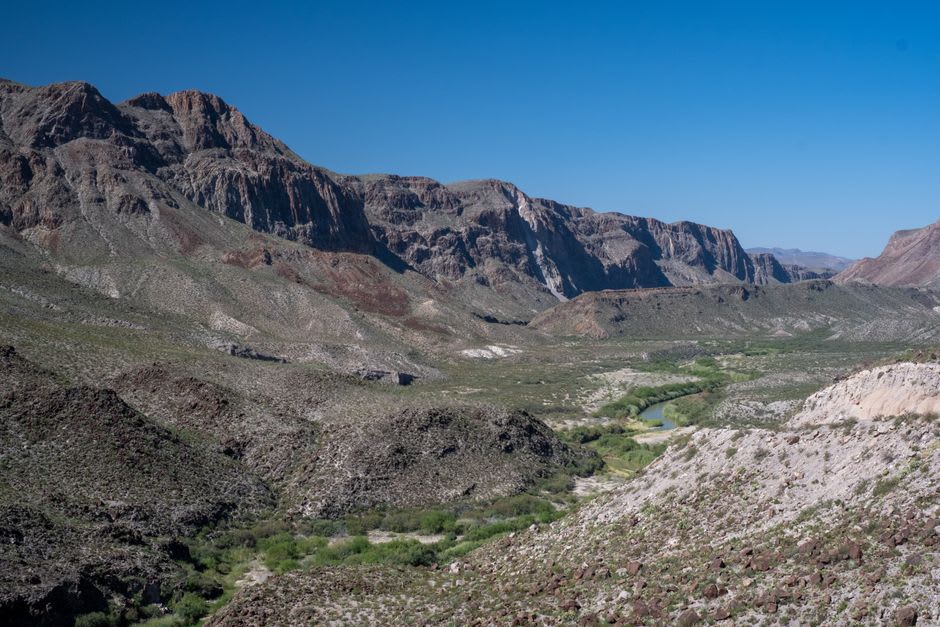
The nearest substantial Mexican town is Múzquiz, roughly 200 kilometers to the east on a road that turns to washboard dirt for its final stretch — plan four hours and a full tank. Most international visitors approach from the US side through Big Bend National Park, a three-hour drive from Alpine, Texas. The border crossing is open Thursday through Monday. Spring and early autumn are the bearable seasons; the Chihuahuan Desert in July is not a negotiation.