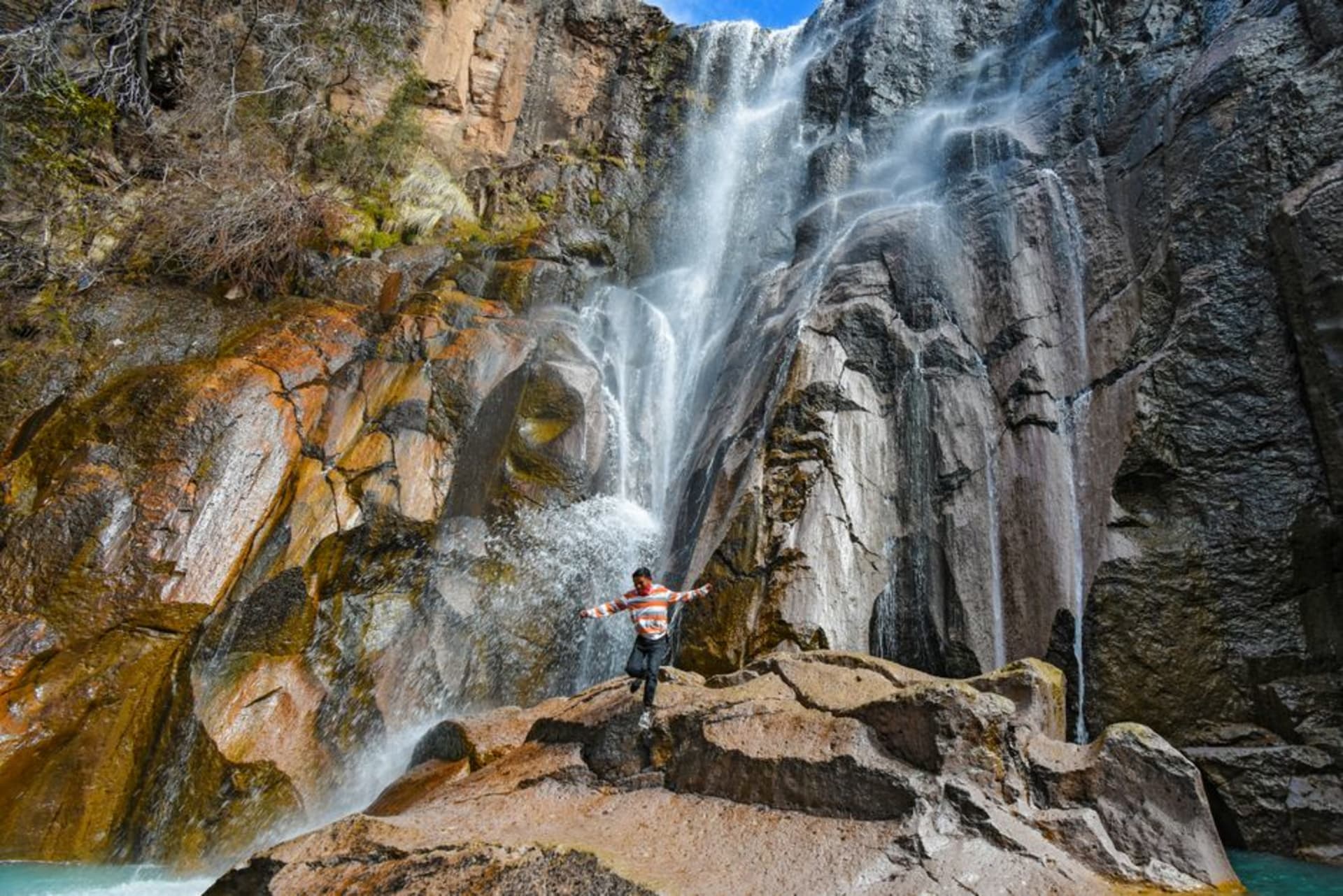
Cascada de Basaseachi
"Standing on the rim watching 246 metres of water dissolve into white noise far below, I understood for the first time why the Rarámuri consider this land alive."
I heard Basaseachi before I saw it. At the trailhead just after seven in the morning, the air sharp with pine resin and altitude, there was a low continuous thunder coming from somewhere below the canyon rim — not dramatic, just steady, like the land itself was exhaling. The lookout is a hundred metres from the parking area, and when you reach it, the fall drops away for 246 metres, the white thread of water dissolving into mist long before it reaches the pool. I stood there a long time doing nothing useful.
The Trail That Humbles You
The hike to Basaseachi’s base pool is listed in park materials as “challenging,” which is the kind of polite understatement that gets people in trouble. It is roughly two kilometres of loose scree and steep switchbacks, dropping around 400 metres in elevation. I made it down in about ninety minutes, moving carefully and stopping to examine the canyon walls with a frequency that had nothing to do with the canyon walls. The climb back up took considerably longer and involved a renegotiation with my knees that I would rather not revisit.
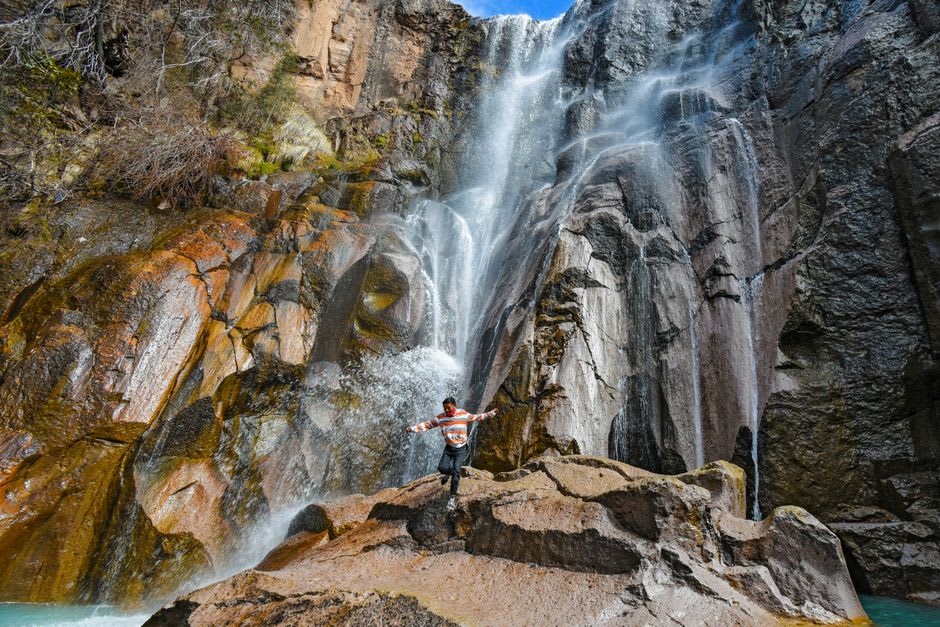
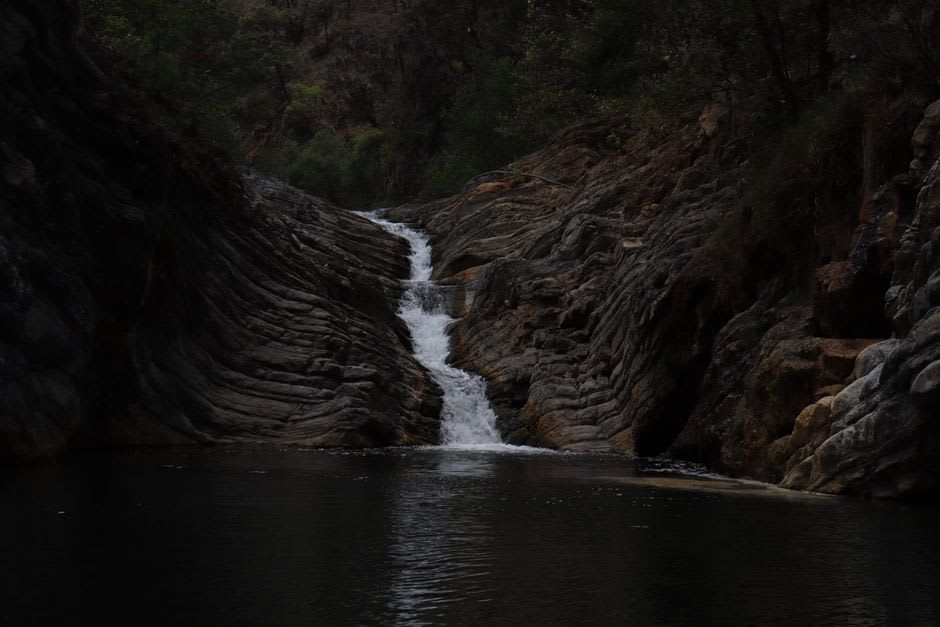
The reward is real. The pool at the base is cold enough to remove all ambiguity about whether you are awake, ringed by basalt and fern, the air tasting of something between stone and ice. From here the fall sounds entirely different than it does from the rim — less white noise, more something enormous and indifferent to your presence. In wet season the volume doubles and the mist makes it difficult to get within fifty metres without being soaked through. I got within forty.
Rarámuri Territory
The Sierra Tarahumara — or Sierra Rarámuri, as the people who have lived here for centuries prefer — is not a backdrop. Basaseachi sits within a national park, but the surrounding land belongs to a much older geography, one where the Rarámuri have run extraordinary distances for millennia and where the idea of land as something separable from its people does not quite translate. Near the trailhead, Rarámuri women sell woven baskets and pine-needle crafts; the correct response is to buy something if it appeals to you and not to photograph anyone without asking first.
Basaseachi pueblo, a few kilometres from the park entrance, has a small tiendita where I bought instant coffee and a bag of chicharrones at eight in the morning and was treated with the particular warmth reserved for people who arrive hungry and grateful. The village is quiet in a way that feels earned rather than sleepy.
Cold Mornings and Good Timing
Basaseachi sits at roughly 1,800 metres. Cold mornings are guaranteed year-round; from October through March a proper jacket is not optional. I was there in early November and needed one until about ten, at which point the sun found the canyon walls and everything shifted into something more forgiving. Bring considerably more water than you think you need for the descent — there is nothing for sale once you are on the trail, and the park entrance fee of around fifty pesos covers only the gate.
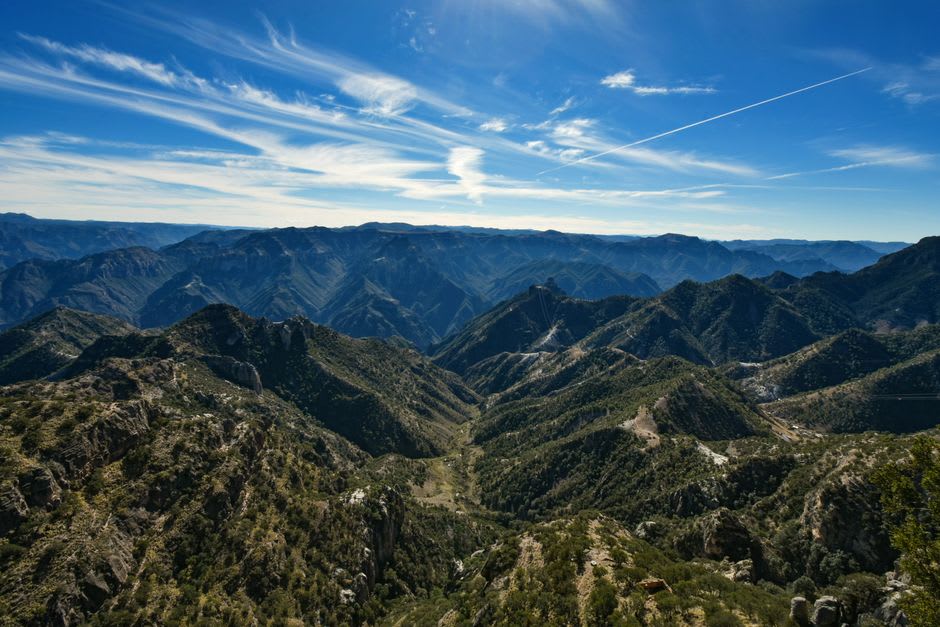
Before committing to the full hike, take the short detour to Mirador Ventana: it gives a completely different angle on the fall and the full scale of Candameña Canyon below, and costs you twenty minutes at most. Plan three to four hours total if you are doing the round trip to the pool.
Getting There
Basaseachi is about four hours by car from Chihuahua city, southwest on Highway 16 through Cuauhtémoc and into the Sierra. There is no reliable bus service to the park itself; combis run between Cuauhtémoc and Basaseachi pueblo on market days only. Rainy season (July–September) brings the fall to full volume but makes the scree trail genuinely treacherous. April through June and October through November offer the most stable conditions.