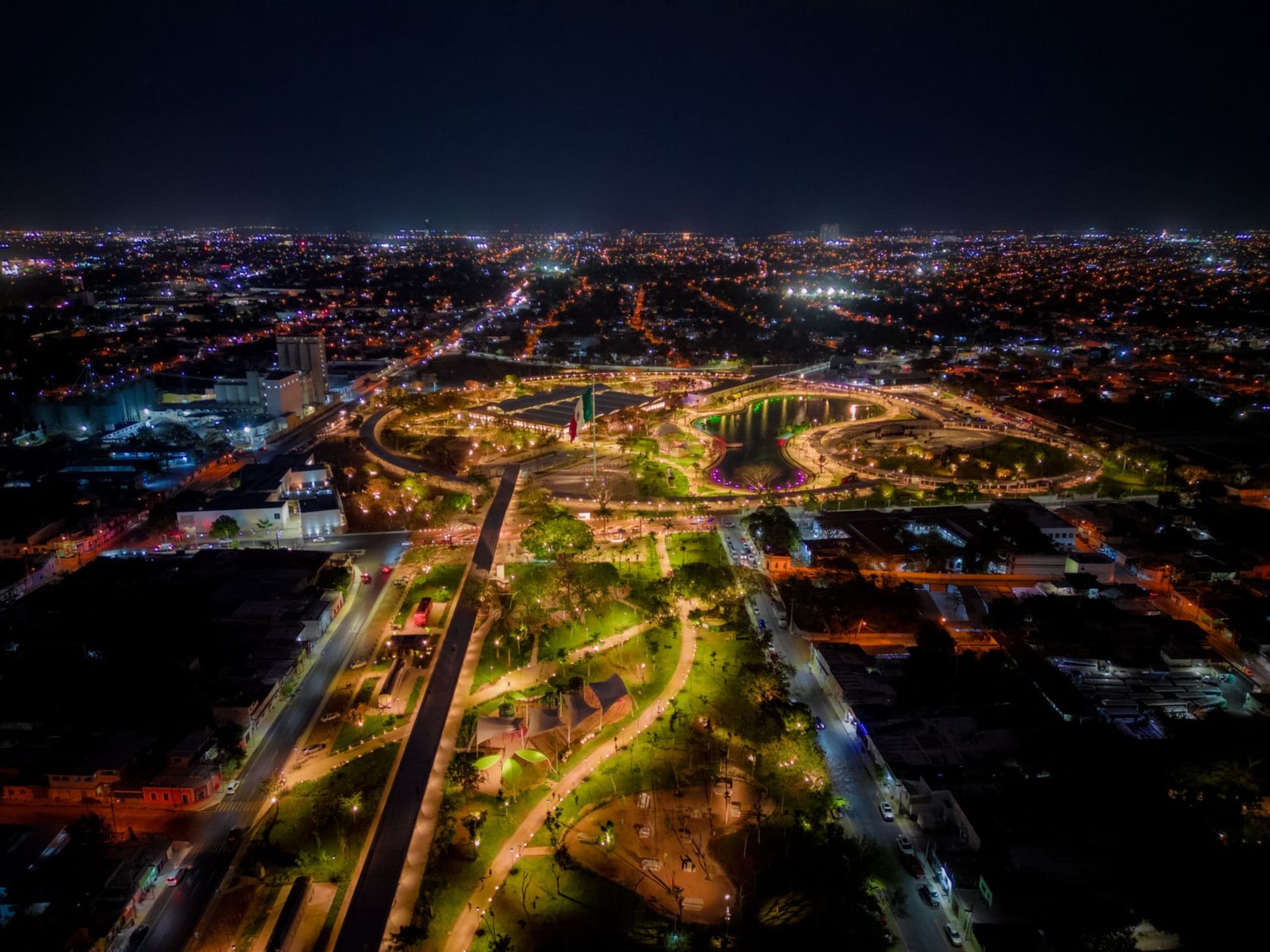
Tapachula
"The Soconusco grows some of the world's best cacao and coffee, and the Maya knew this two thousand years before anyone else did. The café de olla tasted like a proof of that."
Most people treat Tapachula as a transit point — the last Mexican city before the Guatemalan border, or the first one after it, depending on direction. The buses from Guatemala City come in, the buses to Oaxaca go out, and the travelers in between check into the hotels near the terminal and don’t look too carefully at what they’re passing through. This is understandable and also a mistake.
The Soconusco is not a generic tropical flatland. It’s a specific geographic zone — the coastal plain between the Sierra Madre de Chiapas and the Pacific, bounded by Guatemala to the east — with a climate and a soil composition that have made it one of the best agricultural regions in Central America for more than two thousand years. The pre-Columbian Maya knew this. The cacao that formed the basis of Maya ritual and trade economies grew here, and there are early Maya sites in the Soconusco that predate Palenque and Tikal by centuries. Later the Spanish knew it too. And then, in the nineteenth century, the German coffee plantation owners arrived.
The German Coffee Trail
The surnames on the street signs and the business fronts in Tapachula are sometimes German. There’s a Finca Hamburgo and a Finca Irlanda in the hills above the city. German immigrants — many of them fleeing the failed revolutions of 1848, others drawn by the agricultural opportunities the Mexican government was actively advertising — came to the Soconusco in large numbers between 1860 and 1910, established coffee plantations in the Sierra Madre foothills, and stayed.
The Casa Museo Soconusco preserves this history: the plantation ledgers, the furniture, the photographs of men in nineteenth-century European clothes standing in front of tropical landscapes that are completely at odds with their clothing. The museum is small and somewhat modest in its presentation, but the story it tells is genuinely strange — a community of Central European immigrants becoming a defining feature of a region of southern Mexico, producing coffee that eventually won international competitions, and leaving behind a hybridized cultural layer that you still encounter in family names and in the mild blonde-haired exception in some of the faces you see in the market.
The coffee itself is still grown in the hills above town, and you can buy it at the market or at the small roasters and cafés that have opened in the center. I had a café de olla — the traditional cinnamon-spiced preparation in a clay pot — from a comedor near the market, made from beans grown in the Sierra Madre foothills visible from the table where I was sitting. The cup cost twelve pesos. It was exceptional.

The Market and the Border
The Mercado San Juan in Tapachula is where the border logic becomes visible. The stalls sell things from both sides of it without much distinction: Guatemalan woven textiles in colors that don’t appear in the Mexican markets farther north; tropical produce that crosses the border on the back of informal commerce that has been operating longer than the border itself has existed; a density of indigenous languages that you hear rather than understand, mixing at the food stalls near the back.
I sat at a comedor toward the rear of the market and ordered pepita con tasajo — a dish I had eaten versions of elsewhere in Chiapas, but the version here was different, the pepita sauce richer and darker, the tasajo a thinly sliced dried beef that came from the regional tradition rather than the Oaxacan one, the whole thing served with fresh tortillas thick enough to be structural rather than incidental. The woman who brought it came back with a small dish of salsa that she placed without comment, which is the way the best condiments arrive.
The market also has a section where you can buy cacao — raw cacao beans from the Soconusco itself, the same variety that the Maya were trading two thousand years ago. I bought a small bag. I’m not sure what I was going to do with raw cacao beans. I bought them because they were there and because the origin was the point.
Arriving Here
Tapachula doesn’t ask for you to love it. It’s a working city — hot, dense, functional in the specific way of Mexican cities that haven’t been organized for the purpose of tourism. The center has its Parque Hidalgo and its arcades and a cathedral, and these are pleasant without being spectacular. The heat in the middle of the day is absolute.
What it has that is irreplaceable is the accumulation of its particular history — pre-Columbian cacao, German coffee, Guatemalan border commerce, Soconusco agricultural tradition — in a single place that hasn’t been curated or simplified for outside consumption. The feeling of being somewhere that has its own reasons for being, entirely unrelated to your presence in it, is rarer than it should be.
I stayed two nights and could have stayed more. The second morning I found a breakfast comedor where I ate eggs scrambled with chipilín, the herb native to southern Chiapas, that I had not encountered in quite this form before. I ate it with the coffee from the hills above town and watched the market vendors setting up across the street, and did not feel in the slightest like I was in transit.

Getting There
ADO and OCC buses connect Tapachula to Tuxtla Gutiérrez, San Cristóbal de las Casas, Oaxaca, and Mexico City. The Guatemala border crossing at Talismán (for Quetzaltenango) and Ciudad Hidalgo/Ciudad Tecún Umán (for Guatemala City) are accessible by taxi or combi. The international airport connects to Mexico City and a few other domestic destinations. November through April is cooler and drier; the summer months are very hot and very wet.