Becal
"I ducked into a stranger's kitchen, then through a hatch in the floor, and suddenly I was underground watching an old woman braid something impossibly fine in near-darkness."
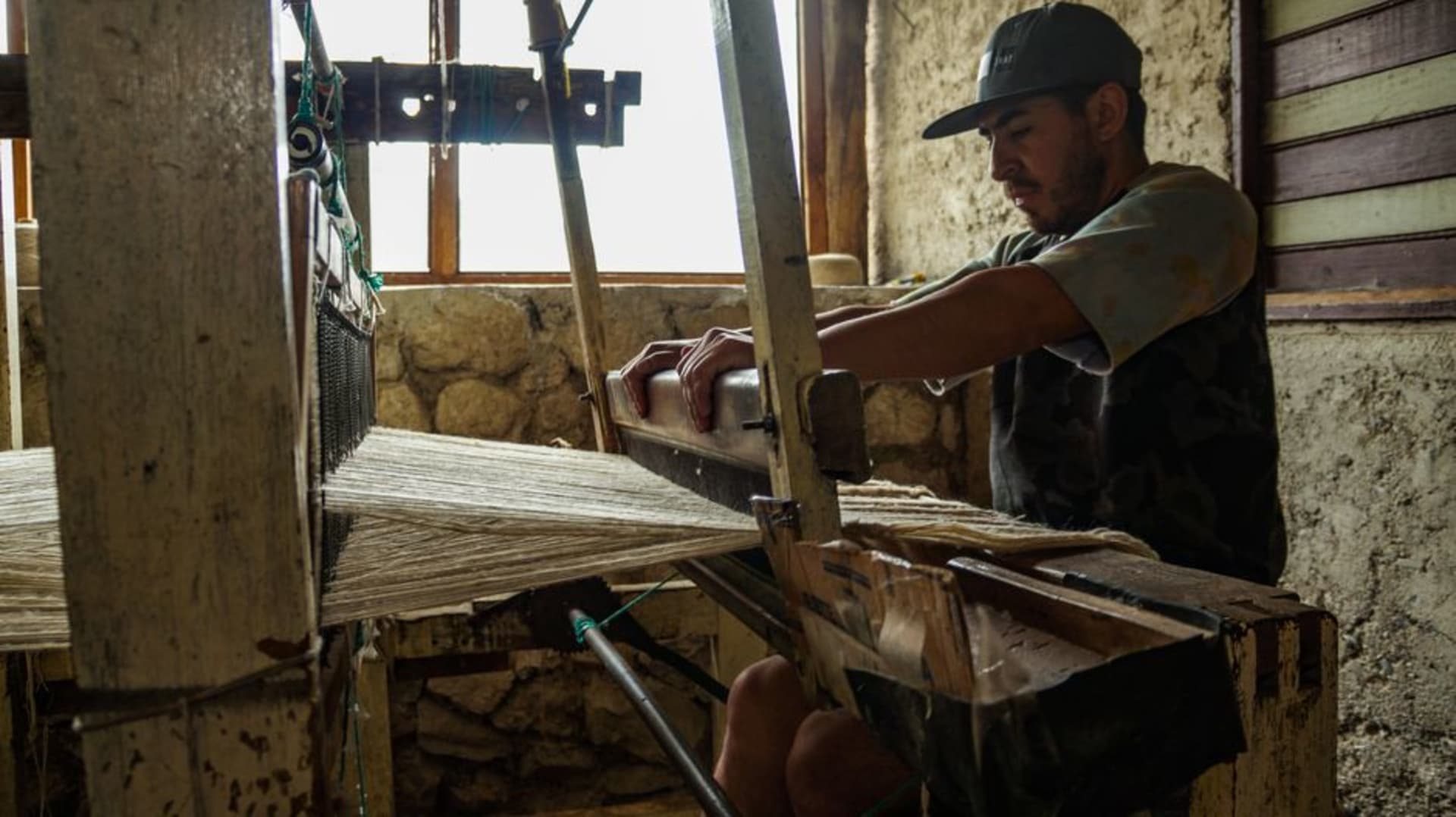
The first thing I noticed driving into Becal was the hats. Not real ones — enormous concrete replicas bolted to pedestals around the plaza, painted cream-white, half the height of a man. I had stopped because I needed water and because the name matched something I’d circled in a notebook months earlier. The second thing I noticed was that half the doorways along the main street had women sitting in the shade, fingers moving over something pale and barely there. I was ninety minutes into Campeche state and already I had miscalculated how long I would stay.
The Caves Below Every Kitchen
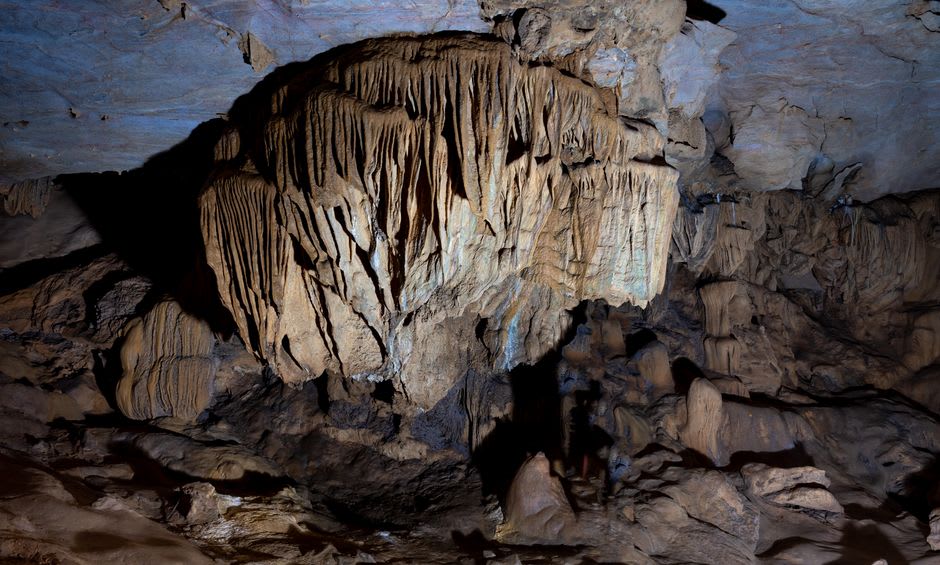
The reason Becal produces the best palm-fiber hats in Mexico — jipi hats, technically, though everyone calls them Panama hats and everyone is wrong — is geological. The limestone shelf under the town holds natural humidity in its caves, cooler by ten degrees than the street above, wet enough to keep the shredded Sabal palm from cracking as it’s worked. Almost every family has dug their own cave beneath the kitchen floor. The hatch is usually near the stove.
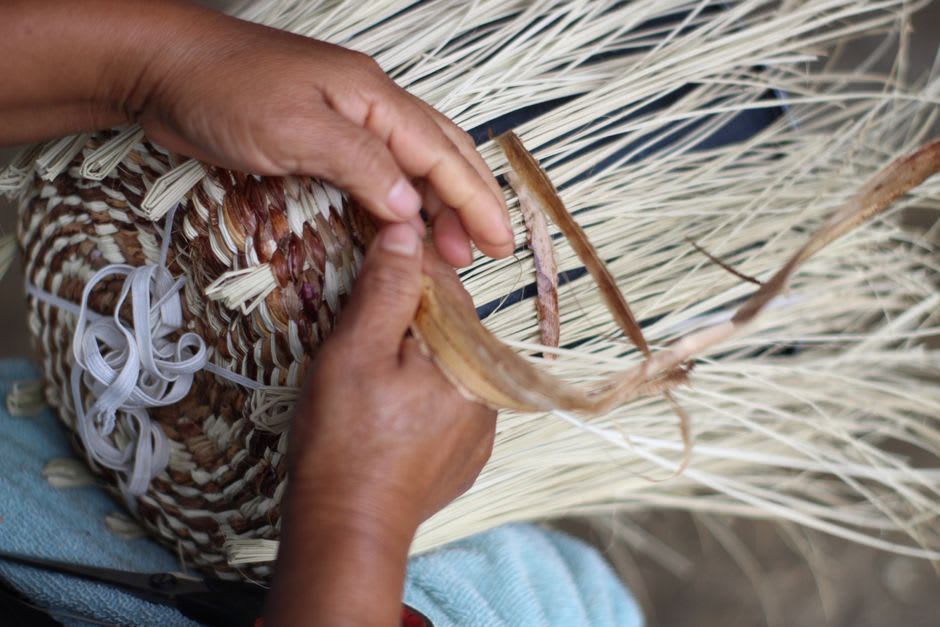
A woman named Doña Carmen took me down through hers — four concrete steps into a low oval chamber, maybe three meters across, lit by a single bare bulb. She had been working since five that morning. Her hands moved without looking at them, pulling strands of bleached fiber into what would eventually be a hat brim: weeks of work, she told me, for a fine weave. The cheapest hats in the plaza shops take a day. The ones she makes take a month. You can hear the difference when you put one on.
Jipi, Not Panama
The plaza shops reward careful attention. The front tables hold machine-stitched imitations — recognizable by their rigidity and the uniform repetition of the weave. A genuine handmade jipi feels different immediately: lighter, more flexible, with a slight irregularity that is not a flaw but a fingerprint. The man who sold me mine, from a shop on the east side of the plaza, unrolled it from a cardboard tube and shook it out. A good jipi can be rolled without damage; a bad one cannot. That is the only test you need.
I ate panuchos at a counter near the market entrance: small fried tortillas stuffed with refried black beans, topped with shredded turkey, pickled red onion, and a habanero that arrived without warning. The turkey had been cooked long and pulled apart by hand. It was nine in the morning. I ate two, then a third, and accepted that I was staying for lunch.
The Right Door
The cooperative on the main street is legitimate — weavers are present, prices are posted, nothing is theater. But the more useful visits happen two or three blocks east of the plaza, through doors that advertise nothing. I was invited in by a family with three generations weaving in the same house: grandmother in the cave, daughter finishing hats at the kitchen table, granddaughter sorting fiber on the porch. They weren’t selling anything. They just wanted to show me.
If you’re buying, ask how many days it took. Any seller will tell you honestly. Under two days means rough quality. Five to fifteen is solid. A month or more, and you’re holding something that will outlast most things you own.
Getting There
Becal sits on highway 180, about 80 kilometers northwest of Campeche city — roughly an hour by car. Second-class buses on the Campeche-Mérida route stop at the plaza, though not all of them do. The town takes under an hour to walk end to end. Best season is November through February, when the heat is manageable. There is no accommodation in Becal; most people come as a day trip from Campeche or a pause en route to Mérida.