Bahía de los Ángeles
"The whale shark came up alongside our kayak so slowly and so silently that I just sat there with my paddle across my knees, not wanting to be the one to end it."
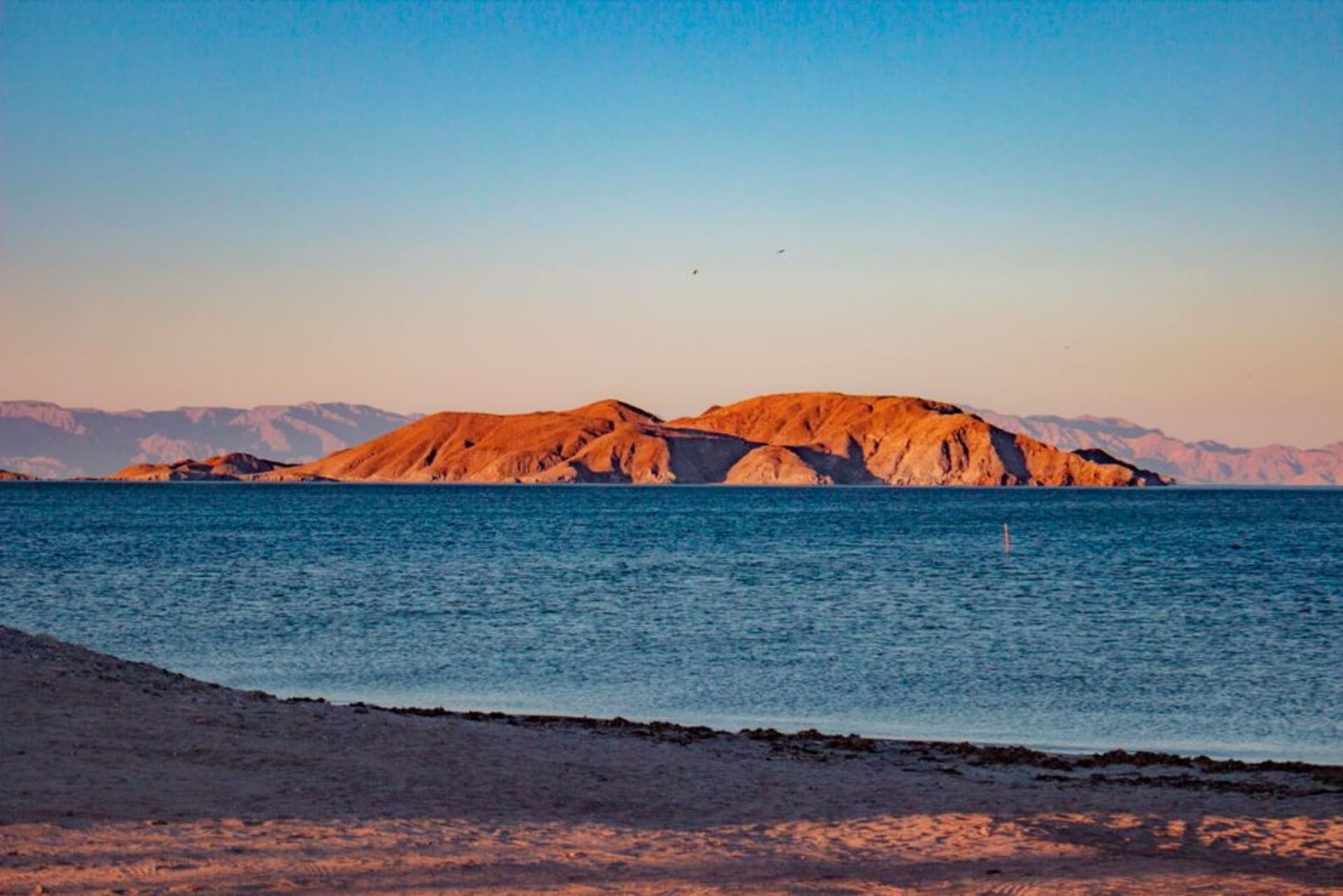
The junction sign on Highway 1 reads “Bahía de los Ángeles — 68 km” and offers no further commentary. What those 68 kilometres mean is this: the last reliable cell signal you will have until you leave. A road that crosses a volcanic peninsula so stripped and specific it feels like the land is making a point. I arrived on a Tuesday afternoon in October, windows down, and the bay appeared below me all at once — the kind of reveal that makes you brake for no mechanical reason, just to stretch it out. Turquoise water, copper hills, a dozen islands stacked toward the horizon like a sentence that keeps going.
A Particular Patience
The whale sharks gather in Bahía de los Ángeles roughly from June through November, working the warm, plankton-dense water of the upper Sea of Cortez with a patience that is genuinely hard to be near without adjusting your own pace. I went out with Guillermo, a fisherman who runs informal morning tours from the beach near the Díaz family pier, in a panga that smelled equally of bait and outboard engine. We found the first one within twenty minutes. That is the thing nobody fully conveys about this bay: the whale sharks are not elusive. They are simply here, enormous and unhurried, doing their slow enormous business, and your job is not to complicate that arrangement. We killed the engine and drifted. The shark passed perhaps two metres off the bow, its spotted grey flank moving with a steadiness I found genuinely humbling. My paddlemate did not say anything. Neither did I. There was no reason to.
The Casa Díaz Table
There are roughly six hundred people in Bahía de los Ángeles year-round, and the infrastructure reflects this without apology. The Díaz family runs the most established operation in town — a modest hotel, a boat-tour service, and a comedor where the fish was caught by people you can see from your seat. I ate a plate of grilled corvina with flour tortillas and a salsa that had been sitting in a jar on the counter long enough to have developed opinions. It was one of the better meals I had in Baja. The natural history museum two blocks up the main road is small, earnest, and worth a careful hour: good topographic maps of the Midriff archipelago, and exhibits on the vaquita marina, the critically endangered porpoise that lives in these waters and is the reason commercial fishing restrictions now exist here. Whether those restrictions are working is a question the locals answer with measured words and a pause that says more than the words do.
Towards the Archipelago
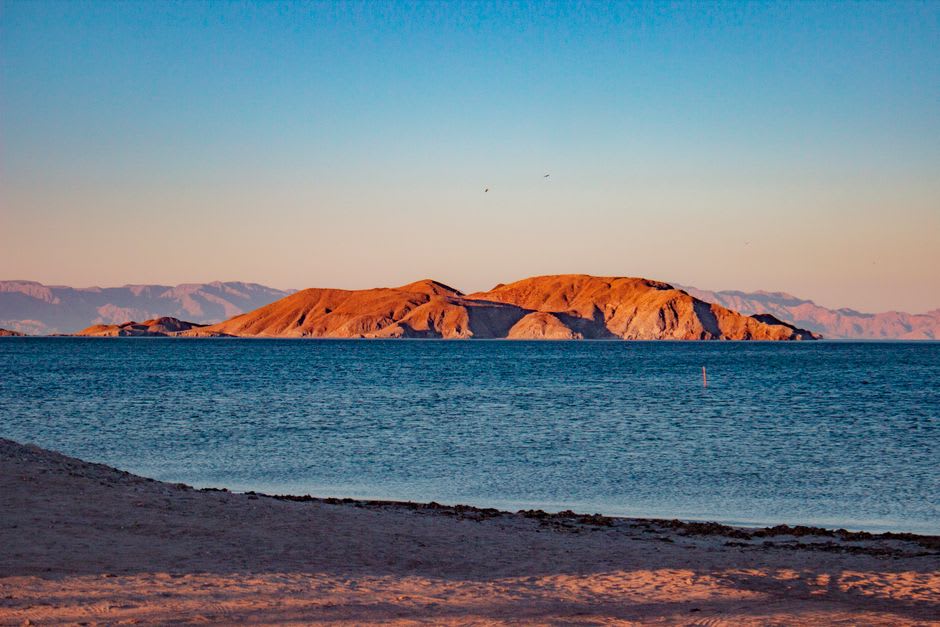
The Midriff islands sit just offshore — Isla Coronadito, Isla Smith, Isla Piojo, and behind them all the long dark mass of Isla Ángel de la Guarda running parallel to the coast like a parenthesis around everything. At sunset the basalt moves through a sequence of colours — terracotta, copper, something that is almost red — that I have not seen matched anywhere else on the peninsula. Kayaks are available for rent from a couple of spots in the village. The crossing to Coronadito takes roughly forty minutes in calm water. Do it in the morning. The afternoon winds arrive with enough conviction to make the return trip educational in ways you may not have planned for.
Getting There
The standard approach is from the north: drive Highway 1 south from Ensenada to the signed junction near Punta Prieta, roughly 490 kilometres from the border. From the junction, the paved road to the bay takes about an hour. No bus service reaches the village. October and November are the practical sweet spot — whale shark season still running, the worst summer heat gone, visitor numbers low. Bring cash; there are no ATMs in the village and the nearest bank is back on the highway.