Nineveh
"Nineveh was destroyed, rebuilt, destroyed again — by now the ruins feel less like a place than a philosophy of persistence."
The winged bulls at the Nergal Gate are enormous in the way that myths are enormous — beyond physical scale, occupying some space between fact and emblem. Each lamassu has five legs so it appears complete from both the front and the side, a human face wearing a tall crown, the wings of an eagle, and the body of a bull. The Assyrians positioned them at the city gates as apotropaic guardians in the seventh century BCE, when Nineveh under Ashurbanipal was the largest city in the world. They were deliberately, calculatedly superhuman: nothing that looked like that could be stopped. And yet Nineveh was destroyed in 612 BCE by a coalition of Babylonians and Medes, burned so thoroughly that later civilizations dismissed biblical accounts of it as legend. It took nineteenth-century archaeologists to prove the skeptics wrong.
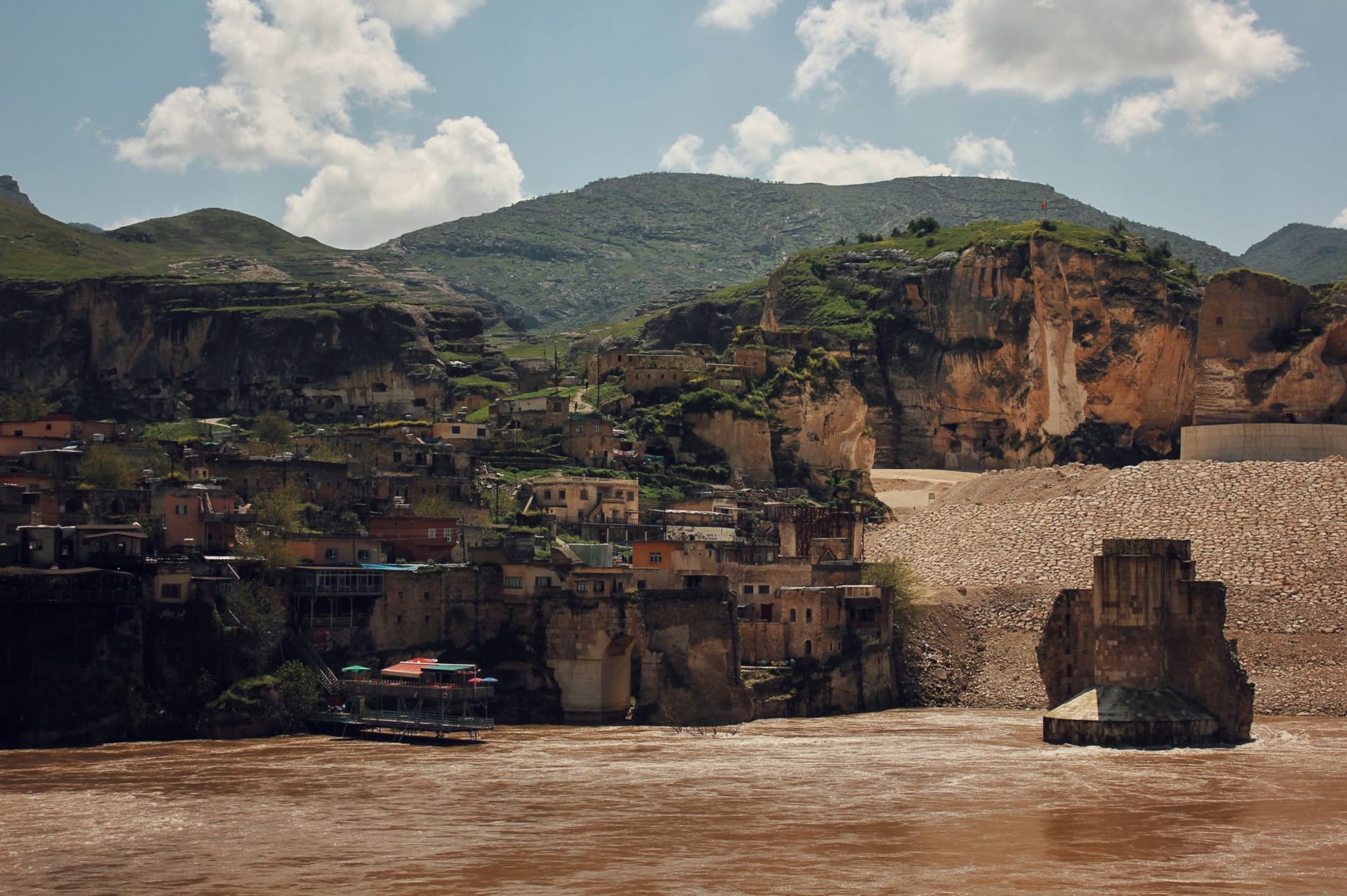
I arrived in Mosul in the early morning, crossing the Tigris on a rebuilt bridge — the original was destroyed in 2017 during the battle to retake the city from ISIS — and drove south to the Nineveh archaeological zone, which sits partially within and partially beneath the modern city. What ISIS did here between 2014 and 2017 is still comprehensible only in pieces. They destroyed the Mosul Museum’s collection, drilling holes through the lamassu and sledgehammering ancient stonework on camera. They blew up the Tomb of the Prophet Jonah. They burned texts. The damage is extensive and documented and surreal: the same deliberate iconoclasm, the same targeting of the irreplaceable, as the Mongols in Baghdad or the Romans at Carthage — just filmed this time and uploaded.

What remains is more than you’d expect. The outer walls of ancient Nineveh — twelve kilometers of earthen rampart — still define the landscape of eastern Mosul. Within them, the mound of Kuyunjik holds the palace complexes of Sennacherib and Ashurbanipal. The Lion Hunt reliefs that once lined Ashurbanipal’s palace halls — those extraordinary carvings of dying lions with broken spines and arrows through their throats, the most psychologically complex depictions of death in ancient art — are in the British Museum. But the palace itself stands. The rooms are identifiable. You can walk the same corridors.
The restoration team working the site when I visited — Iraqi archaeologists, some collaborating with international organizations — were focused on the Nergal Gate. The lamassu there had been damaged but survived. One of the archaeologists, a woman from Mosul who had stayed through the occupation, showed me photographs on her phone of what the site looked like in 2017: rubble, exposed foundations, broken faces. Then photographs from 2024: the same gate, the lamassu partially reconstructed, the stones cleaned. She scrolled between them with a matter-of-factness that felt harder to maintain than it appeared.

Mosul itself is rebuilding in a way that doesn’t look like any urban reconstruction I’ve seen elsewhere — more urgent, more layered, old souks reopening next to houses still bearing the marks of shrapnel, a restaurant serving excellent quzi directly beneath a minaret rebuilt by a Turkish contractor in a slightly different style than the original. The city smells of concrete dust and cooking and the river, and it is more hospitable than its recent history has any right to allow.
When to go: October through April. Mosul sits in northern Iraq where temperatures are more moderate than the south — winters can be genuinely cold, with occasional frost in January. Spring is the best season: mild, occasionally green, the Tigris purposeful and high.