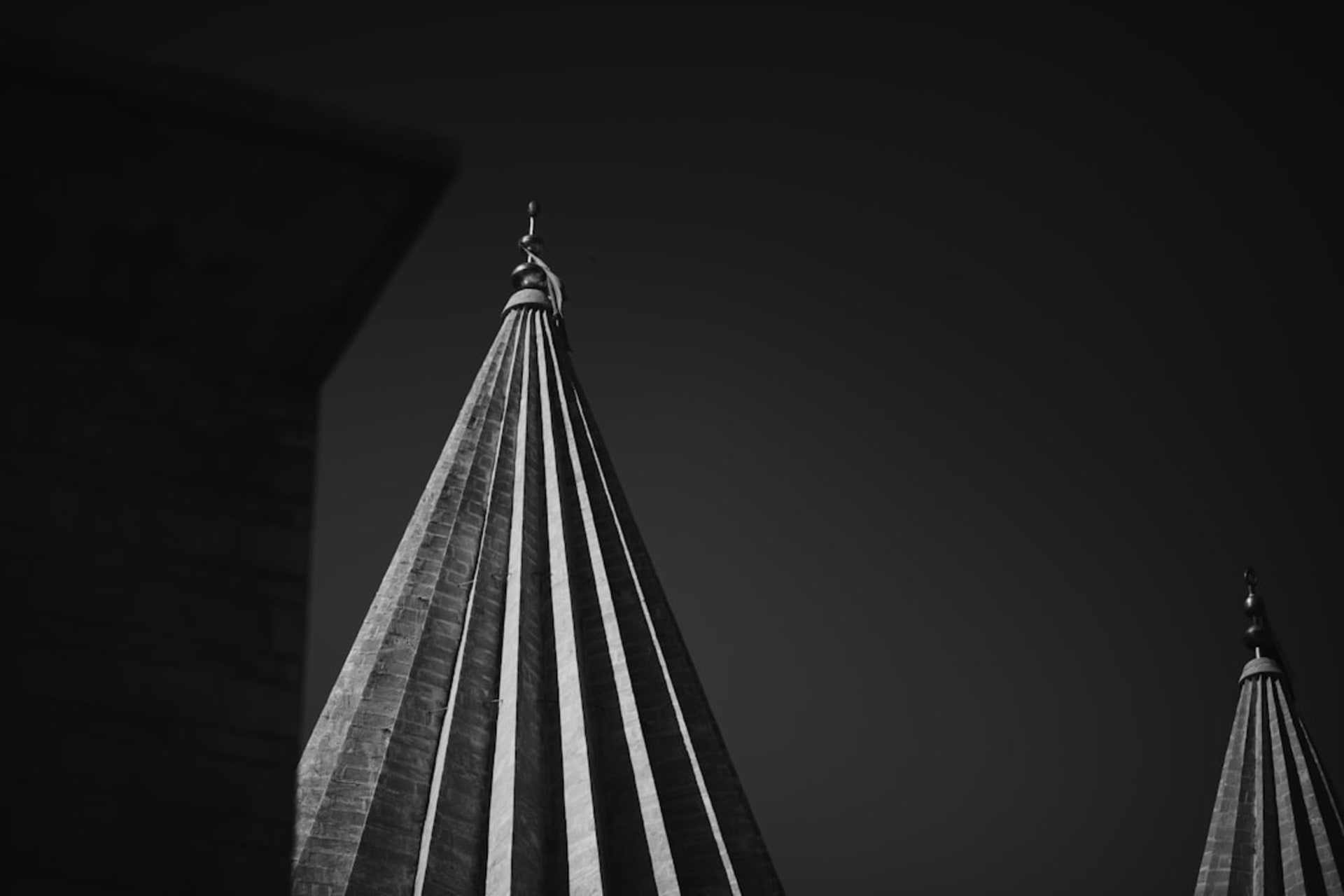
Lalish
"You do not step on the threshold at Lalish. You step over it, carefully, the way you'd step around someone's grief."
The holiest valley of the Yazidi faith, its conical temple spires tucked into a mountain fold north of Mosul, where visitors walk barefoot past sacred springs and a threshold you must never step on.
The first thing anyone tells you at Lalish, usually before you’ve even taken your shoes off, is not to step on the stone threshold at the temple entrance. You step over it. This is not a minor cultural footnote — it is one of the most consistently, gently enforced rules I’ve encountered anywhere, repeated by every guide, every pilgrim, every child running past, and by the time I’d internalized it, an hour in, I understood it as the physical version of the entire Yazidi relationship to sacredness: precise, protective, and completely unbothered by whether outsiders understand the reasoning behind it.
Lalish is the holiest site of the Yazidi religion, an ancient faith centered in this valley north of Mosul and practiced by a community that has survived — repeatedly, and the word “survived” is doing real work here — waves of persecution, most catastrophically the 2014 ISIS genocide against the Yazidis of Sinjar, an atrocity recognized internationally as genocide, which killed thousands and enslaved thousands more, mostly women and girls. Walking through Lalish’s stone courtyards, past the conical fluted spires that mark the tombs of Yazidi saints, most prominently Sheikh Adi ibn Musafir, I met pilgrims from Sinjar who had lost family members in the genocide and had still made the journey here, some for the first time since 2014, describing the visit less as tourism than as a kind of necessary repair.
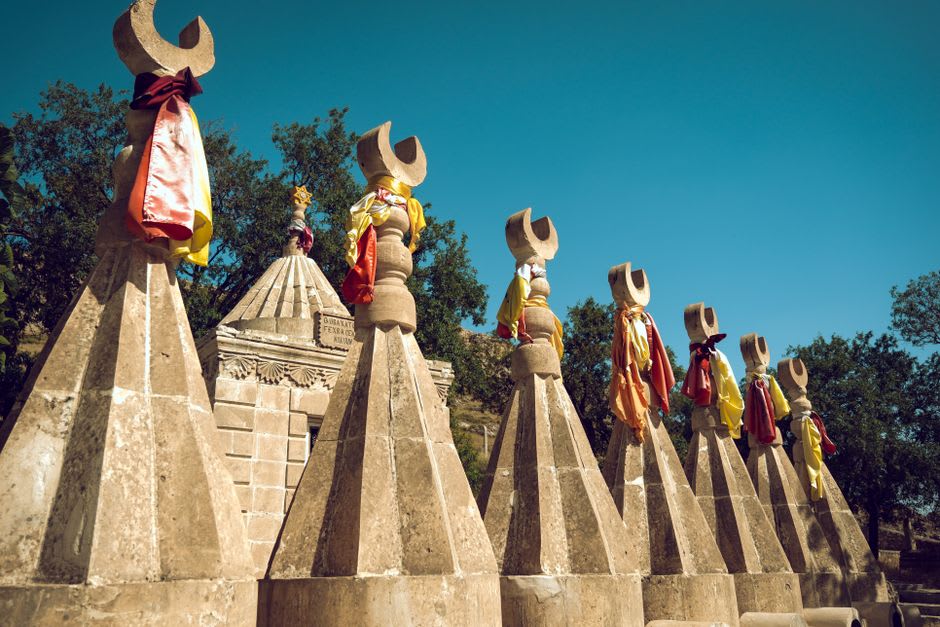
The valley itself is startlingly green compared to the surrounding terrain, sacred springs running through it — the White Spring, Zamzam, named in deliberate echo of the well in Mecca — and enormous old trees wrapped in strips of colored cloth left by pilgrims making requests or giving thanks. Everyone I met was generous about explaining what they could to an outsider and equally clear about what remains internal to the faith and not for me to fully understand, a boundary I respected more the longer I stood inside it. Inside the temple of Sheikh Adi, oil lamps burn continuously, and the interior is dim enough that your eyes take real time to adjust, the space feeling less like a monument and more like a held breath.
I left Lalish more moved than I expected to be by a site I’d known so little about walking in. It is a place that asks very little of visitors beyond basic care — remove your shoes, mind the threshold, don’t photograph what you’re asked not to — and gives back, in exchange, an unusually direct encounter with a community whose survival is itself the point.
When to go: Spring and autumn bring the mildest weather and the most important pilgrimage gatherings, including the Yazidi New Year celebrations in April. Dress modestly, go with a guide familiar with the site’s customs, and always ask before photographing people or interiors.