Uco Valley
"The wine changes at altitude — it gets quieter, more serious, like the mountains themselves have something to do with it."
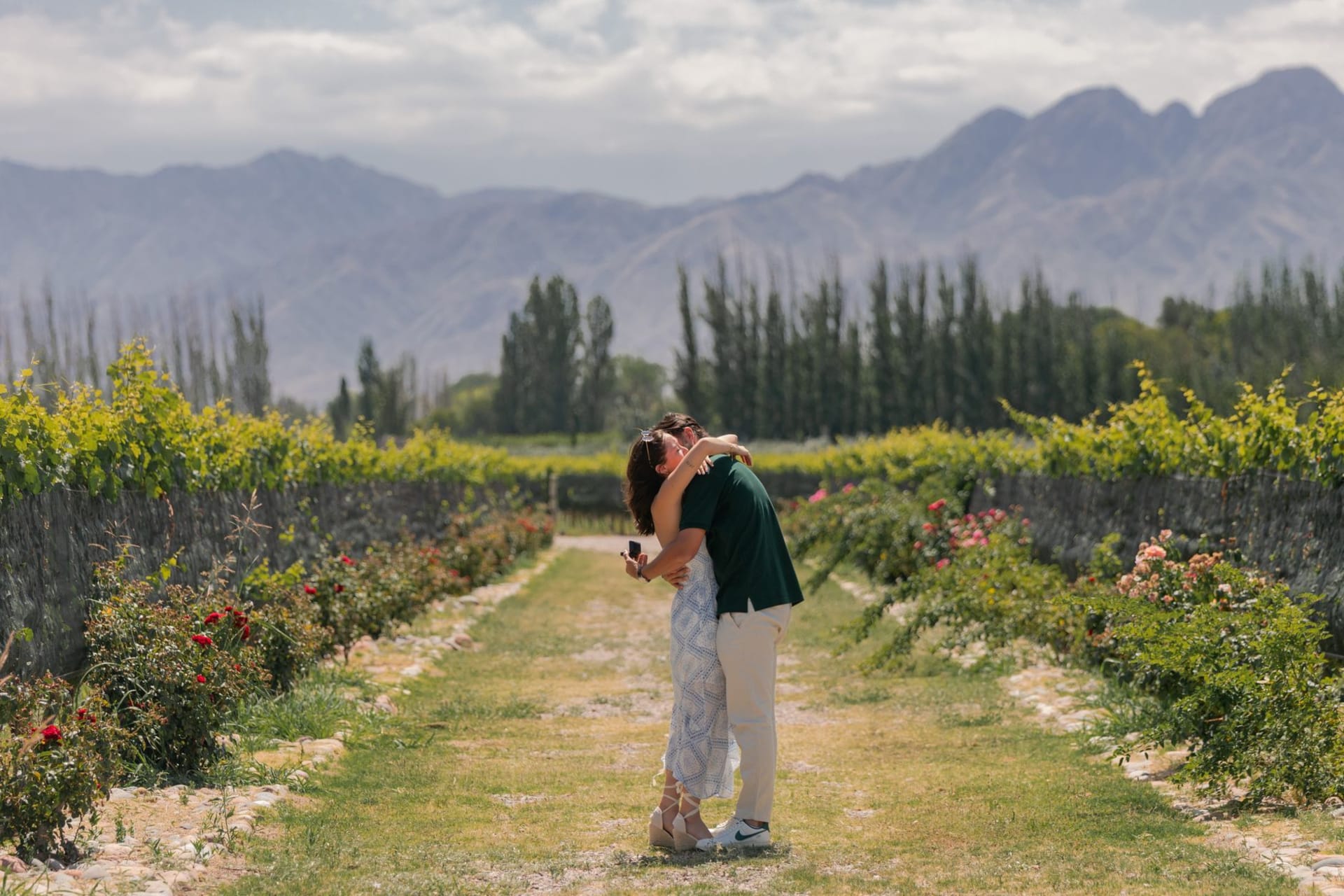
I drove into the Uco Valley in the dark, which means I didn’t see it until morning. I’d left Mendoza city after dinner and the road south runs through flat irrigated country that reveals nothing. Then I woke up in a small guesthouse in Tunuyán to a window full of volcano. The Tupungato rose so steeply and so completely white from the valley floor that for a moment I thought I was looking at a painting — the contrast between the warm brown vineyards stretching toward it and the absolute blue-white of its snowfields was too clean to seem real. Then a condor crossed the frame, and everything settled into being exactly what it was.
The Uco Valley — Valle de Uco in Argentine — extends roughly ninety kilometres through a wide trough between Mendoza’s urban wine zones to the north and the raw Andean peaks to the west. It sits at altitudes between 900 and 1,500 metres, which makes it among the highest wine-growing terrain on the planet. The altitude changes everything: the sun arrives early and burns with an ultraviolet intensity that no sunscreen quite handles; the nights drop by fifteen or twenty degrees even in midsummer; the air is thin enough that the fermentations run differently and the winemakers have to adjust their calculations. The wines that result are unlike the rounder, more accessible Malbecs of Maipú and Luján de Cuyo. Uco Valley Malbec is tighter, more mineral, more structured — it carries what winemakers here call the “altitude signature,” a kind of taut backbone that gives even the mid-range wines something serious to say.

The valley has attracted investment from all directions: the Zuccardi family, whose Valle de Uco bodega in the Paraje Altamira sub-zone is a masterpiece of landscape architecture embedded into the valley floor; the French contingent that followed Michel Rolland into Clos de los Siete in the early 2000s; the Dutch capital behind Salentein’s soaring angular winery near Tunuyán; and a quiet tide of smaller producers who came looking for the kind of terra incognita that the older zones no longer offer. The result is a wine valley that manages to feel simultaneously frontier and established — bodegas that look like architecture magazines exist alongside unmarked plots where a single family makes three hundred cases a year and sells them from the bodega door.

I ate the best steak I had in Mendoza at a farm table in the Uco Valley — a rib section from a local Hereford, cooked over quebracho wood by a gaucho who seemed mildly amused by my interest in how he was managing the fire. The meat tasted differently here too: the Uco Valley’s cattle graze on highland pasture and the altitude grasses leave a faint mineral note that runs through the fat. With a bottle of Zuccardi Valle de Uco Malbec poured under the open sky — condors circling above the mountain, the temperature dropping as the sun left the valley — it was the kind of meal that answers a question you didn’t know you were asking.
When to go: March and April for harvest, when the valley is at its most active and the grapes bring a sweetness to the air. October through December for spring growth, fewer crowds, and the most dramatic snow on the peaks. The altitude means temperatures drop fast after sunset year-round — bring a proper layer even in midsummer.