Ek Balam
"Chichen Itza gets the crowds. Ek Balam got my knees shaking on a 32-meter staircase."
A jungle-swallowed Maya city near Valladolid where you can still climb the pyramid and stand nose to nose with a jaguar-mouth doorway.
I almost didn’t stop at Ek Balam. Lia and I were staying in Valladolid, half-planning a lazy day around the cenotes, when a guy at our hotel mentioned that this was the ruin where you’re still allowed to climb. That was it, decision made. Thirty minutes north on a road that narrows into scrubby jungle, and we were standing in front of the Acropolis, a structure so big it barely looks like it belongs to the same category of “pyramid” as the postcard ones.
Ek Balam means Black Jaguar in Yucatec Maya, and once you’ve climbed halfway up the Acropolis you understand why the name stuck around. About two-thirds of the way up, the staircase opens onto a stucco facade unlike anything I’d seen at other sites: a giant jaguar-mouth doorway, teeth and all, flanked by winged figures, marking the tomb of the ruler Ukit Kan Le’k Tok’, dated to around 770 CE. It’s roped off just enough that you can get close without touching, and the detail in the plaster after almost 1,300 years stopped both of us mid-sentence.
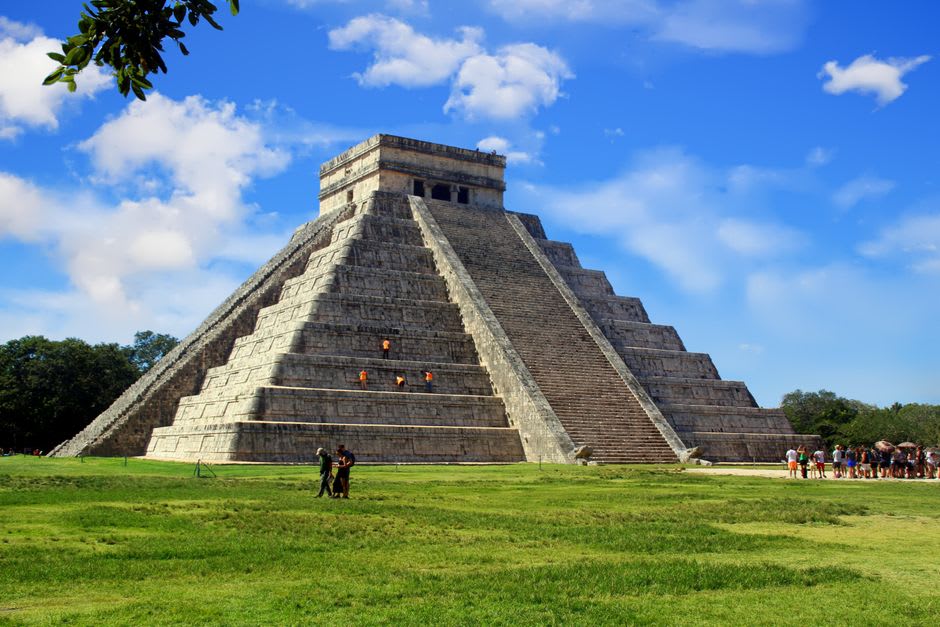
What got me most wasn’t even the tomb facade, it was learning that Ek Balam was still a living city when the Spanish showed up in the 16th century, and that most of what we were looking at only came out of the jungle in serious excavations starting in the 1980s. Lia pointed out that the stucco looked almost too crisp to be real, like a museum reproduction, and I get why she said that. Some of the best-preserved plasterwork in the whole Maya world is sitting up there in the open air.
We kept climbing past the tomb to the very top of the Acropolis, sweating through our shirts, and the view flattened the whole argument for going: unbroken jungle in every direction, with the white cone of a smaller structure poking through the canopy a few hundred meters off. I sat there longer than I should have, letting my legs recover, while Lia took about thirty photos of the same tree line.
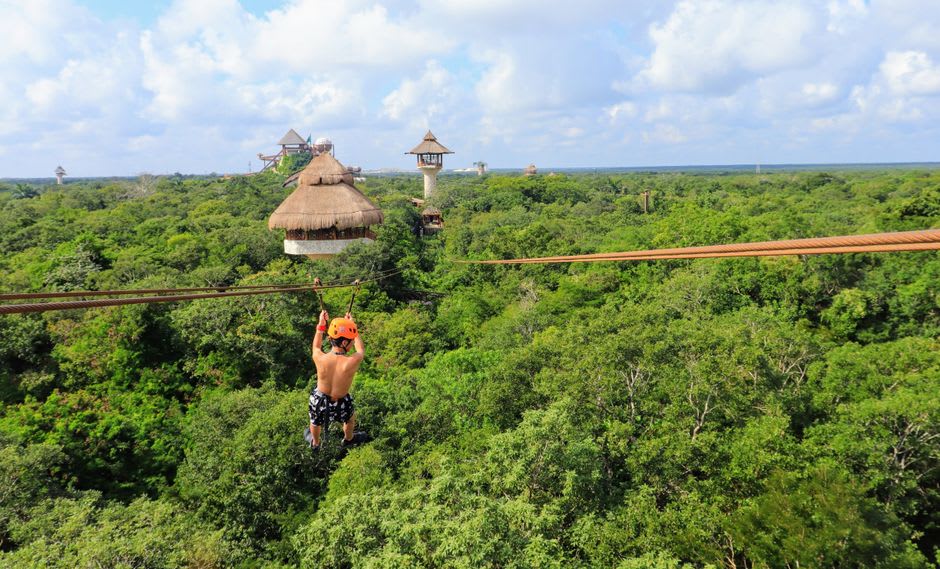
When to go: aim for November through March. We went in the dry season and were grateful for it on that final stretch of stairs, the stone was already hot enough at 10am, and I can’t imagine doing that climb in the humidity of July.
Keep exploring
More from Mayan Heartland
 mayan-heartland
 Flores
A tiny island of pastel houses on a jungle lake where people come for Tikal and stay for the evenings.
Explore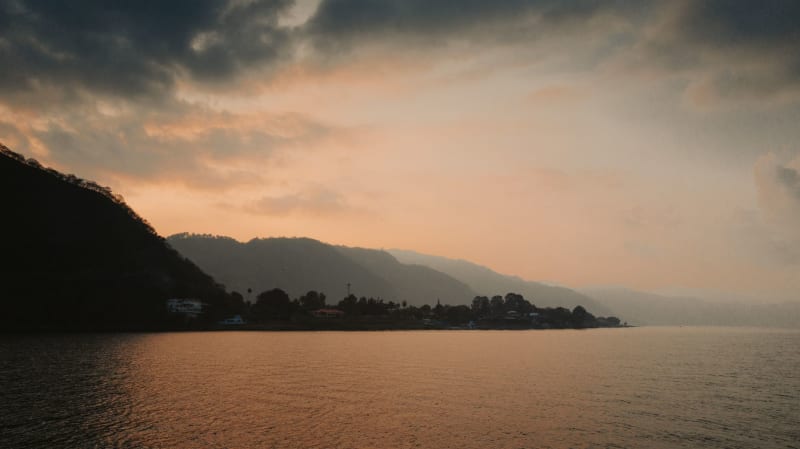 mayan-heartland
 Lago Atitlán
A volcanic caldera lake ringed by Maya villages where the volcanoes, the textiles, and the afternoon wind all compete for your attention.
Explore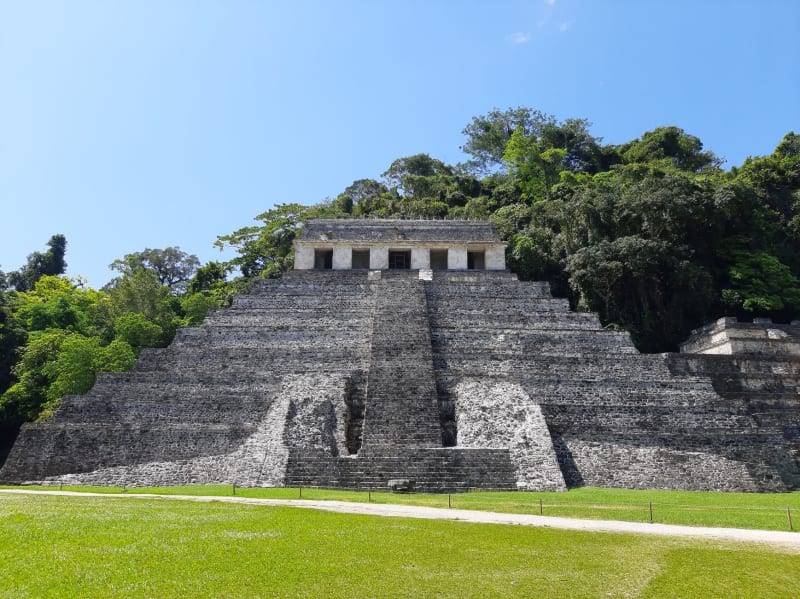 mayan-heartland
 Palenque
A palace complex swallowed and slowly released by Chiapas jungle — wet stone, orchids, and something older.
Explore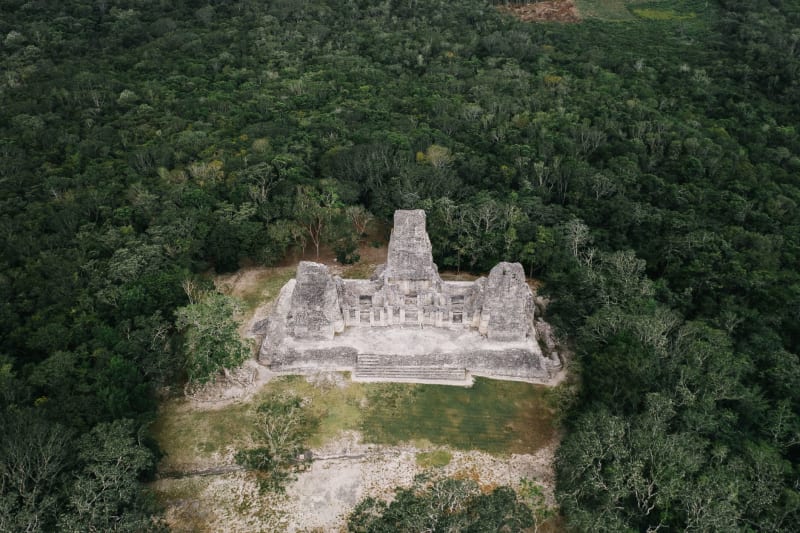 mayan-heartland
 Tikal
A hundred thousand Maya lived here once — now the howler monkeys have inherited the pyramids.
Explore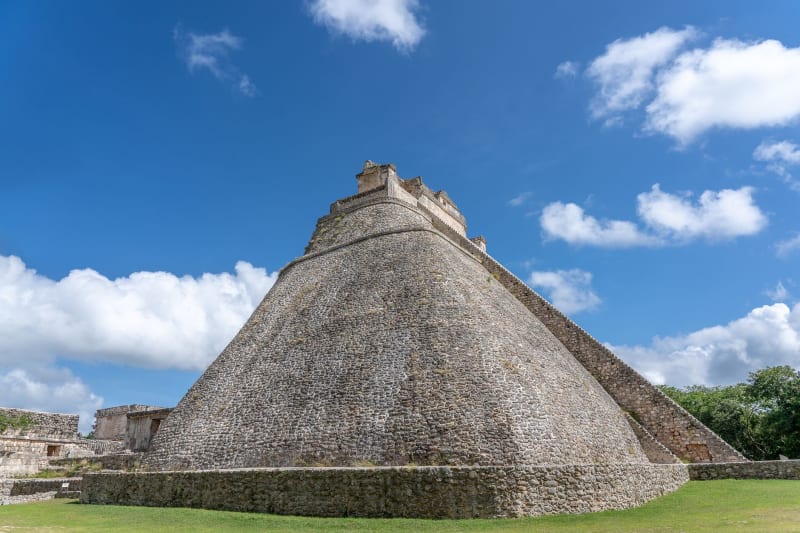 mayan-heartland
 Uxmal
The Puuc hills' architectural crown — stone lattice and rounded corners that feel almost too refined to have been carved by hand.
Explore mayan-heartland
 Xunantunich
A hand-cranked ferry, a limestone ridge, and a pyramid with views into two countries — this is Belize doing Maya ruins right.
Explore