Rodrigues Island
"The flight to Rodrigues is forty-five minutes. The distance from the rest of the world is immeasurable."
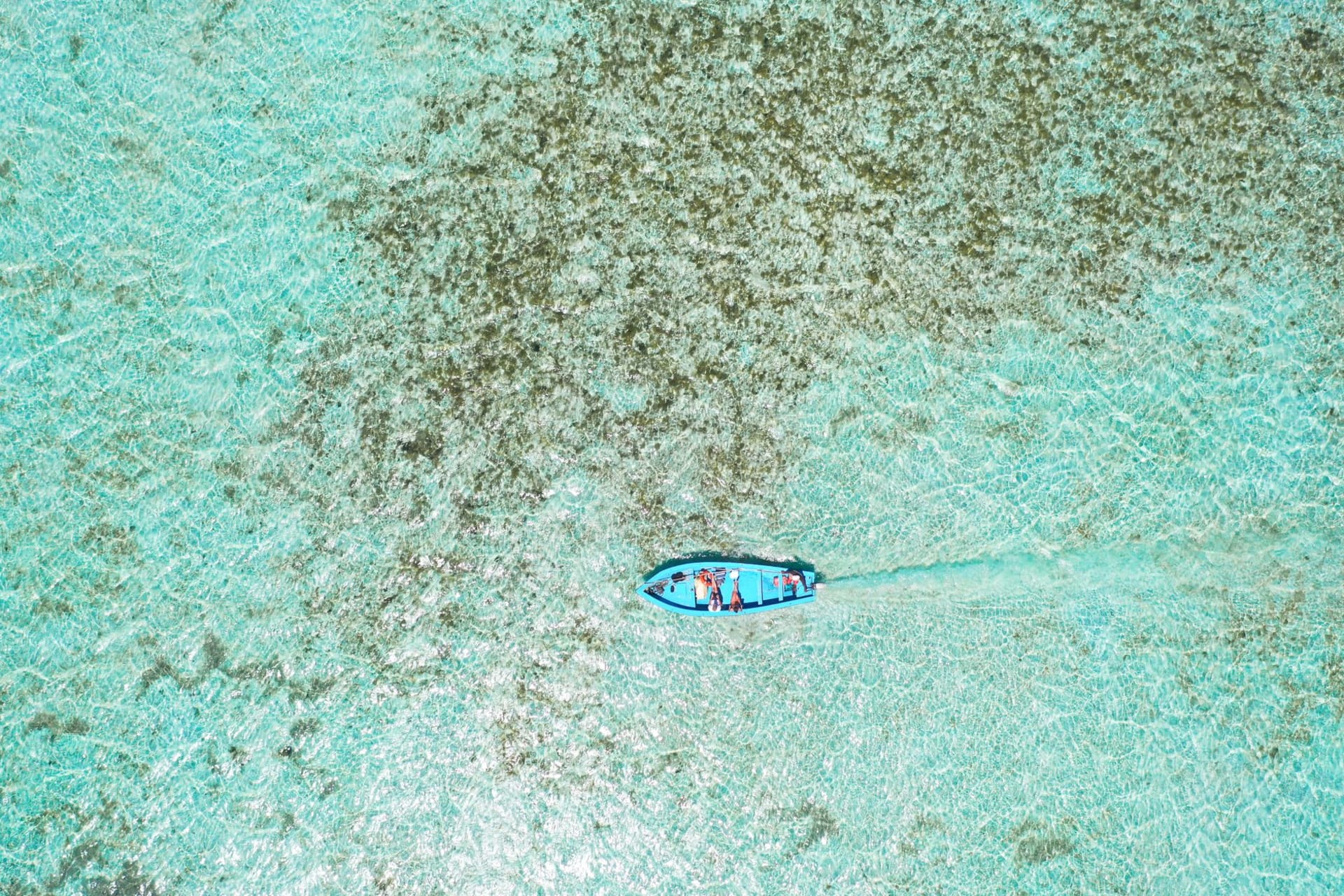
The ATR turboprop banks over the lagoon on approach to Rodrigues and gives you, through the small oval window, the first understanding of what you are coming to: an island roughly twice the size of Manhattan, surrounded by a lagoon so large and so shallow that it looks from above like a sheet of pale blue glass laid on the dark ocean. Port Mathurin, the capital, is visible as a cluster of buildings on the north coast — small enough that from the air you can see its entirety. The plane lands. The airport terminal is a single room. There are no porters, no duty free, no queue for a taxi. A man outside holds a handwritten sign with my name on it, which I had not expected, and we drive to the guesthouse on a road where every other vehicle is either a motorcycle or a truck carrying sugarcane.
Rodrigues is an autonomous island dependency of Mauritius, about 560 kilometres to the northeast. Its population is almost entirely Creole, descended primarily from enslaved Africans, and it has a personality that is entirely its own — slower, more direct, more self-sufficient, less deferential to visitor expectations. The tourism infrastructure exists but it is thin, and the island has not yet developed the reflexes of a place accustomed to being accommodated. When I asked my guesthouse owner for a restaurant recommendation, she told me to come home for dinner and charged me nothing extra. I ate octopus curry and lentils at her kitchen table while her children did homework at the other end.

The lagoon is the dominant fact of life on Rodrigues. At low tide, women from the fishing communities wade the flats in large groups, collecting octopus, sea urchins, and shellfish, the traditional fishing method practiced here for generations. I watched them from the hillside above Port Mathurin one morning — perhaps forty women moving through knee-deep water with their bamboo sticks and collection baskets, their voices carrying across the flat. The octopus caught this way ends up in the restaurants, in the markets, and dried on lines outside people’s homes, and it is the best octopus I have eaten anywhere: grilled with tomato and ginger, its texture somewhere between tender and resistant in the way that well-handled octopus achieves.
The interior of the island is steep and green and largely devoted to small farming plots. The roads climb and drop through countryside that looks almost Mediterranean from a distance, the hillsides terraced with vegetable gardens. The viewpoints from the central ridge show the lagoon on both sides — north and south — with the reef line marking the edge of shallow water against the dark ocean beyond. There is a lentil festival in October, when the island’s particular variety of small red lentils is harvested, and people come from Mauritius for it, which gives you a sense of what constitutes a significant event here.

The caves at François Leguat are the most striking geological feature on the island — a network of limestone formations whose stalactites and stalagmites are named, with local enthusiasm, for the shapes they suggest: a bishop, a sleeping giant, a crocodile. The reserve around the caves has been restocked with Aldabra tortoises, which roam the grounds in numbers that make Rodrigues feel briefly like the Galápagos at a budget price point. I spent an afternoon here in a state of contentment so complete it bordered on torpor, and I do not regret a minute of it.
When to go: Rodrigues is at its best between May and November when the southeast trades bring dry, clear weather and the lagoon is at its calmest. Avoid January through March when cyclones are possible — the island can be cut off by flight cancellations. Book accommodation well in advance; the island has limited rooms and the good guesthouses fill early.