
Tidjikja
"The Tagant is Mauritania's secret. Tidjikja is where the secret keeps itself."
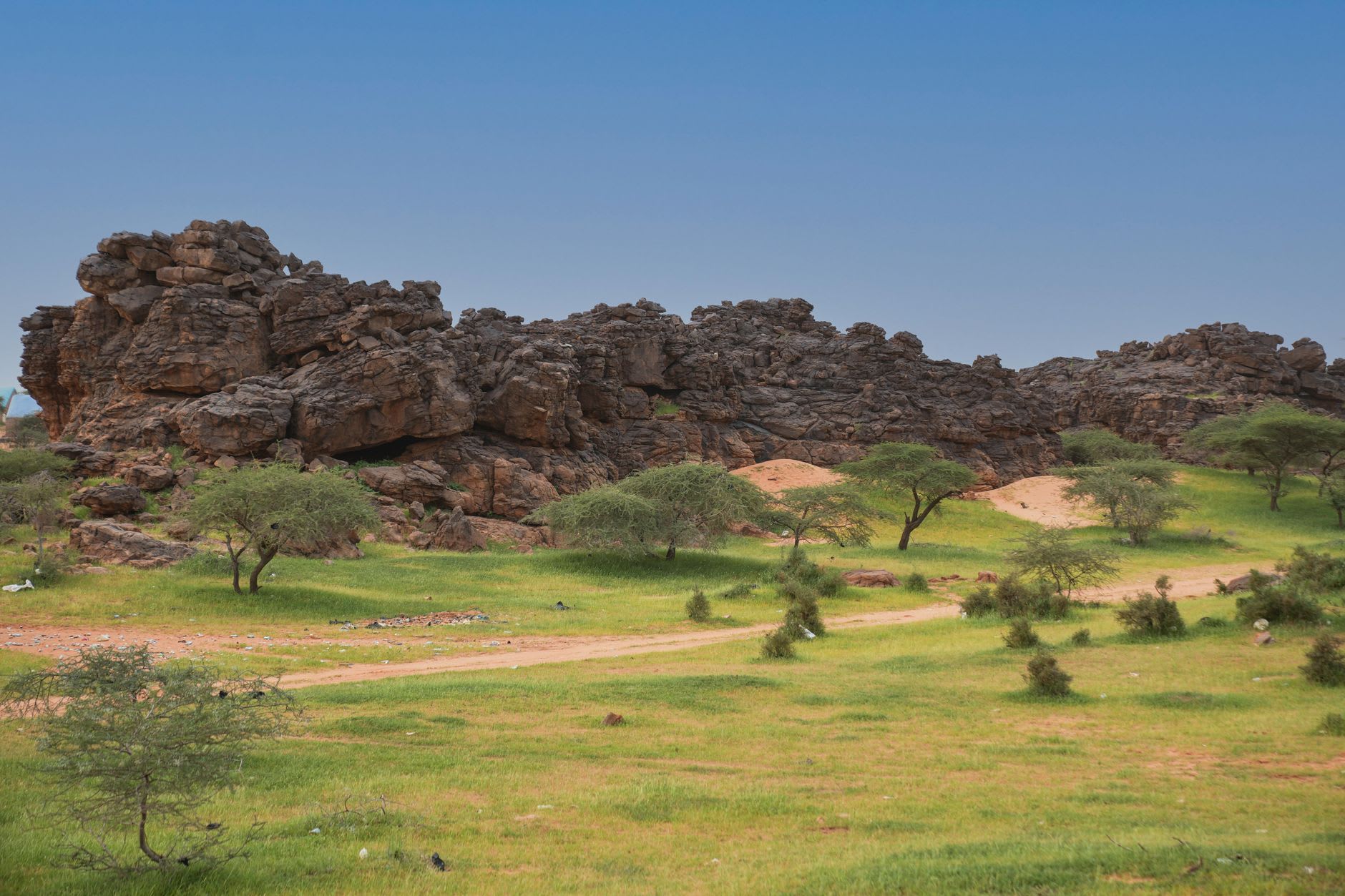
Tidjikja sits in a depression in the Tagant plateau that the surrounding landscape seems to have forgotten to erase. Getting there involves the Route de l’Espoir — the Highway of Hope, a long paved road that crosses central Mauritania and is one of the great overland routes of West Africa — and then a turn south onto a track that climbs into the plateau through terrain the color of dried blood. The ascent onto the plateau is the kind of thing that makes you reconsider what the word “remote” means. By the time Tidjikja’s palm groves appeared below me in a fold of the rock, I had been on roads for six hours and seen perhaps four other vehicles.
What distinguishes Tidjikja from the other ancient towns of the Mauritanian interior is the color of the surrounding dunes. Elsewhere in the Sahara, sand tends toward ochre and gold; here the iron-rich rock of the Tagant plateau has imparted a rose-pink tint to the dunes that press against the edges of the oasis, a color I had not seen before and couldn’t quite name. In the hour before sunset, when the light is low and the shadows are long, the pink deepens toward terracotta and the palms go dark against it and the whole scene has an improbability to it — not artificial exactly, but the kind of beauty that looks considered, as if someone arranged it.
The old ksar — the traditional fortified village that predates the current town — is partially inhabited and partially in ruin, its narrow streets shaded by walls that lean toward each other above head height, creating passages where the air stays cool even in the afternoon. An elderly woman sat weaving at a low loom outside her doorway and watched me pass with the calm attention of someone accustomed to occasional inexplicable foreigners. In the mosque courtyard, a group of young boys were memorizing Quran verses in the call-and-response method, their voices echoing off the stone in overlapping waves. I stayed outside the courtyard and listened for a long time without understanding a word, and the rhythm of it was one of the most consoling sounds I have heard.
The palmeraie is enormous — tens of thousands of trees worked by families who have maintained the irrigation channels for generations. The system of water management here is traditional and extraordinarily sophisticated: a network of seguia channels carries spring water from the plateau edge across the whole oasis floor, calibrated so that each section receives its share of water according to agreements centuries old. I walked through it in the early morning when the water was running — you could hear it before you could see it, a faint trickling that seemed to come from beneath the ground — and the contrast with the dead plateau rock three kilometers away was the kind of thing that rewires your sense of what the word “enough” means.
There is a small regional museum in Tidjikja with a collection of pre-Islamic petroglyphs found on the Tagant plateau — cattle, horses, giraffes and elephants carved into the rock by populations who lived here when the Sahara was green. The museum is irregularly open and requires finding the right person to unlock it, which takes some time and is worth the effort. The petroglyphs document a world that has vanished so completely that the animals depicted — especially the elephant and the giraffe — now seem like speculative fiction about what this landscape might once have supported.
When to go: November through February. Tidjikja is higher and slightly cooler than the Adrar, but summer temperatures on the Tagant plateau are extreme. The Route de l’Espoir is paved and manageable in a standard vehicle, but the track up onto the plateau requires a 4x4. There is a small guesthouse in town and usually the possibility of a room with a local family for those willing to ask.