Africa
Mauritania
"The Sahara starts here. Everything else is just sand by comparison."
The first thing that hits you in Nouakchott is the wind. Not a breeze — a dry, relentless push that carries fine sand into every seam of your clothes, your notebook, your teeth. I arrived on a late afternoon flight and stood outside the terminal trying to orient myself, and within ten minutes I had grit between my molars and a profound respect for everyone who lives here permanently. Mauritania does not ease you in. It presents itself fully, immediately, without apology.
What I hadn’t expected was how deeply the country rewards patience. The capital is sprawling and unglamorous, but give it two or three days and something shifts. The fish market at dawn — an enormous open-air operation where Atlantic catches arrive fresh every morning — is one of the most viscerally alive places I have ever stood. Women in melhafa wrap colorful fabric around mountains of grouper and octopus while men haul ice in wheelbarrows and the smell of salt and fish and diesel hangs over everything. Mauritanians eat extraordinarily well when they are near the coast, and a rice-and-fish thiéboudienne eaten at a roadside stall in Nouakchott cost me less than two dollars and was genuinely one of the best things I ate in months of travel.
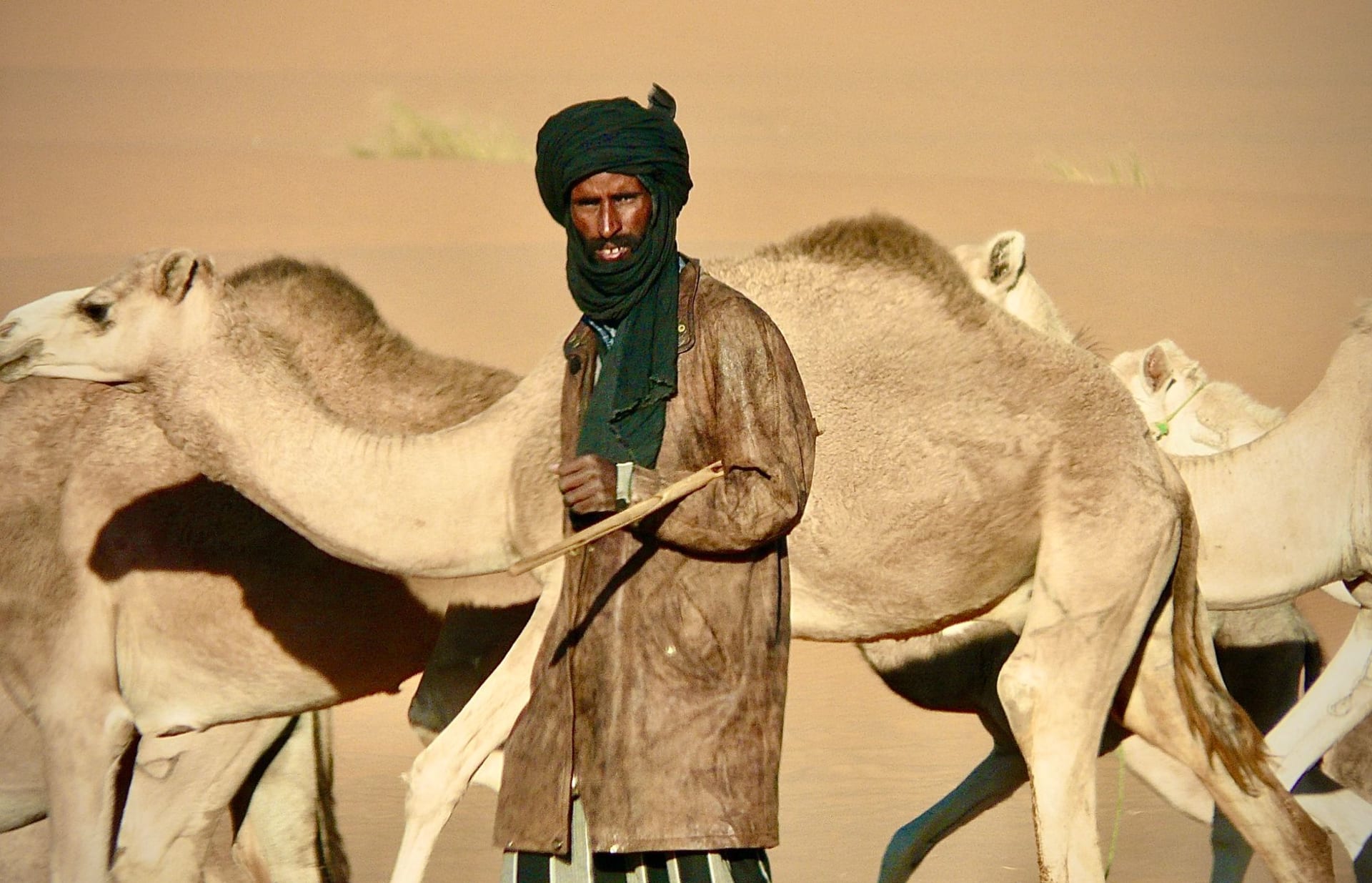
The interior, though, is the reason to come. The drive south toward Chinguetti — one of Islam’s seven holy cities, half-swallowed by dunes — takes you through landscapes so stripped of everything that the mind goes quiet. Ancient camel routes cross terrain that hasn’t changed in a millennium. Chinguetti itself is a town in active disappearance: the old city’s stone libraries, which once held thousands of ancient manuscripts, are slowly being reclaimed by sand. Standing in an empty alleyway at dusk, watching the dunes crest over a rooftop, I understood for the first time why medieval scholars considered this place the edge of the known world — and why they came anyway.
When to go: November through February is the only window I would recommend without serious qualification. Daytime temperatures stay manageable (25–30°C), nights are cool, and the harmattan winds are calmer. March through October is punishing — summer temperatures regularly exceed 45°C in the interior, and the humid coastal heat in Nouakchott is its own special misery. Plan around the dry season and don’t push it.
What most guides get wrong: They frame Mauritania as an extreme destination for adventure travelers and stop there — as if the only reason to go is to suffer photogenically in a big desert. What that framing misses is the country’s intellectual and historical weight. Chinguetti’s manuscript libraries represent one of the most significant collections of pre-modern Islamic scholarship in the world. The ancient trading city of Ouadane, reached by piste through terrain that will test any vehicle, was a crossroads of trans-Saharan civilization when Paris was still a muddy market town. Mauritania is not a backdrop for expedition selfies. It is a place of enormous historical consequence that happens to be almost entirely overlooked.