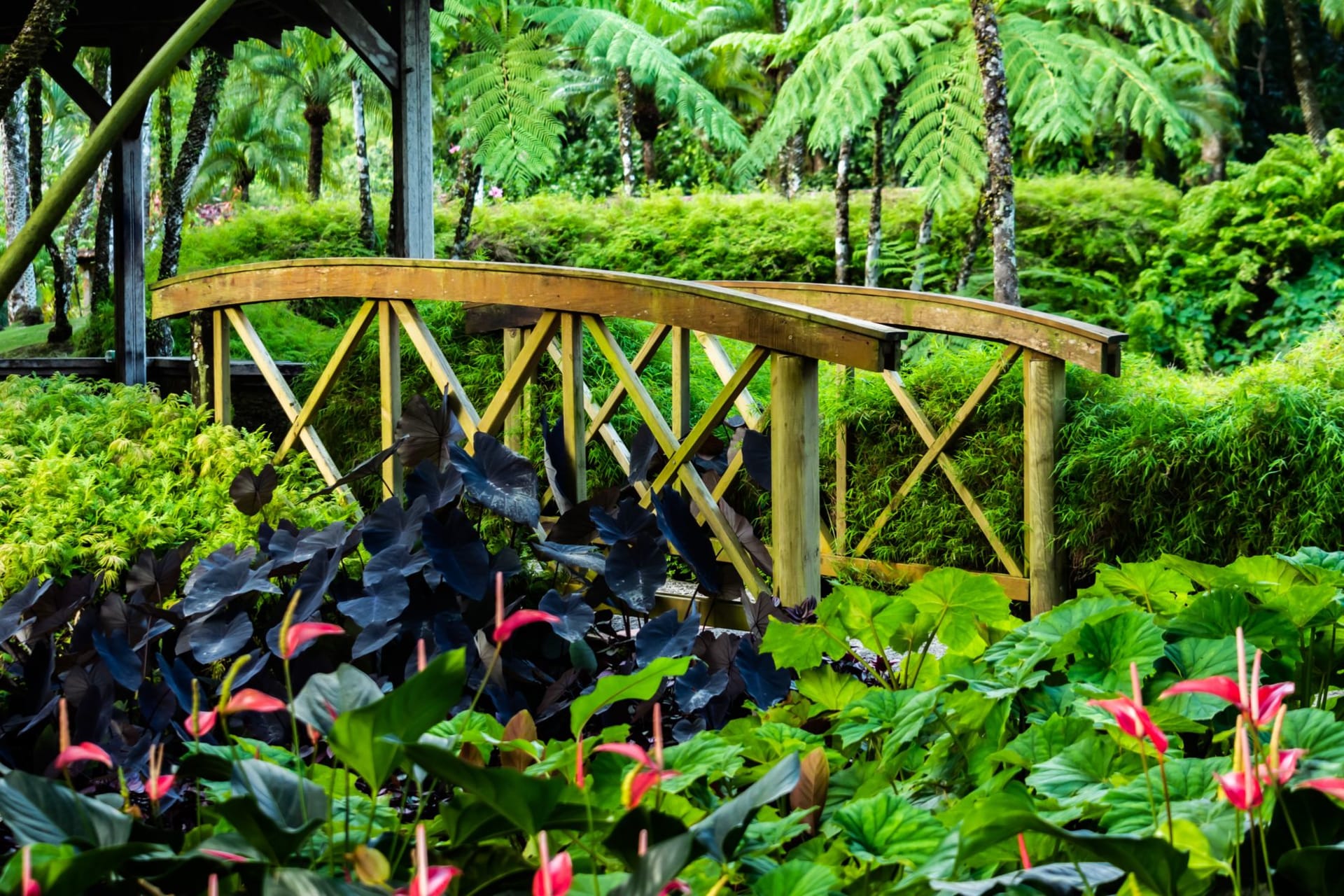
Jardin de Balata
"I came for a garden and left having argued with a hummingbird about personal space."
The Route de Balata leaves Fort-de-France and climbs immediately into the kind of green that makes you distrust your own eyes. Within fifteen minutes the city is gone and you are in cloud-forest country, the road narrowing, ferns leaning in. The Jardin de Balata sits up here, a botanical garden created over decades by a horticulturist named Jean-Philippe Thoze on the grounds of his grandmother’s old Creole house. It is private, lovingly obsessive, and one of the few attractions I have visited that genuinely exceeded the postcard.
Three Thousand Species and a House
The Creole house at the entrance is the anchor — restored, shuttered, furnished as it would have been a century ago, with a veranda looking out over the whole descending tangle of the garden. From there the paths drop away into something Thoze spent his life assembling: more than three thousand species of tropical plants, arranged not as a catalogue but as a composition. Heliconia in violent reds, lotus ponds thick with frogs, palms whose trunks looked machined, and bamboo so tall it created its own weather underneath.
Lia, who has a habit of reading every plaque, gave up after twenty minutes and simply walked, which I took as the garden winning. There is too much to label in your head. You stop trying and let it be overwhelming, which is, I suspect, the point.
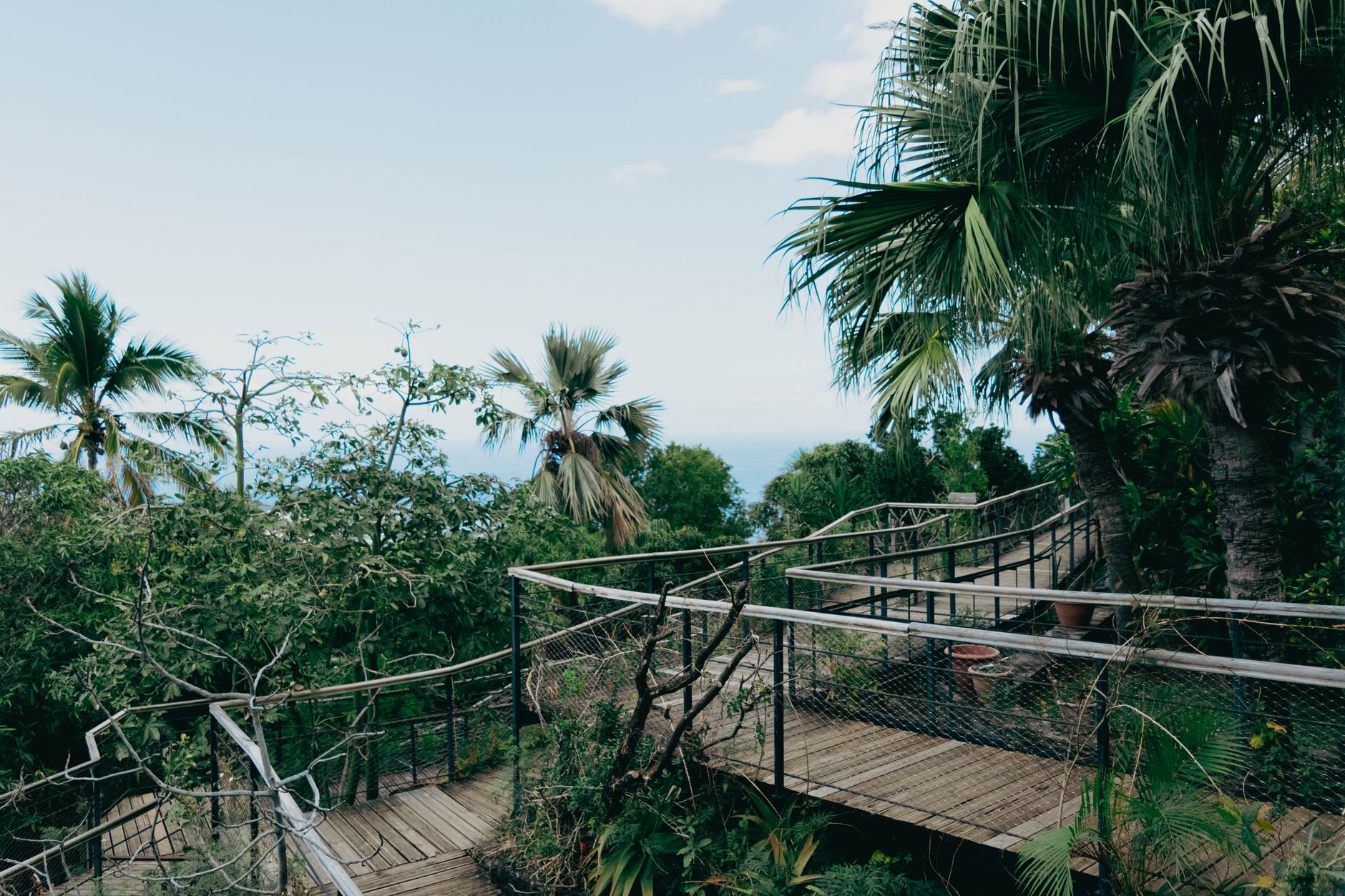
The Canopy Bridges
The reason most people come, though, is the rope bridges. A series of suspension walkways strung between the crowns of giant mahogany trees, swaying gently at about fifteen metres up, putting you eye-level with the canopy and whatever lives in it. I will admit I do not love heights, and the first few steps had the bridge pulsing under me like something breathing. Lia went across with the irritating ease of someone who has never once imagined falling.
But the view from up there reorganises your sense of the place. You see the structure of the rainforest from inside — the layering of light, the epiphytes clinging to high branches, the way the whole hillside breathes moisture. A hummingbird — a colibri, they are everywhere here — hovered close enough that I felt the air from its wings, looked at me with what I can only describe as territorial contempt, and left. I have rarely felt so thoroughly assessed.
The Slow Way Down
We lingered until the afternoon cloud rolled in, which it does here daily, softening everything to grey-green and releasing that wet-earth smell that I now associate with the Martinique interior more than any beach. Back at the house we drank a cold fruit juice on the veranda and watched the mist swallow the lower garden.
Most visitors to Martinique stay welded to the coast. The interior — green, steep, wet, and quiet — is the better island, and Balata is its most accessible window. Half a day, no more, but it recalibrated what I thought the place was.
When to go: Morning, before the daily afternoon cloud and rain arrive. The dry season (December to April) gives clearer canopy views, but the garden is at its most lush and dramatic in the green months — bring something waterproof and embrace it.