Anses d'Arlet
"Somewhere between a village and a postcard, and somehow still a village."
The church at the water’s edge
The church of Anses d’Arlet stands so close to the sea that at high tide the waterline reaches almost to its front steps. It is a small white building with a red roof, not architecturally remarkable by any standard measure, but the way it sits — facing the bay, flanked by the wooden pirogues pulled up on the black sand beach — makes it look like it was placed there to be looked at. It was not. It was built in the nineteenth century to serve a fishing community, and it still does.
I arrived early on a Saturday morning, which turned out to be better timing than I’d planned. The village was awake but not yet tourist-busy, and the fishermen were returning from the night’s work, sorting catch directly from the boats onto small folding tables by the water. Red snapper, barracuda, langoustes still moving. The light was horizontal and gold and hit the water at an angle that made everything look slightly unreal.
What’s underwater
Anses d’Arlet has something that not many beaches anywhere have: sea turtles grazing in the shallows reliably enough that you can swim out and find them without a guide, a boat, or any particular luck. They feed on the sea grass beds in the bay and have apparently decided that the volume of snorkelers is manageable. I’ve seen turtles in a lot of places — Mexico, the Maldives, the Galápagos — and the ones here are different only in that they seem entirely unbothered. A hawksbill floated past me at arm’s length, unhurried, while I tried to remember how to breathe through a snorkel without inhaling seawater.
The snorkeling beyond the turtles is good too: brain coral, sea fans, small reef fish in numbers that indicate the bay is reasonably healthy. The water stays clear because the village has invested seriously in keeping the bay clean, which becomes apparent when you notice how little litter there is anywhere along the waterfront.
The village above the beach
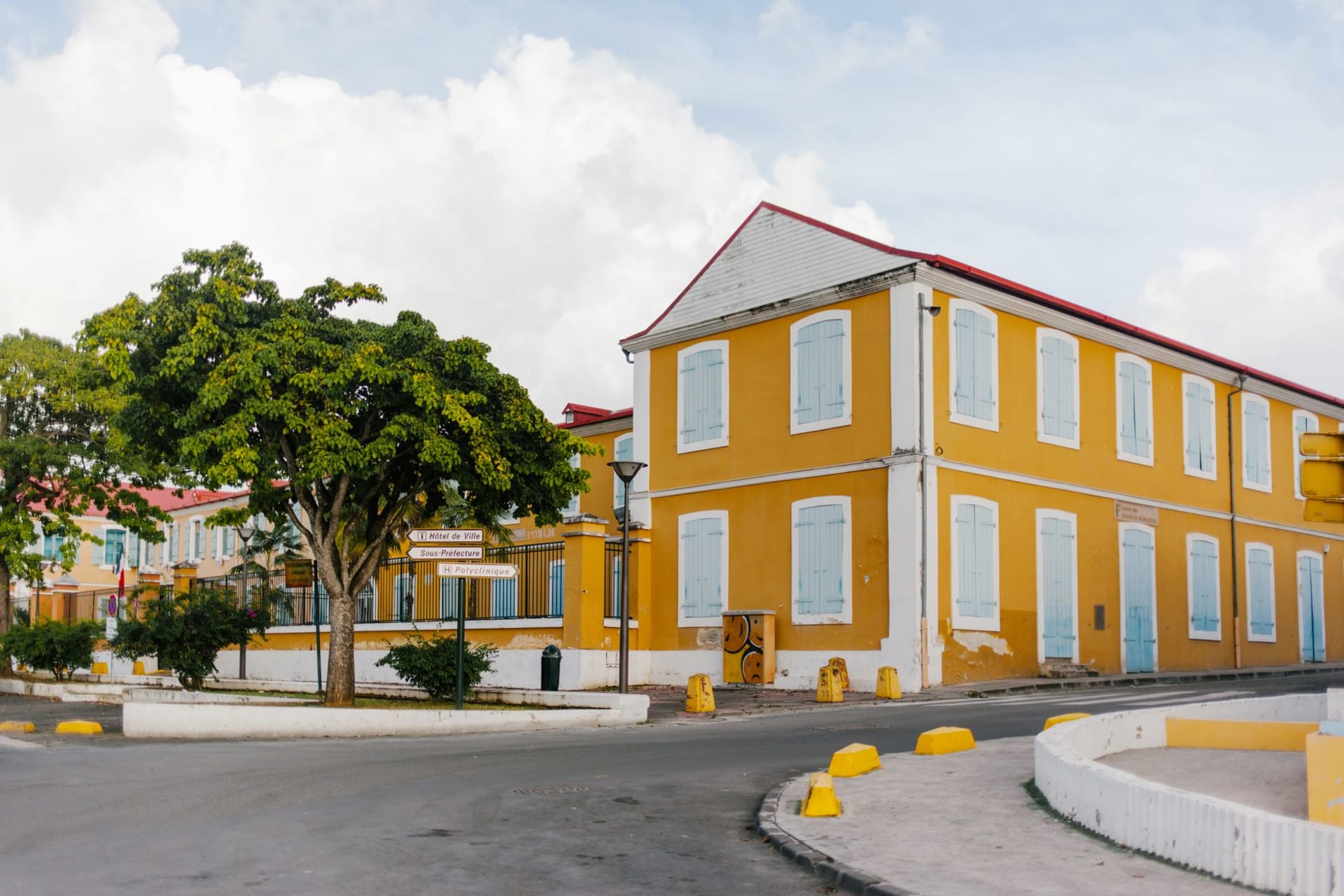
Behind the waterfront there are two streets of houses in faded Caribbean pastels — yellow, pink, pale green — with gardens that overflow bougainvillea onto the pavement. A rum shop with four tables. A small market on Sunday mornings that Lia insisted we go back for specifically to buy the local hot sauce, which she later carried home in her carry-on in a quantity that made airport security briefly curious.
The village sits at the base of steep green hills that belong to the leeward coast’s microclimate — drier than the north, but still green enough to look soft from the beach. Hummingbirds appear suddenly in the flowering trees and vanish just as fast.
Lunch at a waterfront table
There are several restaurants along the beach promenade, all serving more or less the same menu: grilled fish, acras de morue, boudin creole, rum punch. The quality variation is smaller than you’d expect. I ordered grilled mahi-mahi at a table with a direct view of the church and the boats, and spent most of the meal watching a pelican execute increasingly implausible dives offshore.
What you’re paying for in Anses d’Arlet is primarily the setting, which earns its money. Eat slowly. Look at the boats. Let the afternoon go soft.
When to go: January through April is ideal — dry season means clear water, good visibility for snorkeling, and the turtles are reliably present. Anses d’Arlet is extremely popular on weekends and public holidays; arrive before ten a.m. or visit on a Tuesday or Wednesday for a noticeably quieter experience. Avoid the restaurant strip at peak Sunday lunch unless you have a reservation.