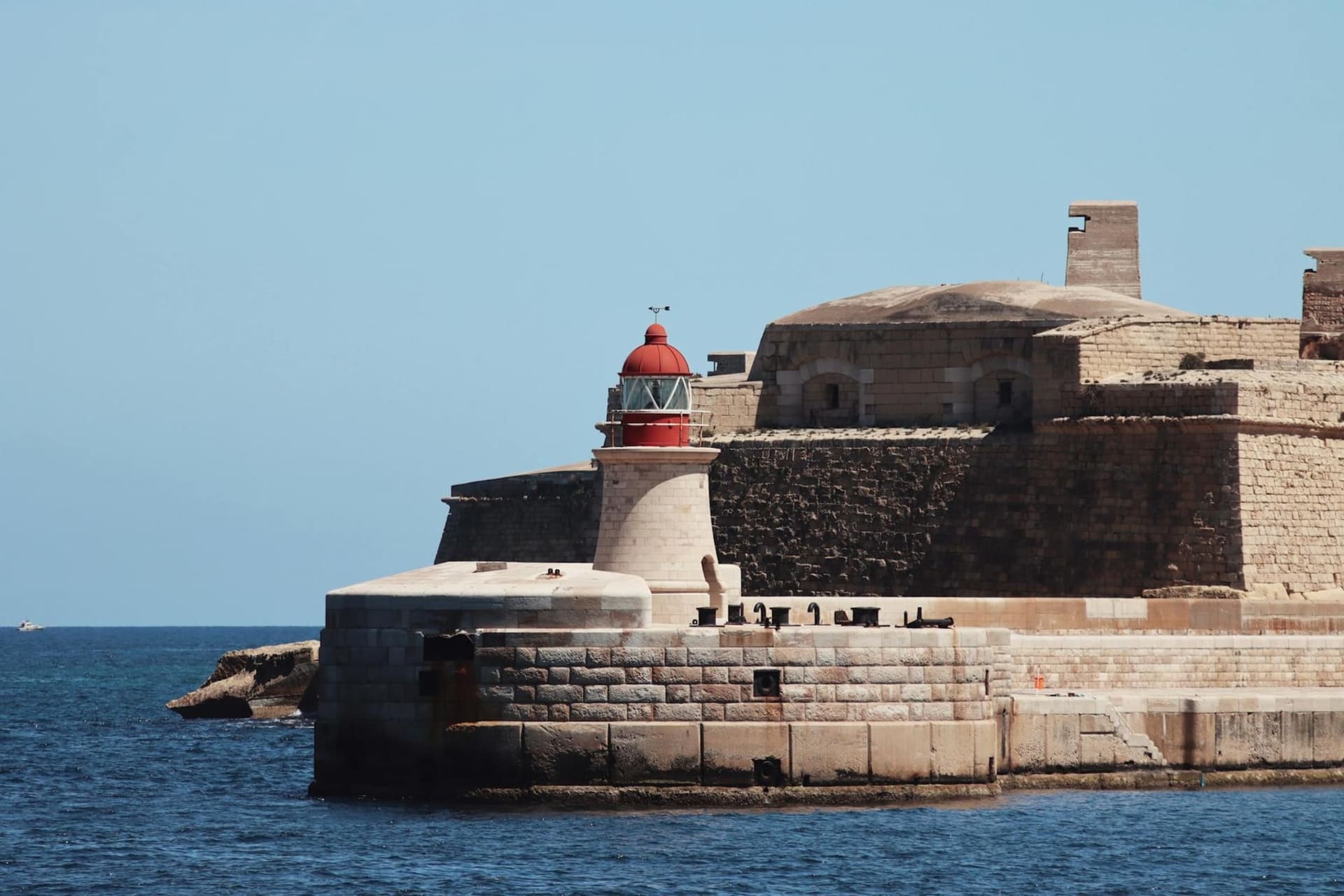
Europe's smallest capital packs an extraordinary density of baroque palaces, Caravaggio paintings, and honey-gold limestone onto a fortified peninsula.
I had been told Valletta was small, but I hadn’t understood what that meant until I walked its entire length in under twenty minutes and arrived, somehow, at a sea wall with nowhere left to go. The city ends. The Mediterranean simply begins. Behind me, a grid of baroque streets. Ahead, open water and the faint smudge of Sicily somewhere beyond the haze.
Honey Stone and Caravaggio
Valletta is built from globigerina limestone, a material so warm and gold it seems to absorb the light rather than reflect it. By mid-morning, Republic Street glows like the inside of a lantern. The facades of the auberges — the palaces that once housed the Knights of St John — wear the same amber tone as the cliffs that drop into the harbour below them, so the whole city feels carved from a single thought.
Inside St John’s Co-Cathedral, the stone gives way to something more extravagant: a floor tiled entirely with the tombstones of dead knights, each slab an intricate mosaic of coats of arms and epitaphs. The ceiling is painted floor to ceiling in gold and cobalt. And at the far end, in a side chapel kept deliberately dim, hang two enormous Caravaggio canvases — the only ones he painted in situ for a commission. I stood in front of The Beheading of Saint John the Baptist for a long time. It is the largest canvas he ever painted, and the darkness in it feels physical, like a presence in the room.
The Unexpected Hour
The thing that surprised me most about Valletta was how quiet it gets at dusk, once the day-trippers from the cruise ships have retreated. Lia and I wandered down Merchants Street just as the light turned from gold to copper, and the city was ours in a way that felt almost guilty. A woman was watering geraniums on a gallarija — one of those enclosed wooden balconies that jut from every building like coloured lanterns. A cat crossed Republic Street without hurrying. From somewhere below, through a gap in the fortification walls, came the sound of a boat engine starting on the Grand Harbour.
Eating on the Waterfront
We ate pastizzi from a paper bag standing up, the ricotta still hot inside the flaky pastry, and later sat down to rabbit stew — fenkata — at a trattoria off Old Theatre Street where the menu was handwritten on a chalkboard and changed daily. The local wine, a Gellewza red from the island’s interior, was rougher than I expected and better for it.
When to go: April and May offer the best balance of warmth, navigable crowds, and that particular quality of Mediterranean spring light. July and August are brutally hot and thick with tourists — the streets, narrow enough to feel intimate in spring, begin to feel like queues.