
Mosta
"A bomb fell through that dome and chose not to go off. Malta has been arguing about why ever since."
A workaday Maltese town crowned by one of the largest unsupported domes on earth — and the unexploded bomb that fell through it and changed nothing.

Mosta is not on most itineraries, and I understand why. It has no harbour, no fortress walls, no Knights-of-St-John brochure glamour. It is a real Maltese town where people buy washing machines and queue at the pharmacy. And then, when you turn a corner near the centre, the entire sky is taken up by a dome so large it seems to have been dropped from a different and more ambitious civilisation.
The Rotunda
The Rotunda of Mosta — properly the Basilica of the Assumption — was built between 1833 and 1860, largely by the parishioners themselves, who reportedly worked on it after their own jobs. Its dome is one of the largest unsupported domes in the world, and standing beneath it produces a specific physical sensation: a slight vertigo, a sense that all that stone overhead is held up by nothing but confidence and good geometry.
I am not, by habit, moved by church interiors. I have seen enough gilt to last several lifetimes. But the scale here did something to me. Lia simply lay back on a pew, which I am fairly sure is not permitted, and stared straight up. A verger walked past and said nothing. I think he understood.

The Bomb
Here is the story everyone in Mosta will tell you, and it is true. On 9 April 1942, at the height of Malta’s wartime siege, a 500kg Luftwaffe bomb pierced the dome during a service attended by some three hundred people. It hit the floor, skidded, and did not explode. Nobody was killed. A replica sits in the sacristy now, and the locals will direct you to it with a particular gravity.
You can interpret this however your worldview demands — divine intervention, a faulty fuse, the simple statistics of a long bombing campaign. The Maltese, who endured the most concentrated bombing of the entire war, have largely made their decision. Standing in the cool sacristy looking at that grey casing, I found I did not want to argue the point with anyone. Some coincidences have earned their reverence.
The Town Around It
What I liked most about Mosta, though, was leaving the basilica and finding an ordinary town getting on with its ordinary day. We had a pastizz — the flaky ricotta-stuffed pastry that is Malta’s true national monument — from a hole-in-the-wall counter for less than a euro, eaten standing on the pavement while a man argued cheerfully with a delivery driver. Down the hill runs the Victoria Lines, a 19th-century British defensive wall you can walk along for miles, looking out over the island’s green-brown interior.
Mosta does not perform for visitors, and that is exactly its appeal. It has one astonishing thing and an otherwise completely unbothered life, and it sees no contradiction in this. Neither, by the end of the afternoon, did I.
When to go: Spring and autumn are ideal — the interior of the island bakes in high summer, and the basilica, while cool, sits in a town with little shade. Visit the Rotunda mid-morning when the light comes through the dome’s lantern at its most generous.
Keep exploring
More from Malta
 malta
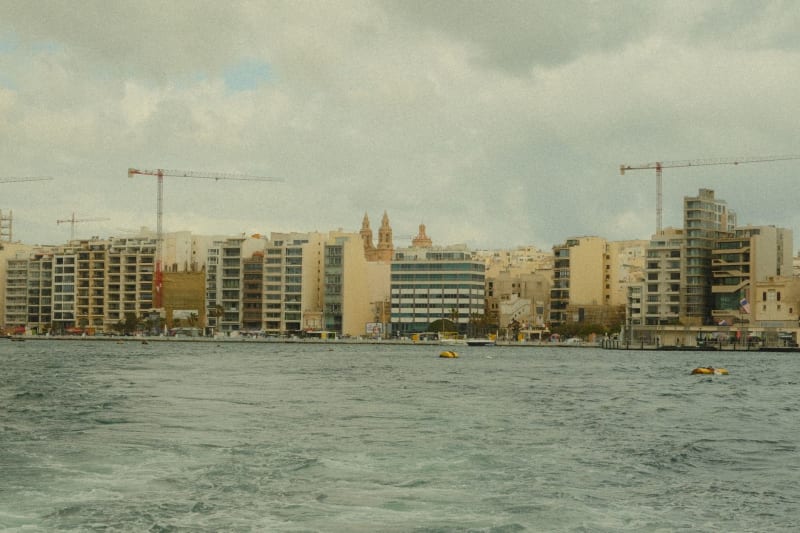
malta Sliema
The seafront promenade across the bay from Valletta, where Maltese families walk at dusk and the ferry crosses every half hour between two different centuries.
Explore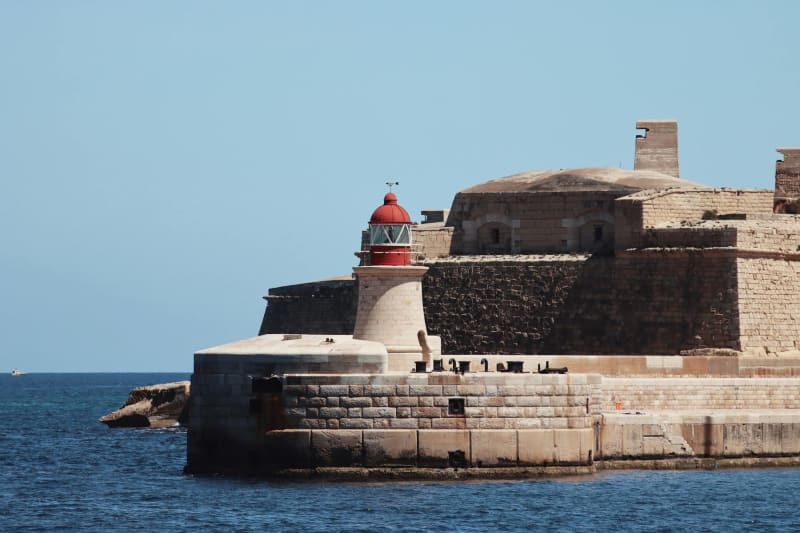 malta
malta Valletta
Europe's smallest capital packs an extraordinary density of baroque palaces, Caravaggio paintings, and honey-gold limestone onto a fortified peninsula.
Explore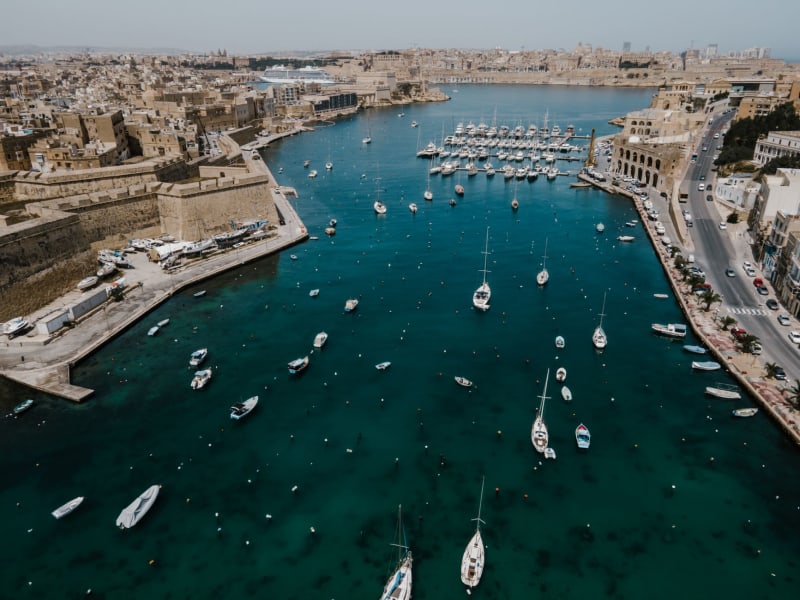 malta
malta Birgu
Older than Valletta and half as visited, Birgu sits across the Grand Harbour wearing its Knights-era fort walls like a coat that still fits perfectly.
Explore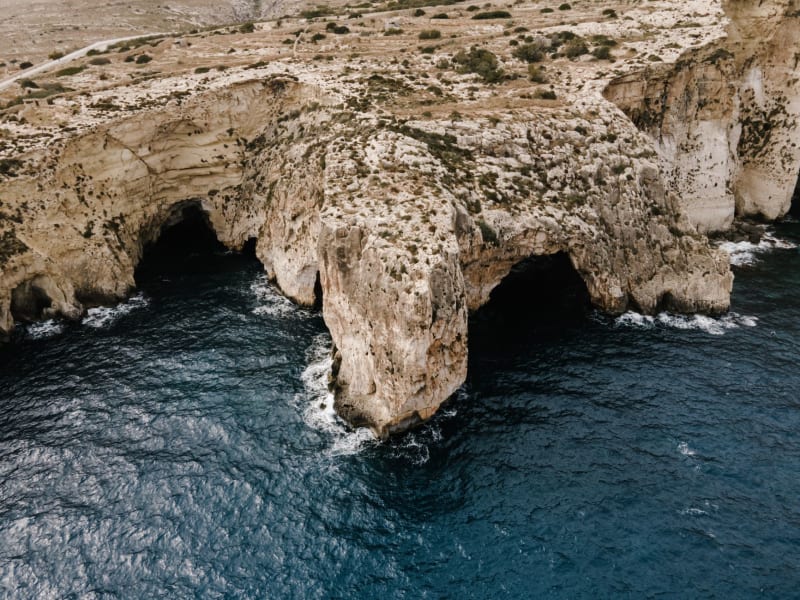 malta
malta Blue Grotto
A cluster of sea caves on Malta's southwest coast where the water turns a color that sits somewhere between turquoise and hallucination.
Explore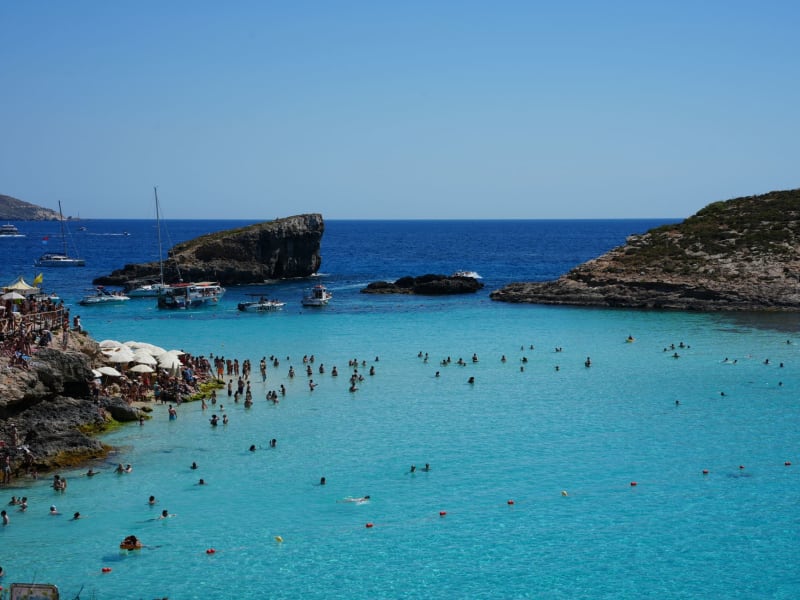 malta
malta Comino
A three-kilometer island with fewer than ten permanent residents, no cars, and a lagoon so blue it looks like someone has been tinting the water since the Phoenicians.
Explore malta
malta Dingli Cliffs
The highest point in Malta: 250 meters of sheer limestone dropping into open Mediterranean with no railing, no signage, and a silence that doesn't feel like absence.
Explore