Gozo
"Gozo is what Malta was before everyone arrived, and still is on quiet Tuesday mornings."
Malta's sister island moves at a slower pace, offering citadel views, salt pans, and sea caves in an island the size of a weekend.
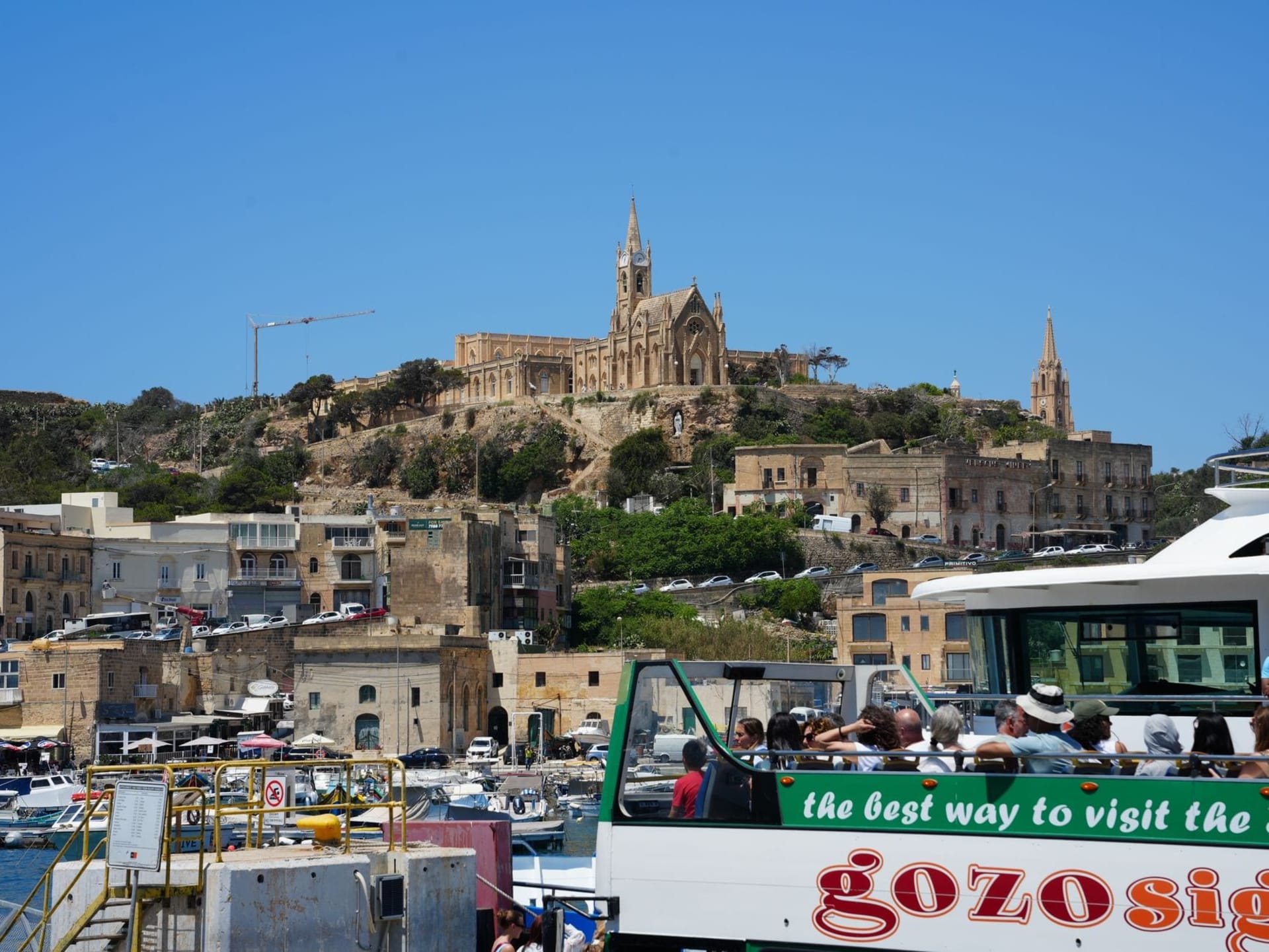
The ferry from Ċirkewwa takes twenty-five minutes. By the time you step off at Mġarr and smell the harbour — diesel, brine, a faint sweetness from the bakery on the hill — you already understand that something has shifted. Gozo doesn’t announce itself. It simply becomes the place you’re in now.
The Citadel and the Weight of the View
I walked up to the Cittadella on a Tuesday, which turned out to be the correct day. The tour groups cluster on weekends and on the weekend-adjacent hours of Friday afternoon. On a Tuesday the ramparts belong to the pigeons and to whatever you brought with you. Standing on the north bastion, I could see the entire island below me — Victoria’s ochre rooftops, the flat blue smear of the Marsalforn bay, the salt pans at Xwejni catching light like cracked mirrors. The island is twenty-seven square kilometres. From this height you can feel exactly that — contained, complete, like a painting someone actually finished.
The Cattedrale tal-Assunta inside the Cittadella has a trompe-l’oeil ceiling that stopped me cold. There is no dome. There never was. Francesco Zahra painted one in 1739 and from the nave floor it reads as solid stone, ribbed and vaulted and impossible. I stood there longer than I meant to. That’s the kind of surprise Gozo specialises in — the thing that makes you recalibrate your assumptions about what’s real.
Salt and Stone at Xwejni
Lia found the salt pans first. We had rented a small car and taken the coast road north from Marsalforn when she pointed left at a pull-off I would have driven past. The pans are cut directly into the limestone shelf at the water’s edge — hundreds of shallow rectangles that have been worked by the same families for generations. The Cini family sells from a small booth at the road. We bought two bags, the coarser one and the one flecked with herbs, and ate lunch nearby with fresh ħobż biz-żejt from a bakery in Victoria: the Maltese bread rubbed with tomato paste, then olive oil, then capers and tuna. Salt on top, still damp from the pan.
The Water at Dwejra
The Azure Window is gone — it collapsed in 2017 — but the Inland Sea at Dwejra remains, and it is stranger and more beautiful than any arch. A narrow channel cuts through the cliff and opens into the open Mediterranean. Fishermen take their luzzu through it by memory. The water inside the lagoon is so still and so green it looks like the sea is holding its breath.
When to go: April through June offers warm days, uncrowded sites, and the island’s wildflowers still in bloom. October is equally good — golden light, quieter roads, and the summer’s heat finally loosened from the stone.