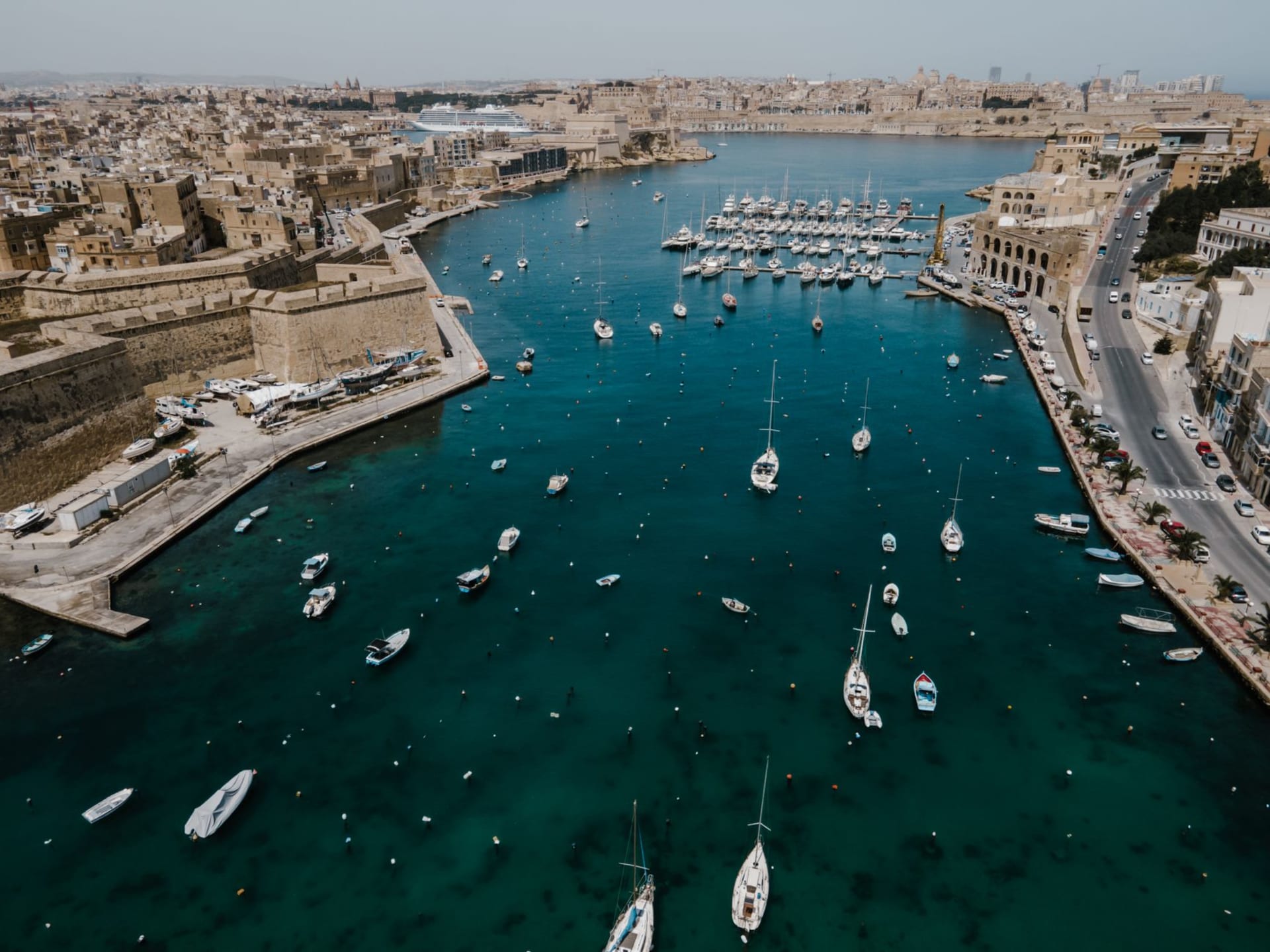
Valletta is the famous one, the capital, the UNESCO site everyone photographs. But Birgu — the older city, one of the Three Cities tucked behind the Grand Harbour — is where Malta’s actual history was conducted, and it shows in the stone. The Knights of St. John fortified this peninsula before Valletta existed. The Inquisition ran its courts here. The Great Siege of 1565 played out in these streets. Walk Birgu slowly and you feel the weight of all of it in a way that Valletta, for all its grandeur, occasionally oversells.
Arriving by Water
There’s a ferry from Valletta’s lower waterfront that crosses the Grand Harbour in about five minutes and costs next to nothing. Take it. The approach by boat makes Birgu comprehensible in a way that arriving by road doesn’t — you see how the Three Cities (Birgu, Senglea, Cospicua) cluster on their peninsulas, how Fort St. Angelo guards the tip of the headland, how every roofline steps down toward the water. The fort was here before the Knights arrived and has been rebuilt so many times it’s essentially a geological formation at this point. It smells inside like old limestone and the mild mustiness of rooms that were never meant to be warm.
The Inquisitor’s Palace
Most travelers skip this and I can’t explain it. The Inquisitor’s Palace is the only complete Inquisition tribunal building left in the world, and it’s sitting in a residential street in Birgu with a small sign and a reasonable entry fee. The cells are intact. The interrogation rooms are intact. The Great Hall where sentences were read has its original timber ceiling. I spent more time here than anywhere else in Malta and left with the uneasy feeling of having been in a place where things happened that are worth remembering with some precision.
The Marina and the Waterfront
The marina on Birgu’s south side is all glossy superyachts and chandlery shops and a row of restaurants with water views. It’s a jarring shift from the Inquisitor’s cells two streets away, but this is Malta: the medieval and the contemporary coexist without any apparent self-consciousness. Lia and I sat at a waterfront table with cold Cisk beer and plates of bragioli — thin beef rolls stuffed with breadcrumbs, eggs, and herbs, braised slowly in wine until the whole thing surrenders — and watched Valletta glow orange across the water as the sun dropped behind the bastions.
Evening in the Alleyways
Birgu is small enough to walk completely in an hour, but the side streets reward slower progress. The houses are tall and narrow, the limestone the same warm honey color as everywhere in Malta, the balconies painted dark green or dark red. On weekday evenings it goes very quiet — this is a functioning residential area, not a tourist precinct — and you can hear people cooking through open windows, a television, a dog somewhere behind a wall. The maritime museum near Fort St. Angelo closes early; don’t miss it.
When to go: Birgu is compelling in any season. Spring and autumn avoid the summer heat and keep the streets manageable. The Birgu by Candlelight festival in October lights the entire city with candles — an event worth building a trip around if the timing aligns. The ferry from Valletta runs all year.