Senga Bay
"By the third day I had stopped checking my phone. By the fourth I'd forgotten it existed."
Senga Bay doesn’t announce itself the way Cape Maclear does. There’s no single reputation-defining vista, no one thing you come specifically to see. You come because someone told you about the drive down from the Salima road — the sudden opening of the lakeside plain, the trees thinning, the air changing quality — and because you wanted a few days of the lake without the infrastructure that comes with its more famous shores.
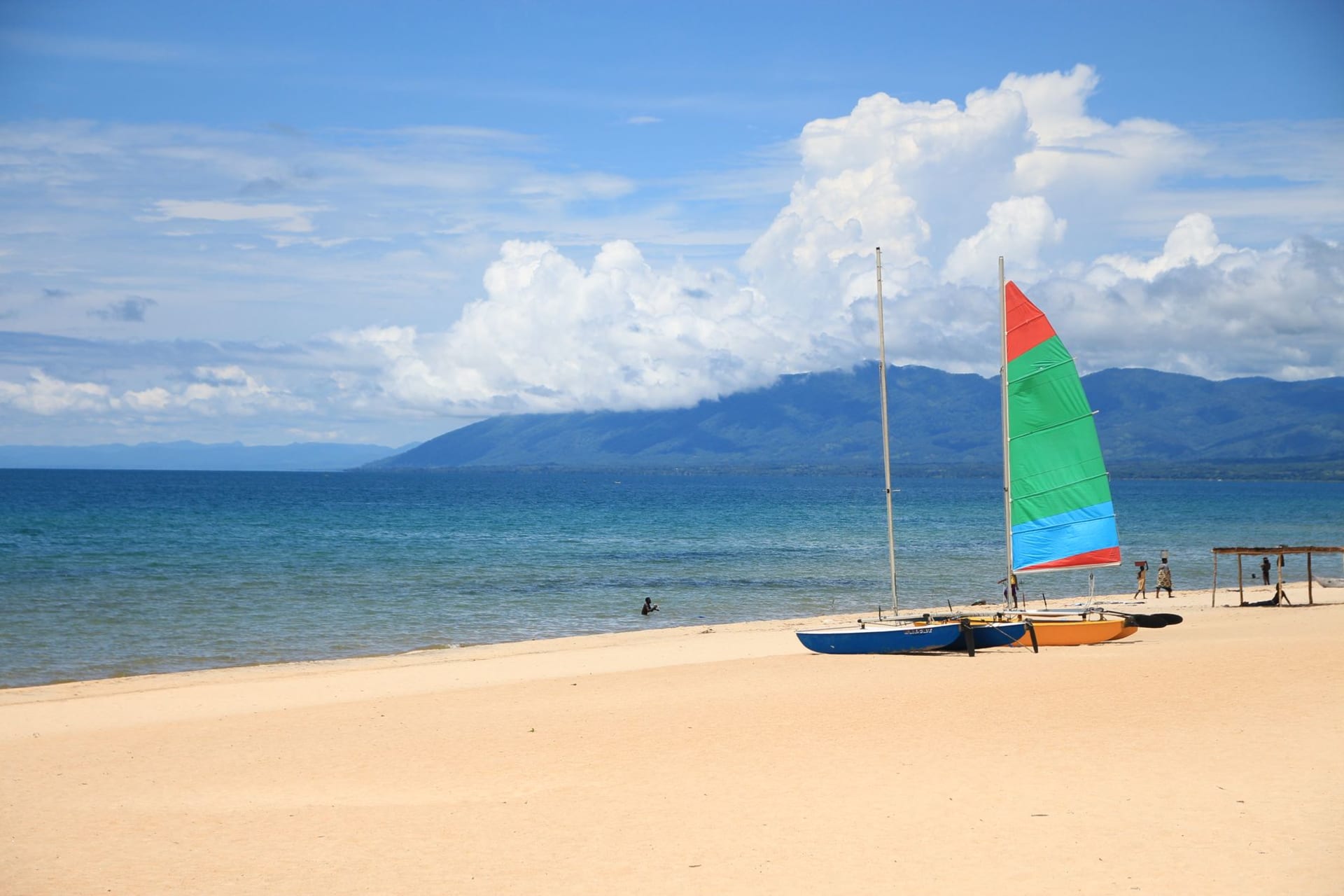
I arrived on a Thursday afternoon in August, the light already going amber, and walked straight through the small cluster of lodges to the waterline. The beach was wide and almost empty — a couple of boats pulled up, a woman washing clothes at the water’s edge, a kid attempting to fly a kite made from a plastic bag in air that wasn’t cooperating. The water was warm when I put my feet in, the surface catching the low sun in a way that fractured it into something more interesting than reflections. I stood there longer than I’d planned and missed whatever was happening in Lilongwe that week, which was almost certainly nothing that couldn’t wait.

The lodges at Senga Bay are various: a few upmarket options with proper dining rooms and speed boats for waterskiing; several mid-range family guesthouses where the fan works when the power’s on and the nsima appears reliably at mealtimes; a couple of cheaper spots where the charm is primarily in the view and the hammocks. I ate chambo most evenings, either at my lodge or at a small restaurant further down the shore run by a family that clearly regarded their fish as the best on the lake and seemed to be right. The grandmother cooked. The grandchildren served. The grandfather sat on the porch and commented on the preparation, which he considered insufficiently attentive to detail.
Senga Bay’s geography creates a particular kind of evening. The bay faces west — or west enough — so the sunsets are direct and unhurried, the kind that build slowly from yellow to orange to a deep burning red while you watch from whatever you’re sitting on. On my second night a group of young Malawians arrived from Lilongwe for a weekend and set up speakers and a volleyball net on the beach and cooked meat over a fire the size of a small building. I wasn’t invited but was also not unwelcome, and spent an hour at the edge of the firelight eating whatever was offered and watching the lake go dark.

The village above the bay has a modest market and a small Catholic church whose Sunday service spills music out through open windows and down toward the lake. The snorkeling off the rocky northern point is rewarding enough, though not as spectacular as the southern lake’s waters. But Senga Bay isn’t really about superlatives. It’s about scale — the right-sized lake moment, the correct amount of sun.
When to go: May through October for reliable dry weather, warm days, and the best conditions for being on the water. The long drive from Lilongwe (roughly two hours) makes this a popular weekend destination for the capital’s residents, so Fridays and Saturdays can be lively. Arrive Thursday and leave Monday for the quietest version of the place.