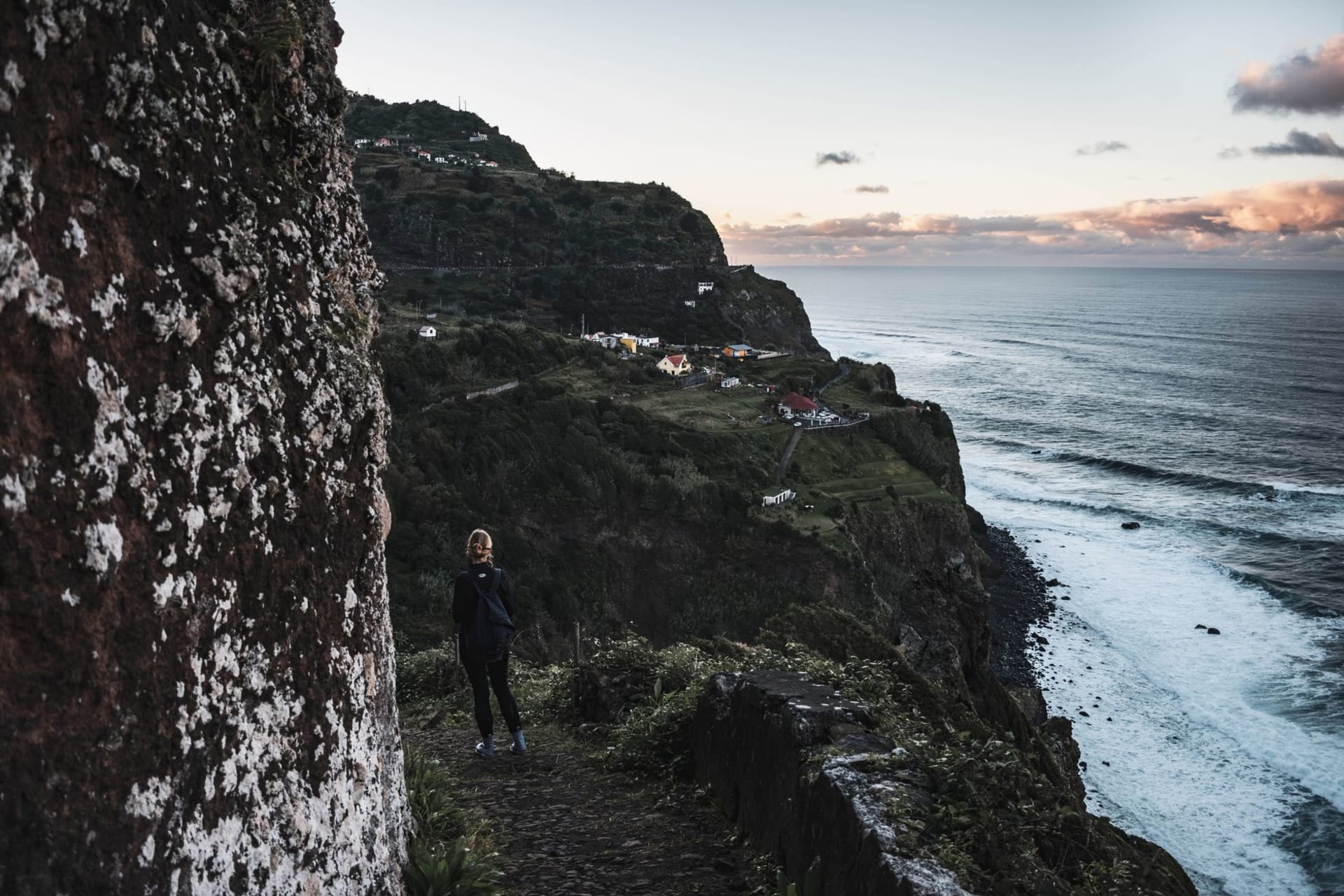
The road to Santana from the south goes over the central plateau through cloud and wind and then drops suddenly into a green so saturated it looks digitally enhanced. The north coast of Madeira receives more rain than the south, and the landscape shows it — the hillsides are lush in a way that feels subtropical but with a temperate cool, the grass almost luminously green in the way Irish grass can be, the kind of green that makes you understand why people invented the word viridian. I came around a bend and there, in a field that belonged to someone’s working farm, were two palheiros — the traditional A-frame houses of Santana — with their thatched roofs falling nearly to the ground and their brightly painted doors, and I pulled over on a road with no pullout and sat in the car for a moment just looking at them.

The palheiros are not a theme park, which is what I had half-expected. Some have been converted to small shops or are maintained as tourist draws, yes, but walk further up the lane and you encounter versions that are clearly in current use — a woman hanging washing behind one, a dog sleeping against a painted door, a vegetable garden planted right up to the foundation. The thatch comes down to about knee height on the sides, giving the houses an almost fairy-tale quality, low and sheltered and seemingly designed to suggest that the outside world is somewhat irrelevant. In a north-coast Madeiran winter, that design logic is entirely sound.
The village itself stretches along the ridge rather than concentrating, which means wandering it takes longer than you expect. The church of São Jorge nearby has azulejo tile work on its exterior that I stood in front of for fifteen minutes without particularly intending to. The café I found in the centre of town served queijo fresco and bolo do caco — the dense, slightly sweet local flatbread heated on a lava stone — with a cup of coffee so strong it tasted structural. I ate two rounds of the bread and did not feel any need to move for a while.

From Santana, the road continues west toward Faial and São Vicente, following the coastline closely enough that Atlantic spray occasionally reaches the tarmac in rough weather. The Rocha do Navio natural reserve is accessible from here — a protected bay where you descend by funicular to a stony beach, and if the sea is calm enough to enter, you swim in water so clear the volcanic rock twenty feet below looks close enough to touch. I made two attempts on different days. The sea was calm enough once. It was worth the second attempt.
When to go: Spring, March through May, brings the north coast’s flowers out without the summer crowds and is genuinely the most beautiful season on this side of the island. Winter is cloudier and cooler — authentically moody rather than unpleasant, and the palheiros look best in soft grey light anyway. Summer weekends bring day-trippers from Funchal but the roads are narrow enough to keep the numbers manageable.