
Porto Moniz
"The wave came over the wall while I was swimming and I laughed before I could think not to."
The drive to Porto Moniz from anywhere takes longer than the map suggests, because the north coast road — the ER101 — is a ledge above sea cliffs that requires full attention and has a tendency to be damp and occasionally one-laned due to fallen rock or vegetation that hasn’t been trimmed in a while. I drove it from Santana in about an hour, the Atlantic throwing itself at the rocks several hundred metres below the road the entire way, and arrived at the northwest tip of the island in a low orange light that was throwing long shadows across the lava formations along the shore. The pools were still full. A woman was swimming in the largest one, and I sat on a rock and watched the Atlantic do its thing against the outer walls and felt immediately that I had not planned enough time here.
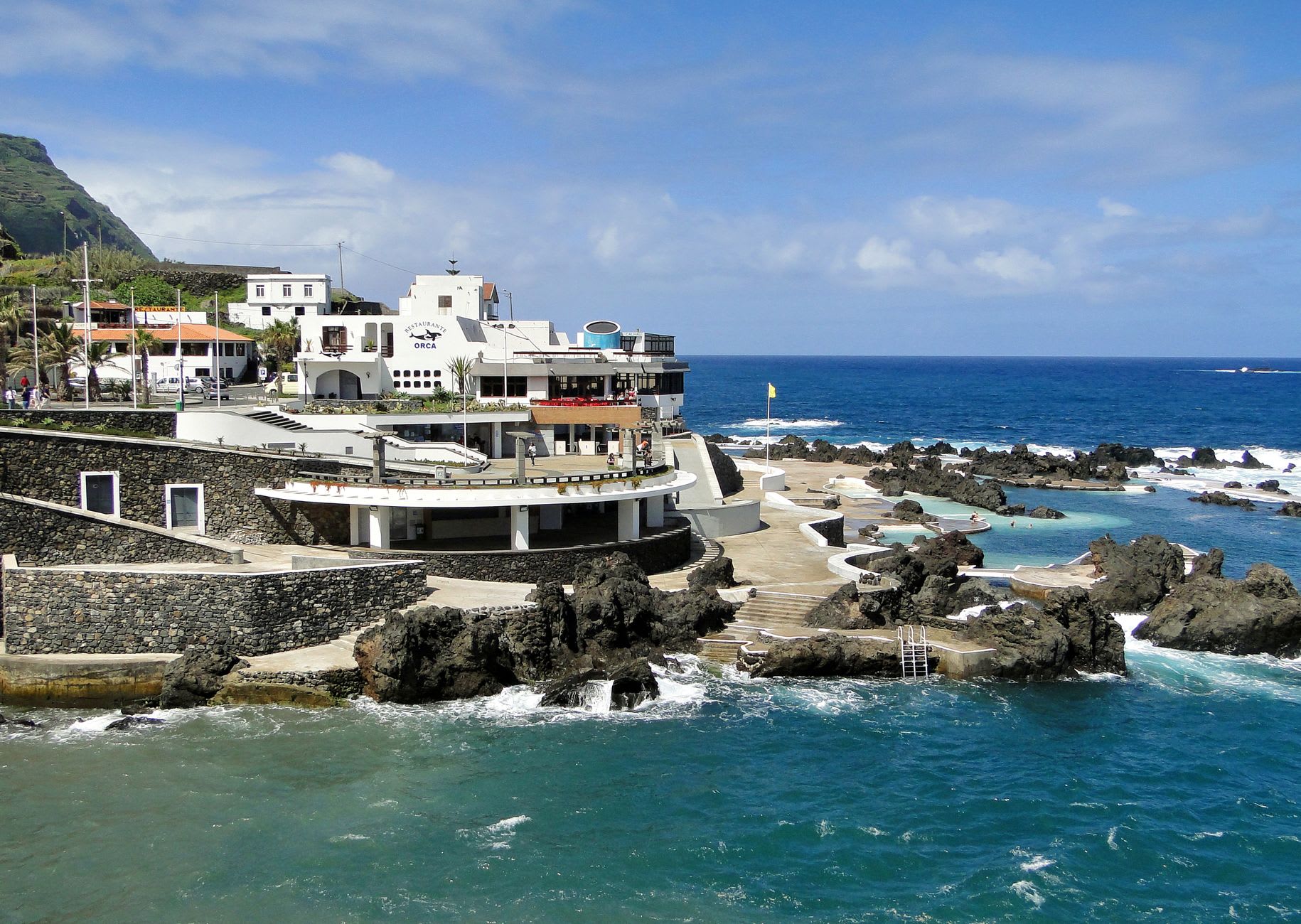
The pools at Porto Moniz are natural formations that have been enhanced rather than constructed — the volcanic lava flow created a series of interconnected basins along the shoreline, and seawater refreshes them naturally with each tide and surge. The largest pool is substantial, big enough to do proper laps in, and the water is the clearest seawater I have swum in outside of the Azores: you can see the bottom, track the small fish navigating the rockery, see your own hands several metres down. The temperature is, to be direct, cold — the Atlantic here is not the Mediterranean. But the cold is clean and the shock of entry is over quickly and what follows is something close to clarity.
The village above the pools is small and has the calm quality of a place that knows it sits at the end of a long drive. The restaurants along the promenade serve grilled espada and lapas — limpets grilled in the shell with butter and lemon — with a confidence that suggests they know you are not going anywhere until you have eaten. I had a plate of lapas at a table where I could see the pools from my chair and the sea beyond. The texture of the limpets, which I had not eaten before, was somewhere between shellfish and something more mineral, the shell itself carrying more flavour than I expected, the butter pooling in the concave surface.
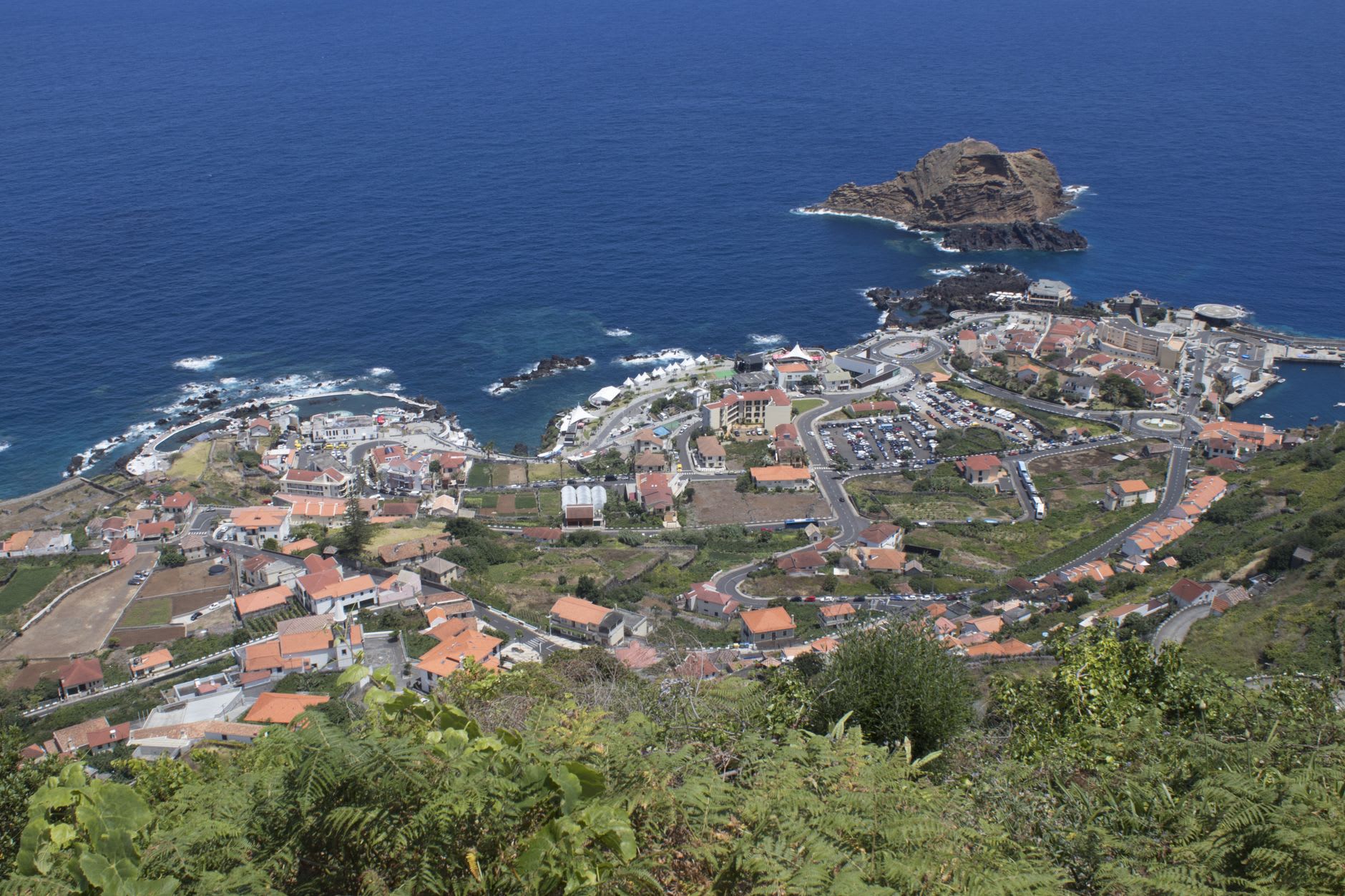
Above the village, the road continues east along the north coast toward Seixal and then São Vicente, and if you have not driven this particular section you are missing what I think is the most dramatic road in Portugal — two lanes of tarmac, sea cliffs to the left, the ocean several hundred metres below, tunnels cut through the rock, waterfalls falling directly across the road in wet weather. The drive alone justifies the trip to this corner of the island, independently of the pools, independently of the limpets.
When to go: June through September for swimming — the water is at its warmest and the Atlantic is calmer in summer. But Porto Moniz in winter has a different appeal entirely: the storms that hit this coast in November and December are spectacular, and watching the waves throw themselves against the outer lava formations from the shelter of a restaurant window is genuinely memorable in its own way. Avoid the pools on summer weekends if you want space.