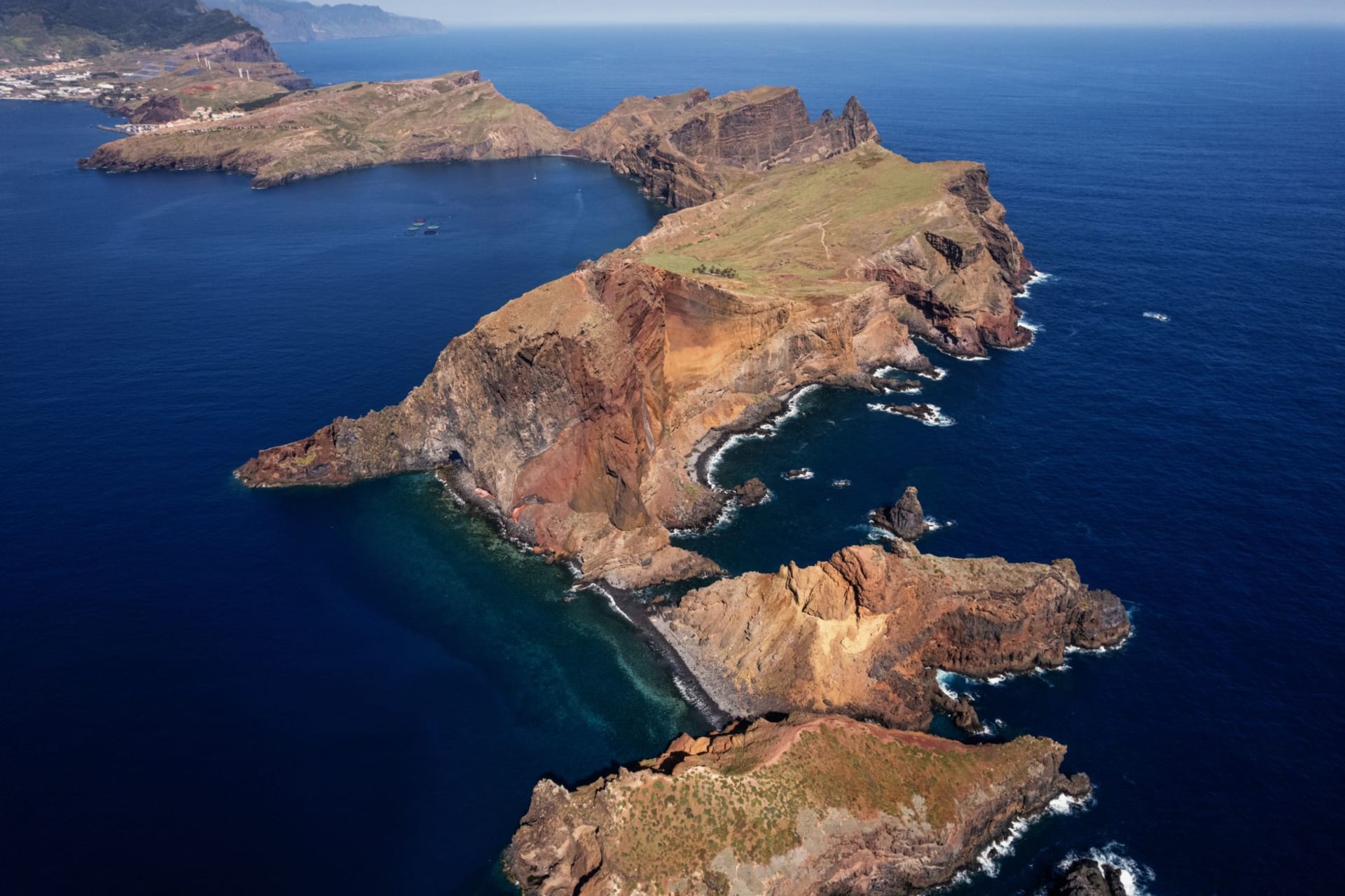
Ponta de São Lourenço
"Madeira is a green island, except for the one finger of it that forgot to be."
Madeira sells itself as the floating garden of the Atlantic, and for the most part the marketing is honest — the place is so relentlessly green and lush that after a few days I began to find it almost oppressive, like being trapped inside a very humid greenhouse. And then we drove to the far eastern tip, to Ponta de São Lourenço, and the island simply stopped being itself. The trees vanish. The greenery thins to scrubby tussock. And the land narrows into a long, bare peninsula of red, ochre and rust-coloured rock, twisting out into the ocean like the tail of some petrified sea creature. It is the geological opposite of everything else on Madeira, and it is my favourite part of the island.
The Walk Out
The trail — the PR8 — runs the length of the peninsula and back, a there-and-back of perhaps three hours that involves a fair amount of up and down across exposed ridgelines. There is no shade. None. Lia, who had sensibly brought a hat, spent much of the walk gloating gently while I went the colour of the surrounding rock. But the reward is constant: on both sides the land drops away in vertiginous cliffs to a sea so blue it looks artificial, and the wind comes howling across the spine of the peninsula with nothing to break it between here and the African coast.
The colours are extraordinary. This is the volcanic skeleton of Madeira laid bare — layers of red oxidised basalt, bands of yellow and grey ash, sea stacks standing offshore like sentinels. We passed a small group of researchers monitoring the rare plants that cling on out here, species found nowhere else, surviving on salt spray and stubbornness.

The End of the Island
The trail ends at Casa do Sardinha, a lonely white house tucked into the only sheltered green pocket on the whole peninsula, with a small visitor point and, mercifully, a little café where I bought a poncha — the local rum, honey and lemon concoction — and felt my sunburn forgive me slightly. From a viewpoint just beyond, you can see the very last rocks of Madeira trailing off into the sea, and beyond them the small island of Ilhéu de Fora with its lighthouse.
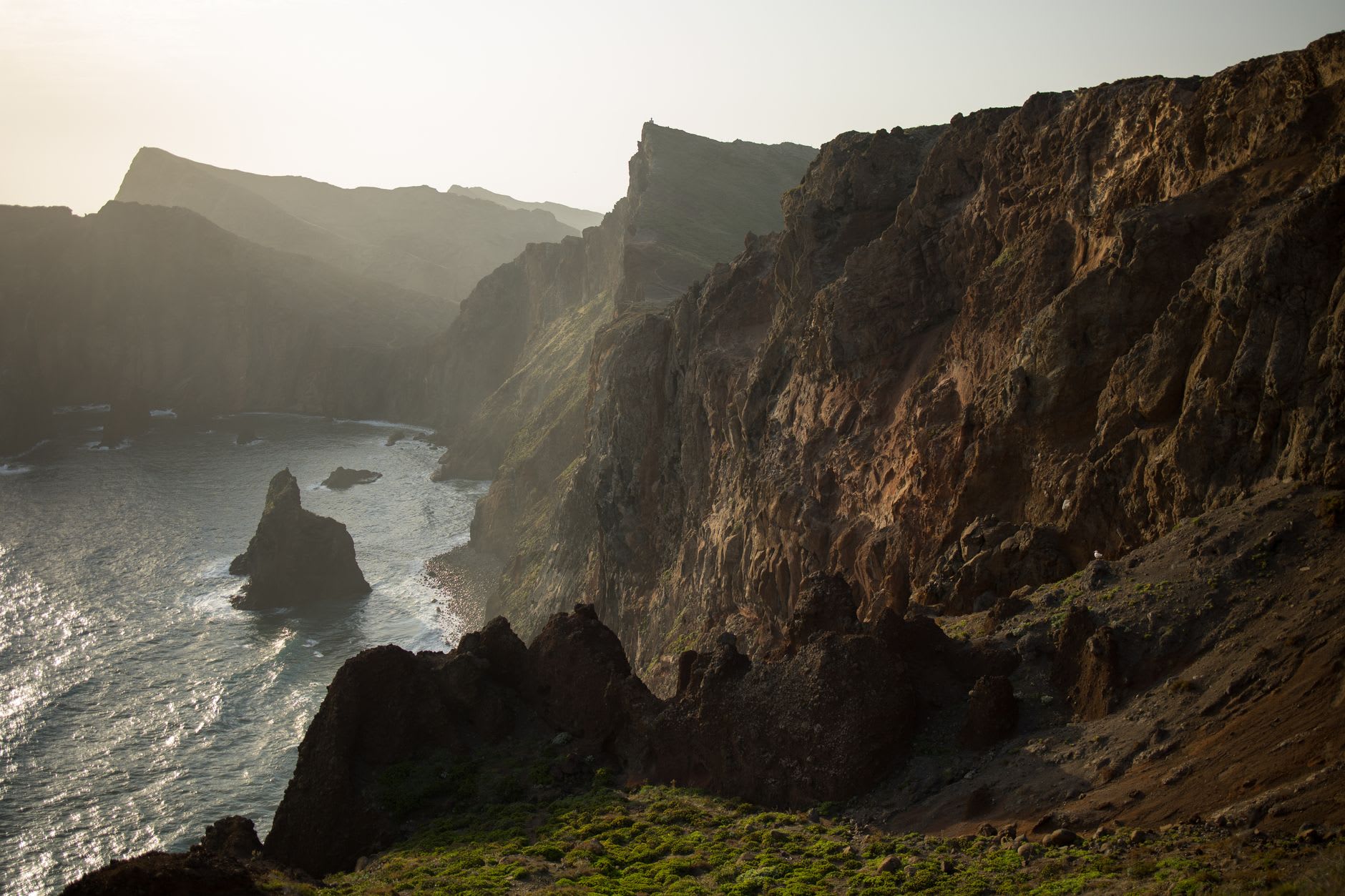
We sat there for a long time. There is something about the end of a place — the literal final scrap of land before the open ocean — that makes me reflective in a way I cannot entirely justify. Lia said it reminded her of the end of a pier, and that the only thing missing was someone selling ice cream. She was not wrong, but I preferred my version, where I stood at the edge of Europe’s most southerly garden island and felt suitably small.
When to go: Year-round, but go early in the morning to beat both the heat and the crowds — by mid-morning the car park fills and the narrow trail develops queues at the steeper sections. Take far more water than you think you need, and do not attempt it on a very windy day; the exposed ridges are no joke.