Caniçal
"The sperm whale skeleton in the museum was so large it made the building feel like the wrong size."
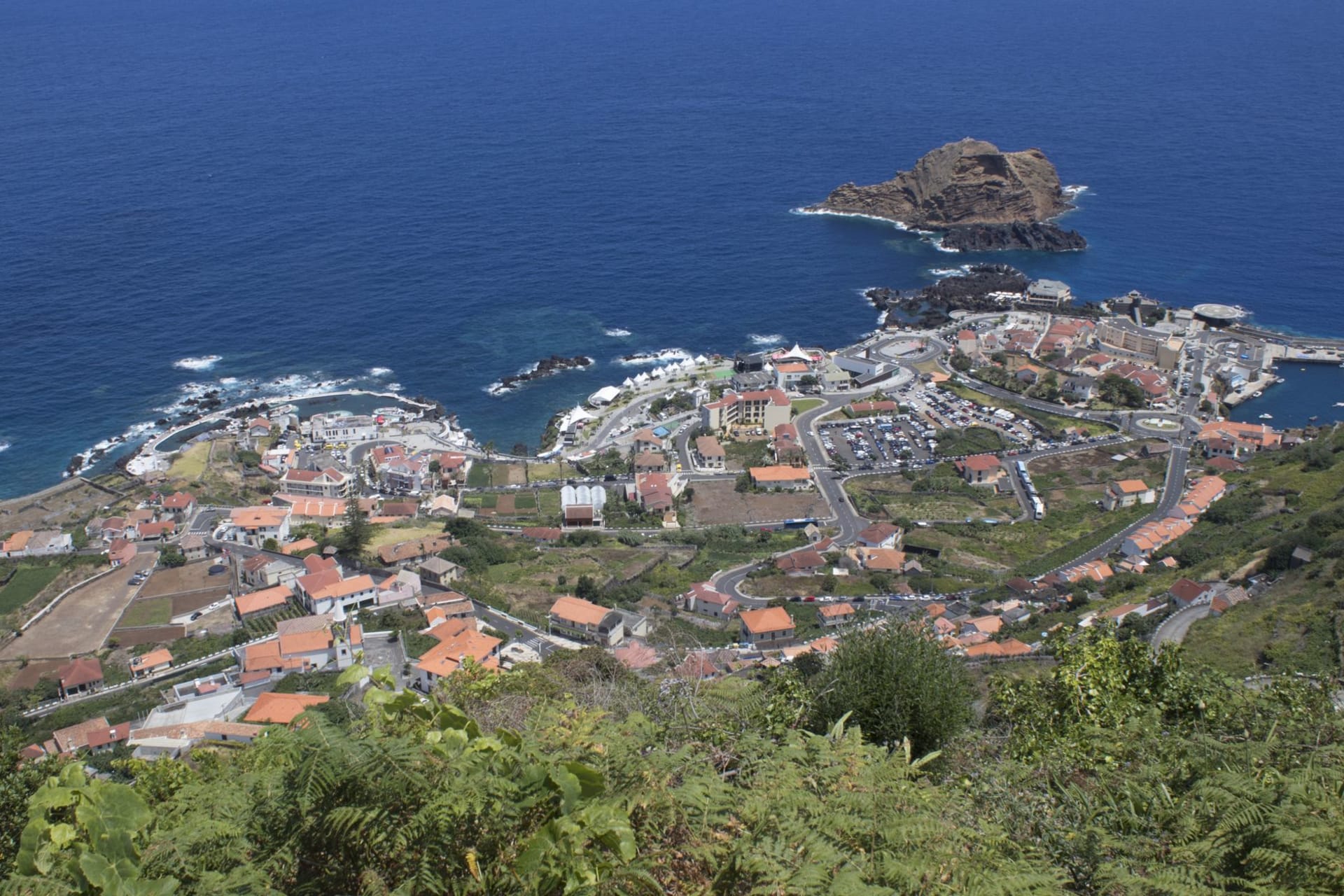
Caniçal sits at the end of the island, east of the long road tunnel that separates it from the rest of Madeira, in a geographic isolation that has given it a character distinct from the more accessible villages. It was, until 1981, the site of Madeira’s last whale processing station — an industry that ran from the 1940s and was conducted in open water from small open boats with hand-thrown harpoons, in a tradition directly descended from the Azorean whalers who brought the technique here generations earlier. The factory closed when Portugal outlawed commercial whaling, and in its place grew a museum, and in the waters offshore grew a sanctuary.

The Museu da Baleia occupies a building that was the factory itself. The exhibits are genuinely affecting rather than merely informative: scale models of the canoas that launched from this harbour, harpoons and flensing knives with worn handles, photographs of men doing work that was physically extraordinary and ecologically ruinous in equal measure, and in the main hall, the assembled skeleton of a sperm whale that is large enough that the room doesn’t really contain it — you feel, standing beneath it, like the architecture has been outscaled by its own exhibit.
The living version of this history departs from the same harbour. Whale-watching trips go out into the deep water south and east of Madeira in search of sperm whales, which are resident year-round because the ocean floor here drops to over three thousand metres within a few kilometres of the coast — exactly the kind of deep water habitat sperm whales require for their extended dives. I went out in April on a rigid inflatable with eight other people and we found a family group of three within forty minutes: the blow visible from three hundred metres, then the massive blunt head lifting briefly from the surface, then the slow sound dive and the fluke rising almost ceremonially from the water. I have seen whales before. I had not seen sperm whales in their actual habitat and the scale of them — the ease and the indifference — is something I still think about.

The village itself is quiet, the harbour functional rather than picturesque, the restaurants serving the catch of the day without ceremony. The eastern tip of Madeira — the Ponta de São Lourenço peninsula, accessible by road and then on foot — is the most dramatic landscape on the island and completely different in character from the forested interior: bare volcanic rock in shades of ochre and rust-red, the sea on both sides, the path narrowing along a ridge above a series of small perfect bays. The walk takes about three hours return and feels, at several points, like a completely different island has materialised at the end of the one you drove to get here.
When to go: April through October for whale watching — sperm whales are resident year-round but sea conditions are more favourable in calmer months. The Ponta de São Lourenço walk is best in spring and autumn when the light is low and warm. The eastern tip receives more sun and less rain than the north coast, which makes it a reliable destination even in shoulder seasons when the rest of the island is unpredictable.