Câmara de Lobos
"Churchill sat on these cliffs with his easel and I understand the impulse completely."
The road from Funchal to Câmara de Lobos hugs the coast for about ten minutes and deposits you in a fishing village that looks, from the right angle, almost exactly as it must have when Winston Churchill set up his easel on the clifftop in 1950. The harbour is small, sheltered by volcanic rock headlands, and the fishing boats moored inside it are painted in colours that have appeared in maybe ten thousand postcards and still somehow manage not to feel staged. They are working boats, not decorative ones. That distinction matters here more than in most places.

I arrived on a Thursday and the smell hit me first: dried fish, diesel, seawater, and underneath it something I later identified as the garlic from the tascas along the harbour front. The fishermen here target espada, the scabbardfish that Madeira built its culinary identity around, dropping handlines into water that plunges three hundred meters just offshore. The fish has to come from that depth to survive the pressure change, which means each catch is hauled up dead and perfect, its eyes large and fixed and silver. I watched a man unload a cooler full of them and he seemed neither hurried nor proud. This was simply the transaction of a morning’s work.
The village rises steeply behind the harbour in narrow lanes that require the specific attention of someone who is not in a hurry. The bar Ponto de Encontro, which translates as Meeting Point and does not disappoint on that promise, is where the local poncha is drunk seriously. Poncha here is made with aguardente de cana, honey, and lemon, and the proportions vary by bartender and mood. The version I had that afternoon was sweeter than I expected and hit me at the base of the skull after about twenty minutes in a way that explained why Churchill reportedly worked through quite a lot of it on his painting visits.

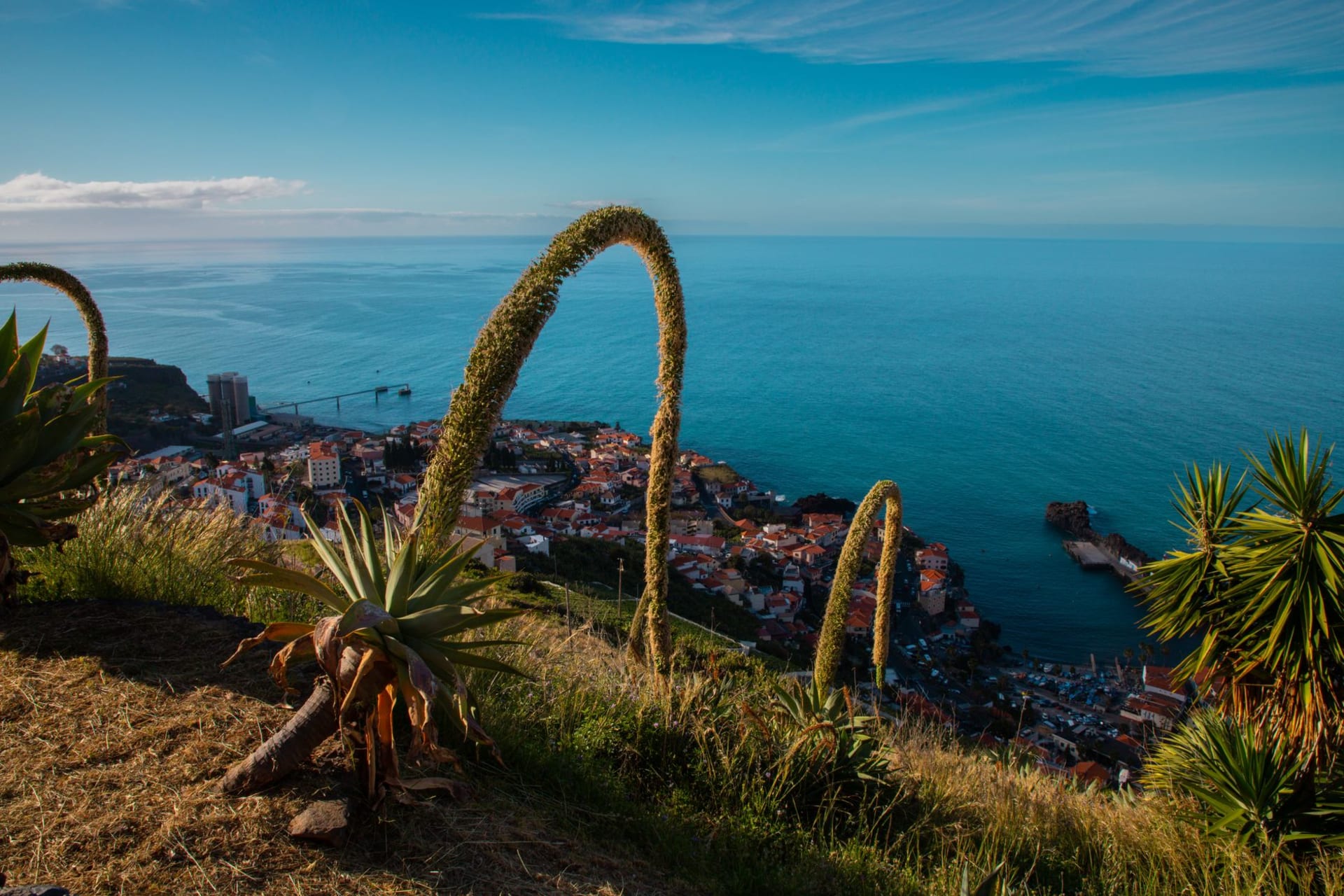
The viewpoint above the village looks east toward Cabo Girão, one of Europe’s highest sea cliffs, and the sight of that sheer five-hundred-meter drop into the Atlantic does something to your sense of scale. Standing there in the afternoon light, the harbour below with its boats, the cliff face going straight into white water, I felt what Churchill must have felt — not that this is picturesque, exactly, but that it is genuinely overwhelming, and painting might be one reasonable response. Writing is another. Neither quite works.
When to go: Câmara de Lobos is not a weather-dependent place — it functions any time of year. Come early morning any day but Sunday if you want to watch the fishermen unload. January through March gives you the harbour without the day-trippers. The festival of São Pedro in late June turns the harbour front into something festive and loud and worth timing a visit around if you happen to be on the island.