
Kirindy Forest
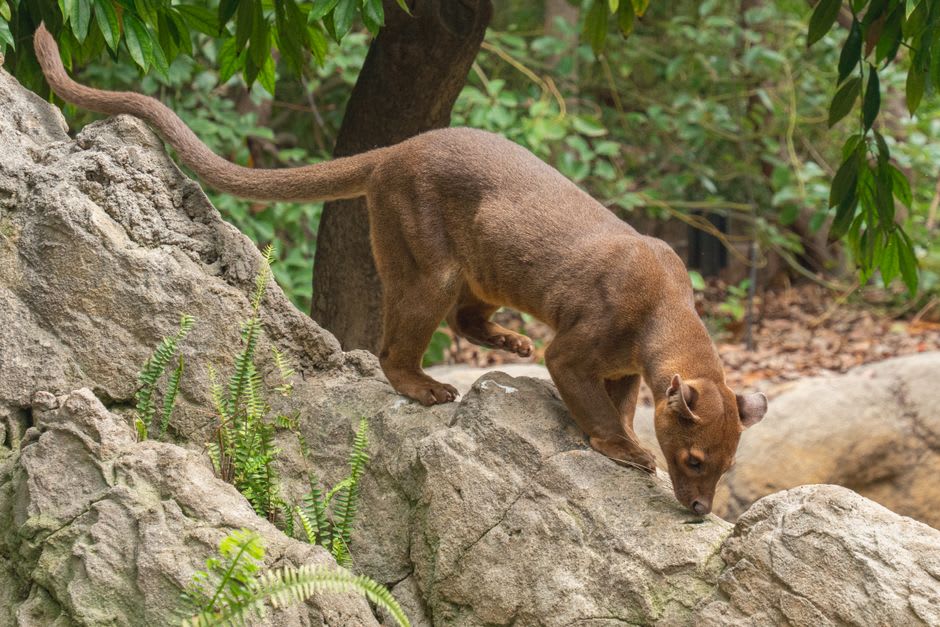
"I came for lemurs. I left thinking mostly about an animal that looks like a small mountain lion crossed with a mongoose."
A private dry-forest reserve near Morondava where the fossa, Madagascar's largest predator, still rules the night after dark falls.
Kirindy sits about an hour and a half inland from Morondava, down a sandy track that turns genuinely difficult after rain, through baobab-studded farmland that thins gradually into dry forest proper. It’s a private reserve, managed for both research and tourism, and it has a reputation among people who take Madagascar’s wildlife seriously as one of the best forests in the country for a single reason: the fossa.
Waiting for the Fossa
I’d heard about fossa sightings here for years before actually visiting — Madagascar’s largest native carnivore, somewhere between a cat and a mongoose in appearance, agile enough to hunt lemurs through the canopy, and rare enough that most visitors to the island never see one. Kirindy’s population is unusually habituated, in part because the research station has tracked and monitored them for decades, and a guide named Tiana told me, with the tone of someone managing expectations professionally, that sightings were common but never guaranteed. We found one on our second morning walk: a reddish-brown shape moving low and fast between tree trunks, pausing once to look directly at us with an expression that felt entirely unbothered, before continuing on toward whatever business it had elsewhere in the forest. It lasted maybe fifteen seconds. I’m still thinking about it.
The Smallest Primates Alive
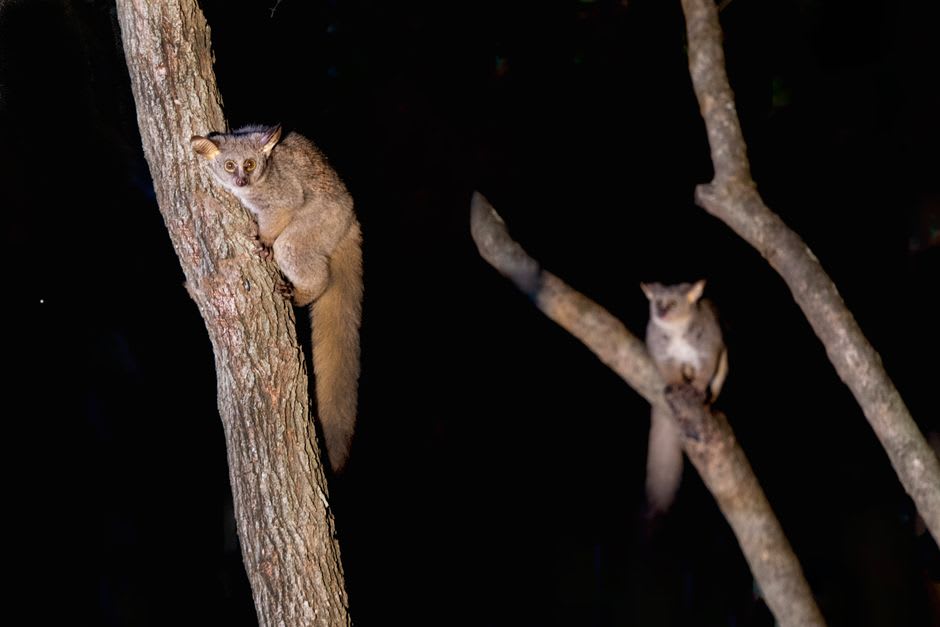
Kirindy is equally known for its mouse lemurs, and specifically for holding the world’s smallest primate, Madame Berthe’s mouse lemur, a species discovered here and found nowhere else with confidence. At night, torches sweep the low branches and undergrowth looking for the reflective eye-shine that gives them away — tiny, glowing pinpricks that resolve, when the beam holds steady, into something roughly the size of a fist, huge dark eyes, quivering with what looks like permanent anxiety. We found three different mouse lemur species in a single two-hour night walk, along with a sleeping chameleon rigid on a branch tip and a giant jumping rat, an endemic rodent that looks and moves disconcertingly like a small kangaroo.
Baobabs Between the Trees
Scattered through Kirindy’s drier sections stand isolated Grandidier’s baobabs, thick-trunked and disproportionate against the smaller surrounding canopy, a visual reminder that this whole region belongs to the same baobab-dominated ecosystem as the more famous avenue near Morondava. I stopped under one at midday, grateful for its narrow band of shade, and watched a column of ants disappear into a crack in the bark with the kind of purposeful indifference to my presence that most of the forest’s residents seemed to share.
The camp where I stayed runs on generator power for a few hours each evening and goes properly dark after that, which made the night sky, away from any real light pollution, almost as memorable as the fossa. I lay on a bench outside my bungalow for a long time before sleeping, listening to the forest do whatever it does once the flashlights go out.
When to go: June through October, dry season, for accessible roads and the most reliable fossa activity. The track from Morondava can become impassable during heavy rain.
Keep exploring
More from Madagascar
 madagascar
 Mahajanga
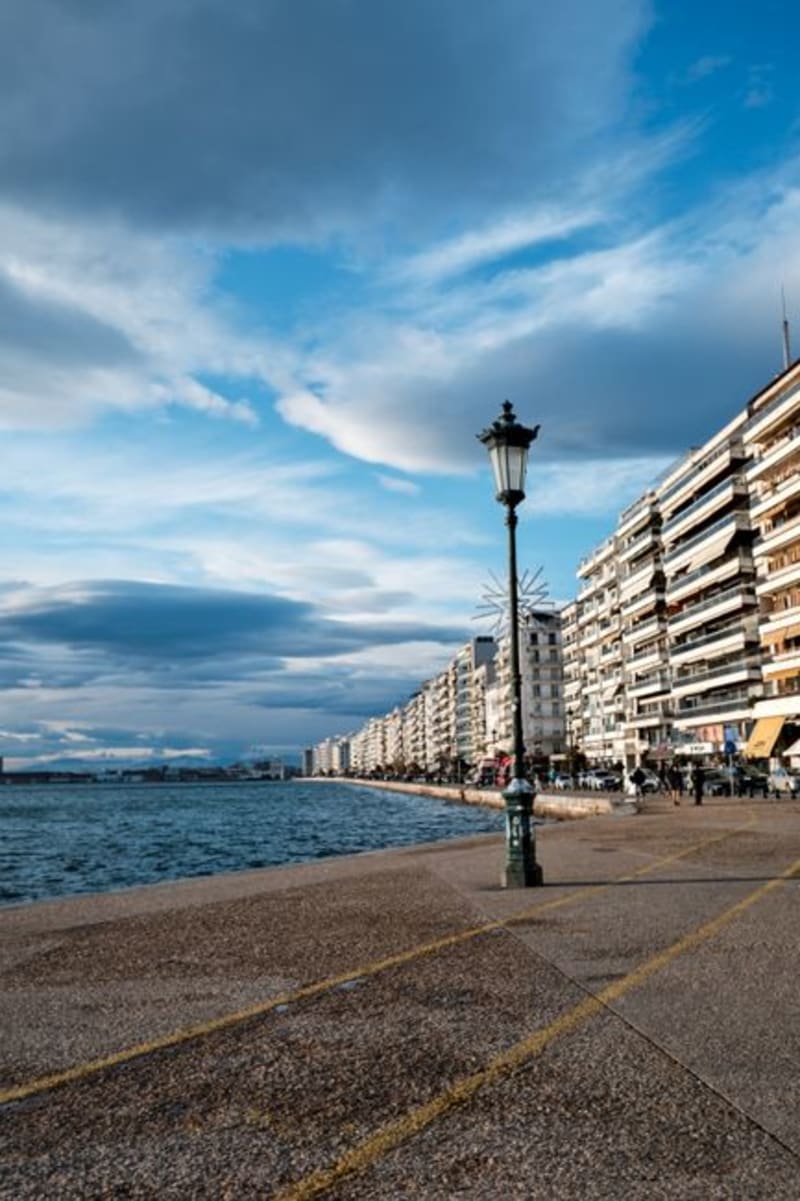
A relaxed northwestern port city with an Arabic-influenced old quarter, a giant baobab in the town square, and a seafront made for slow evening walks.
Explore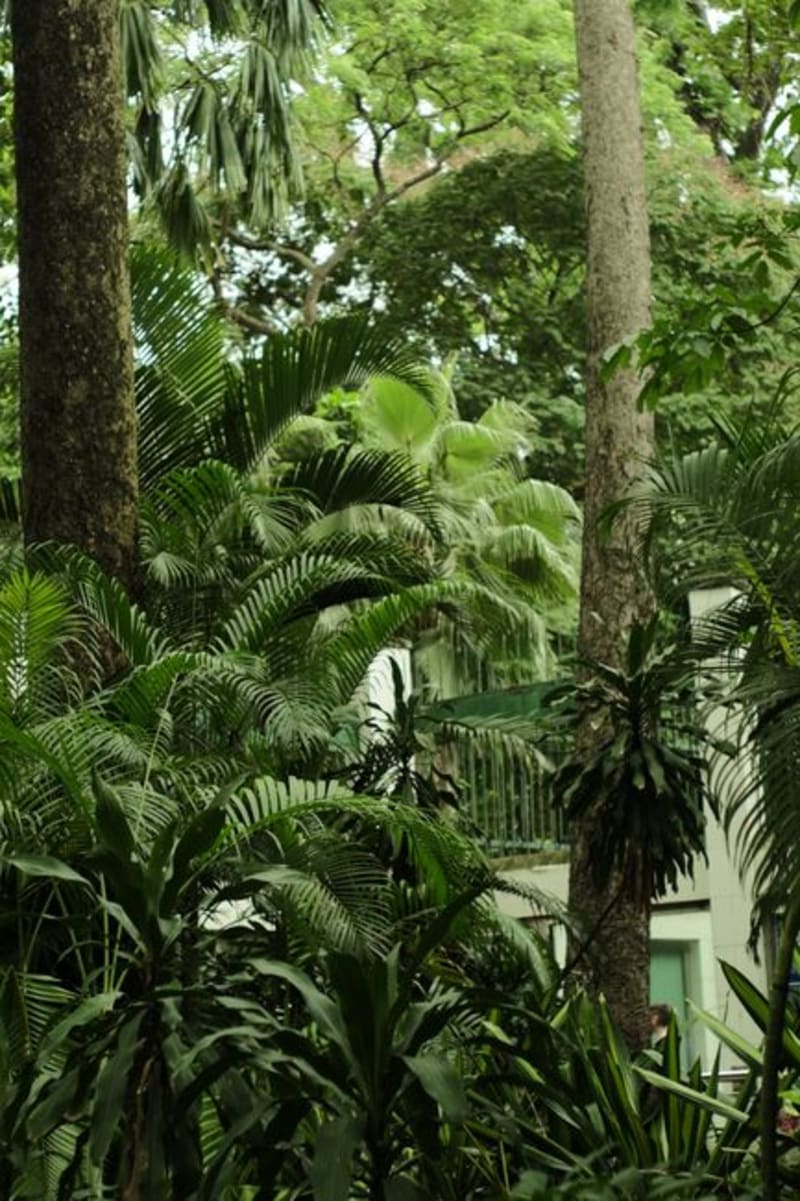 madagascar
 Mantadia National Park
Andasibe's wilder, steeper neighbor, a stretch of primary rainforest where diademed sifaka move through some of the tallest canopy in Madagascar.
Explore madagascar
 Masoala National Park
Madagascar's largest protected rainforest, a roadless peninsula where the jungle runs straight down to a coral-fringed coast.
Explore madagascar
 Montagne d'Ambre National Park
A cool, mist-fed volcanic massif above Diego Suarez where waterfalls drop into crater lakes and chameleons the size of a thumbnail cling to fern fronds.
Explore madagascar
 Morondava
A sun-bleached fishing town on the west coast where the road to the famous baobabs starts, and where the beach itself is worth the detour.
Explore madagascar
 Nosy Be
The perfume island — ylang-ylang plantations, whale watching, and coral reefs in the Mozambique Channel.
Explore