Diego Suarez
"The bay is so large that French naval planners once thought it could shelter every fleet in the world at once."
A weathered port city on one of the world's finest natural harbors, gateway to red sandstone canyons and a bay carved into three distinct colors.
Everyone here still calls it Diego Suarez, though the official name reverted to Antsiranana decades ago — old habits, especially ones this comfortable in the mouth, don’t get replaced easily. The city sits at the northern tip of Madagascar around a harbor so enormous and so well protected by surrounding hills that the French navy considered it strategically irreplaceable for most of the twentieth century, and you can feel that military-port DNA still in the wide boulevards and crumbling colonial villas near the center, half of them repainted in flaking pastel and half of them simply abandoned to the vines.
A Bay Split Into Colors
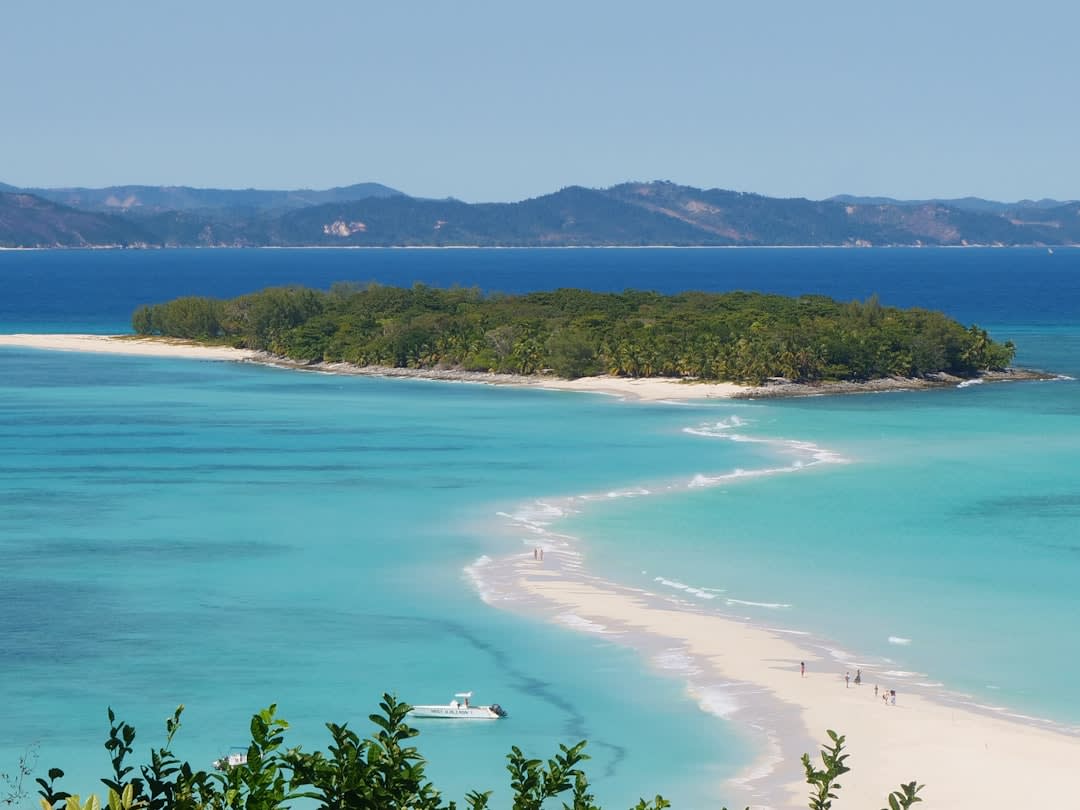
The reason to come is the Baie des Sakalava and the viewpoint locals call the Three Bays, a short drive out of town where a single overlook shows three adjacent inlets, each a different shade — one turquoise, one nearly emerald, one a deep working-harbor blue — separated by narrow spits of red sand. I arrived close to sunset, when the light does something to the color contrast that photos never quite hold onto, and stood there next to a French expat on a motorbike who told me he drove out here most weeks just to look at it, which felt like both an eccentric and completely reasonable use of a Tuesday evening.
Red Tsingy and the Road Out
An hour or so east, the road turns to red laterite track and eventually reaches the Red Tsingy, a set of eroded sandstone pinnacles in shades of rust, ochre, and bleached white, carved by rain rather than the limestone karst process that shaped the more famous grey tsingy further south. They’re smaller, more intimate, and you can walk right up between the formations without a harness or guide rope — a barefoot scramble through what looks, honestly, like the inside of a geode turned to landscape. I went in the late afternoon and had the entire canyon system to myself except for a family of local kids using one of the smoother pinnacles as a slide.
The City at Ground Level
Back in town, the market near the old railway station sells everything from raffia baskets to fresh octopus laid out on banana leaves, and the harborfront restaurants specialize in seafood so fresh it was likely swimming that morning — I had grilled kingfish with a coconut-and-lime sauce at a place called La Bodega that had plastic chairs and genuinely excellent food, which is a combination I’ve learned to trust more than the reverse.
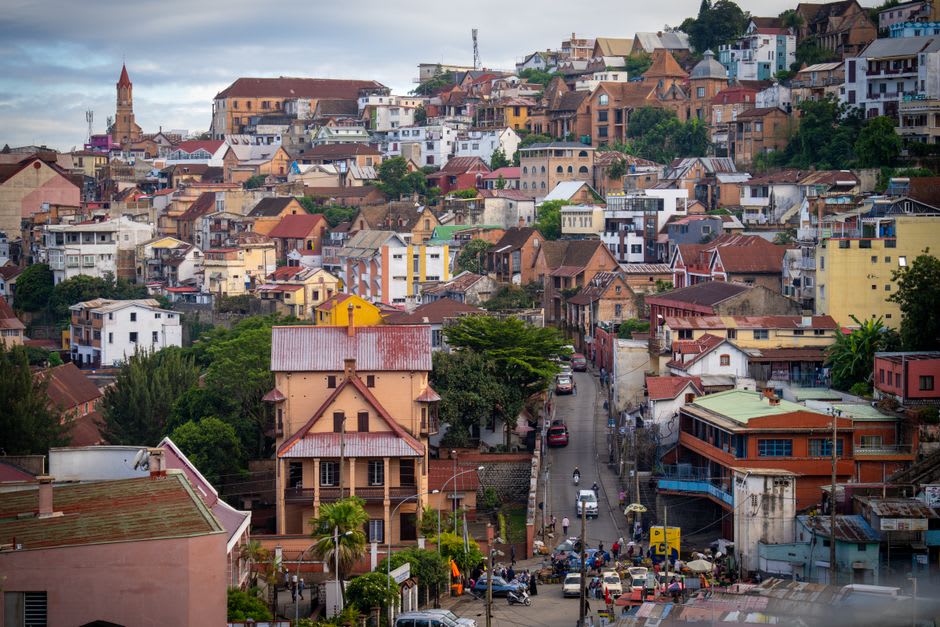
Diego doesn’t try to charm you the way the beach towns further south do. It’s a working port city with a rough, salt-scoured edge to it, and the pleasure of the place is mostly in what surrounds it — the bay, the canyons, the drive out to Montagne d’Ambre — rather than in the city itself. I liked it more for that, not less.
When to go: April through November for dry roads to the Red Tsingy and clear skies over the bay. Avoid the cyclone-prone months of January and February.
Keep exploring
More from Madagascar
 madagascar
 The Emerald Sea
A shifting sandbar off Nosy Be where the lagoon turns an implausible green-gold and you can stand waist-deep a kilometer from any shore.
Explore madagascar
 Fianarantsoa
A hillside university town in the southern highlands, home to Madagascar's small, surprising wine industry and a rattling old colonial railway.
Explore madagascar
 Fort Dauphin
Madagascar's dramatic southern tip, where the Indian Ocean hammers one coast while calm lagoons stretch down the other, and the Anosy region holds some of the island's least-visited wilderness.
Explore madagascar
 Ifaty
A strip of fishing villages north of Toliara where spiny forest meets coral reef and the beach bars empty onto sand instead of pavement.
Explore madagascar
 Ile aux Nattes
A tiny car-free island off the southern tip of Sainte Marie, ringed by the kind of water that makes you stop mid-sentence.
Explore madagascar
 Île Sainte-Marie
A slim blade of island off Madagascar's east coast where humpback whales give birth in sheltered bays, pirates are buried in a mossy cemetery, and the pace of life adjusts itself to the rhythm of the tides.
Explore