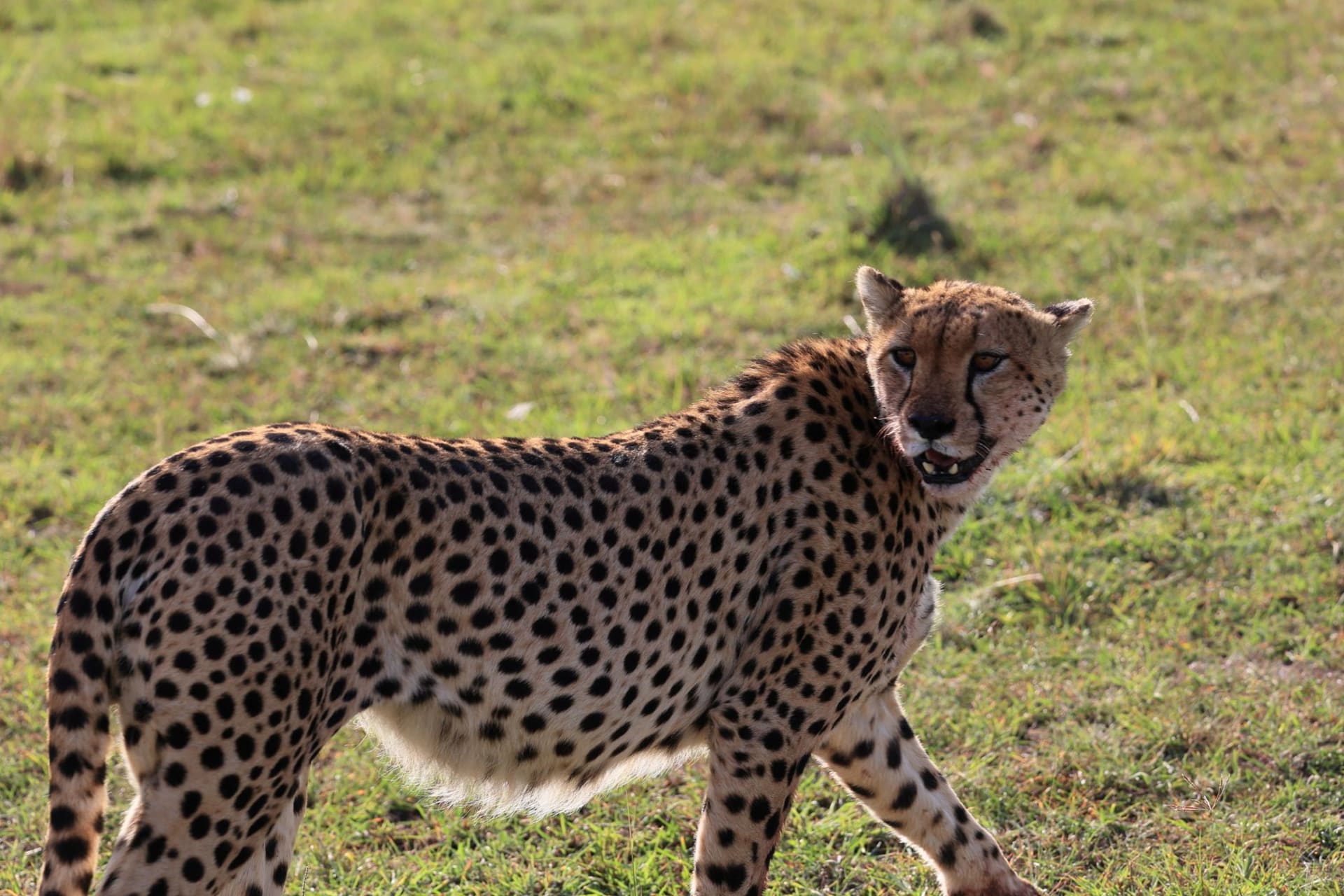
Naboisho Conservancy
"Naboisho doesn't feel like a safari product. It feels like land that chose its own future."
The road into Naboisho from Sekenani winds through small Maasai homesteads — enkiamas with their thorny boma fences, goat herds raising rust-colored dust, children who watch the vehicle pass with a calm curiosity rather than waving for sweets — and then the conservancy opens up and the grass changes quality. Longer, more varied, scattered with croton thicket and dry luggas where leopards bed down in the heat of the afternoon. This is still Maasai land. You don’t cross a threshold into some managed nature reserve; you enter a landscape that its owners have chosen, collectively and deliberately, to keep whole.
The conservancy was formed when fifty-plus Maasai landowners pooled their land rather than subdividing it for individual cultivation, and the arrangement requires a certain faith — that the conservancy fees will keep coming, that the wildlife won’t devastate your remaining cattle, that the city government won’t change the rules. William Ntiampe, a landowner I spent an afternoon talking with over a lunch of grilled maize and beans at his homestead just outside the conservancy boundary, explained it without sentimentality. “It makes economic sense now,” he said. “Ask me again in ten years.” He said it as a challenge, not a complaint.

The wildlife in Naboisho skews toward the density you might not expect from a younger conservancy. The elephant population has expanded significantly since the area was secured, and it’s common to encounter large mixed herds moving through the luggas or gathered around the seasonal waterholes. The conservancy is also excellent for raptors — bateleur eagles hanging on thermals, martial eagles surveying from high acacia crowns, secretary birds stalking through the grass with that absurd upright dignity that makes them look like bureaucrats who’ve taken a wrong turn.
What I remember most about Naboisho is the sound at midday: complete, pressing silence broken only by the call of a fiscal shrike repeating itself in the heat. Not peaceful exactly — there’s an attentiveness to savanna silence that keeps you alert — but deeply quiet in a way that Mexico, where I’ve been living, almost never is. I sat outside my tent at noon unable to read, just listening to the not-sounds, and felt, for a couple of hours, entirely emptied out.

When to go: January and February are the driest months and bring excellent visibility across the open plains. The green season (November, April–May) turns Naboisho extraordinary in a different way — deep green grass, wildflowers along the luggas, and resident predators hunting the newborn calves of the grazing herds.