Mara North Conservancy
"The wildlife here doesn't perform. It's just going about its day, and you're allowed to watch."
North of the main Mara reserve, where the road turns to track and then to something you navigate more by instinct than map, the landscape changes character in a way that’s hard to articulate on first encounter. The classic open plains of the Mara — that sea of grass, the acacias like drawings against the sky — persist, but the terrain gets more sculptural. Rocky outcrops break the sightlines. The hills to the north carry forests. Dry riverbeds carve deeper, and the dense riverine vegetation along them supports a completely different cast of wildlife than the open plains just a few kilometers south. When I drove into Mara North from the reserve proper, I had the sensation of the Mara turning inward, becoming more private.
The conservancy covers a significant stretch of community Maasai land north of the reserve boundary, and the lease agreements bring direct revenue into communities that have historically been asked to absorb the costs of living alongside large and sometimes destructive wildlife. The elephant population here is substantial — moving between the conservancy, the reserve, and the broader Laikipia ecosystem — and the coexistence is genuinely complicated. A ranger at the conservancy headquarters showed me a map of the GPS collar data from the elephant herds and the pattern of crop-raid incidents overlaid on it. The complexity of it, the long corridors these animals travel and the human settlements they pass through, was sobering.

What the conservancy offers that the main reserve cannot is space — psychological space, the sense of being in something very large. Vehicle limits are strictly enforced, and on the morning drive I did on my second day we covered perhaps forty kilometers without seeing another 4x4. We found a pack of wild dogs near a lugga at seven in the morning, which I did not expect and which rearranged my entire understanding of what might happen on any given day. Wild dogs are uncommon in the Mara ecosystem; they range widely and erratically and are more reliably found further north toward Laikipia. Finding them here, hunting, the pack moving in that loose, communal lope that looks almost casual until something suddenly isn’t, was the kind of encounter that makes you want to stay an extra week.
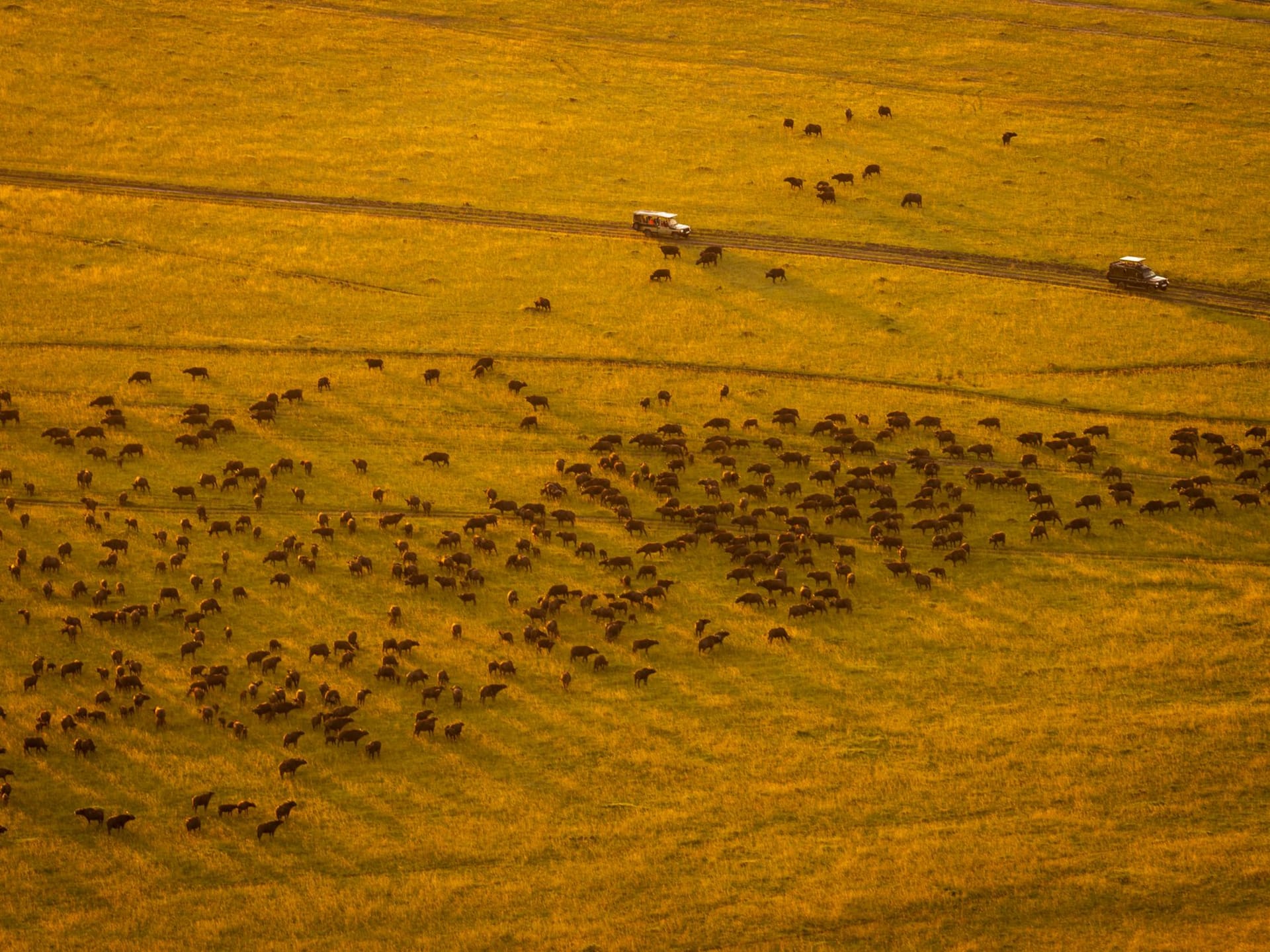
The Esoit and Oloroimutiek Hills frame the northern edge of the conservancy and are worth the slow drive up if the track allows. From the high ground you see the Mara spreading south and the forests of the Mau to the west, and the light in the late afternoon comes at such a low angle that the grass turns a color somewhere between amber and copper that I have not seen duplicated anywhere else.

When to go: The dry season (June–October) makes the tracks passable and the wildlife more predictable around the water sources. But March and April, in the long rains, transforms the conservancy into something lush and relatively empty of visitors — worth the muddy roads if you’re comfortable with uncertainty.