Wiltz
"The lower town and the upper town barely seemed to acknowledge each other, which made staying in both feel like visiting twice."
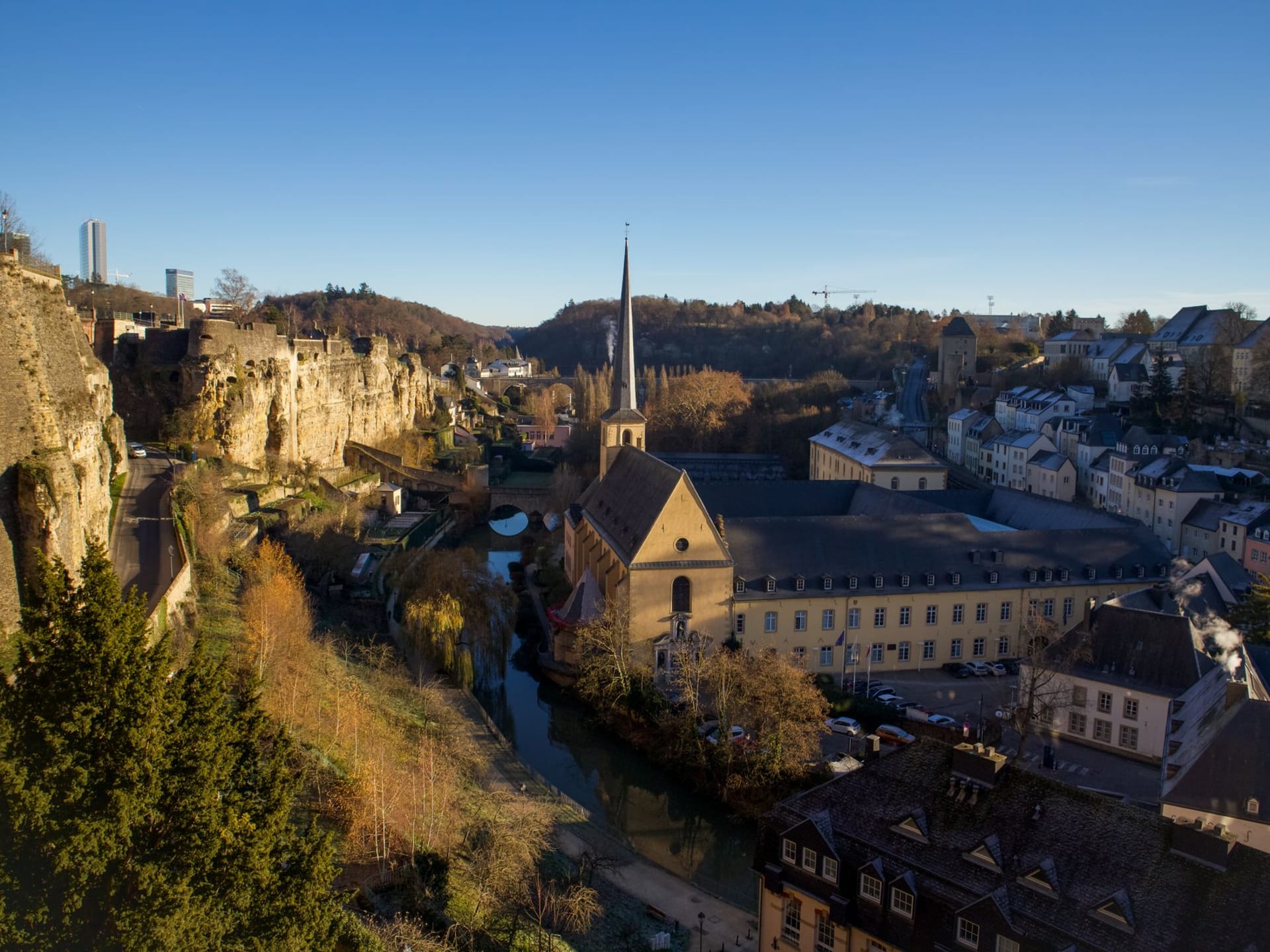
A northern Ardennes town built on two levels of a hill, with a castle above and a river below, that earns its place by being the genuine article rather than a destination anyone has dressed up for visitors.

Wiltz divides itself geographically in a way that reflects something honest about Luxembourg’s north. The upper town — castle, church, the old bourgeois quarter — sits on the plateau above. The lower town stretches along the Wiltz river below, built by the tanneries and mills that made this place functional rather than scenic. Connecting them is a road with enough gradient that the locals who walk it daily have a particular quality of unhurriedness, as if they’ve decided the hill isn’t worth arguing with.
The Castle and Upper Town
Wiltz Castle is a Renaissance structure with earlier medieval bones, occupied since the twelfth century and significantly rebuilt in the seventeenth. It now houses municipal offices, a museum of local history, and — this being the Ardennes — a Battle of the Bulge section that covers the 1944-45 winter offensive with the particular intensity of a place that lived through it. The German advance in December 1944 pushed through the Oesling region and Wiltz saw heavy fighting; the museum presents this without theatrics, through personal testimony and local documentary evidence. I find that approach more affecting than any diorama. Outside the castle gate, the view over the valley is the kind of long, forested, nearly unpopulated panorama that makes the north of Luxembourg feel more remote than it actually is.
The Festival Town
For three weeks in late July, Wiltz hosts an open-air festival — theater, music, dance — that has been running in the castle amphitheater since 1953. This is not a major international event; it’s a regional festival with a genuine local character, which means the programming mixes amateur and professional productions, the audience brings folding chairs and blankets, and the bar sells local beer at prices that don’t require financial planning. I went on a Thursday evening for a chamber music performance and sat outside while bats hunted the perimeter of the stage lighting. The sound quality was not perfect. Everything else was.
Along the Wiltz River
The river itself is the best thing about the lower town. The Wiltz runs cold and clear through a valley of alder and willow, and the paths along its banks are used primarily by locals walking dogs and the occasional serious cyclist. I followed the river east for two hours one morning, past the old tannery buildings that have been converted to apartments, past a small waterfall where I sat and ate a sandwich, past a trout fisherman who told me — in Luxembourgish, which I don’t speak, but hand gestures traveled — that the water was too cold and the fish weren’t cooperating. He seemed at peace with this.
The Oesling Plateau
Wiltz sits at the edge of the Oesling upland, and driving north from town takes you through a landscape of heath and pine plantation that thins to bare plateau near the Belgian border. This is deer and boar country; hunters in autumn, cyclists and hikers in summer, and in winter a landscape of frozen fields and empty roads that has its own severe beauty. The Via Ardenna long-distance trail passes through Wiltz, connecting Luxembourg’s north with Belgium’s Ardennes in a 240-kilometer route that attracts a specific type of sustained walker — the kind who carries their own stove.
When to go: July for the festival, but book accommodation far in advance — the town fills up. May and June for trail walking before the summer heat. October is excellent for the forest colors and the near-total absence of other visitors. Avoid January through March unless you’re specifically after the winter landscape and don’t mind reduced services.
Keep exploring
More from Luxembourg
 luxembourg
Beaufort
A small Mullerthal village with two castles, deep forest, and a blackcurrant liqueur tradition that locals treat with the seriousness most regions reserve for wine.
Explore luxembourg
Berdorf
A sandstone village where climbers cling to 180-million-year-old cliffs and forest ravines swallow the sound of everything else.
Explore luxembourg
Bourscheid
A ruined medieval fortress perched on a rocky spur above a loop of the Sûre, the largest castle in the Grand Duchy and one of its quietest.
Explore luxembourg
Clervaux
A Benedictine abbey watching over a valley town where one of the great photography exhibitions of the twentieth century has lived inside a castle since 1994.
Explore luxembourg
Diekirch
A market town on the Sûre river with a first-rate WWII museum, a functioning brewery, and the self-contained character of a place that has never needed to perform for anyone.
Explore luxembourg
Echternach
Luxembourg's oldest town sits beside the Sûre river in the Little Switzerland region, its Benedictine basilica anchoring eight centuries of pilgrimage.
Explore