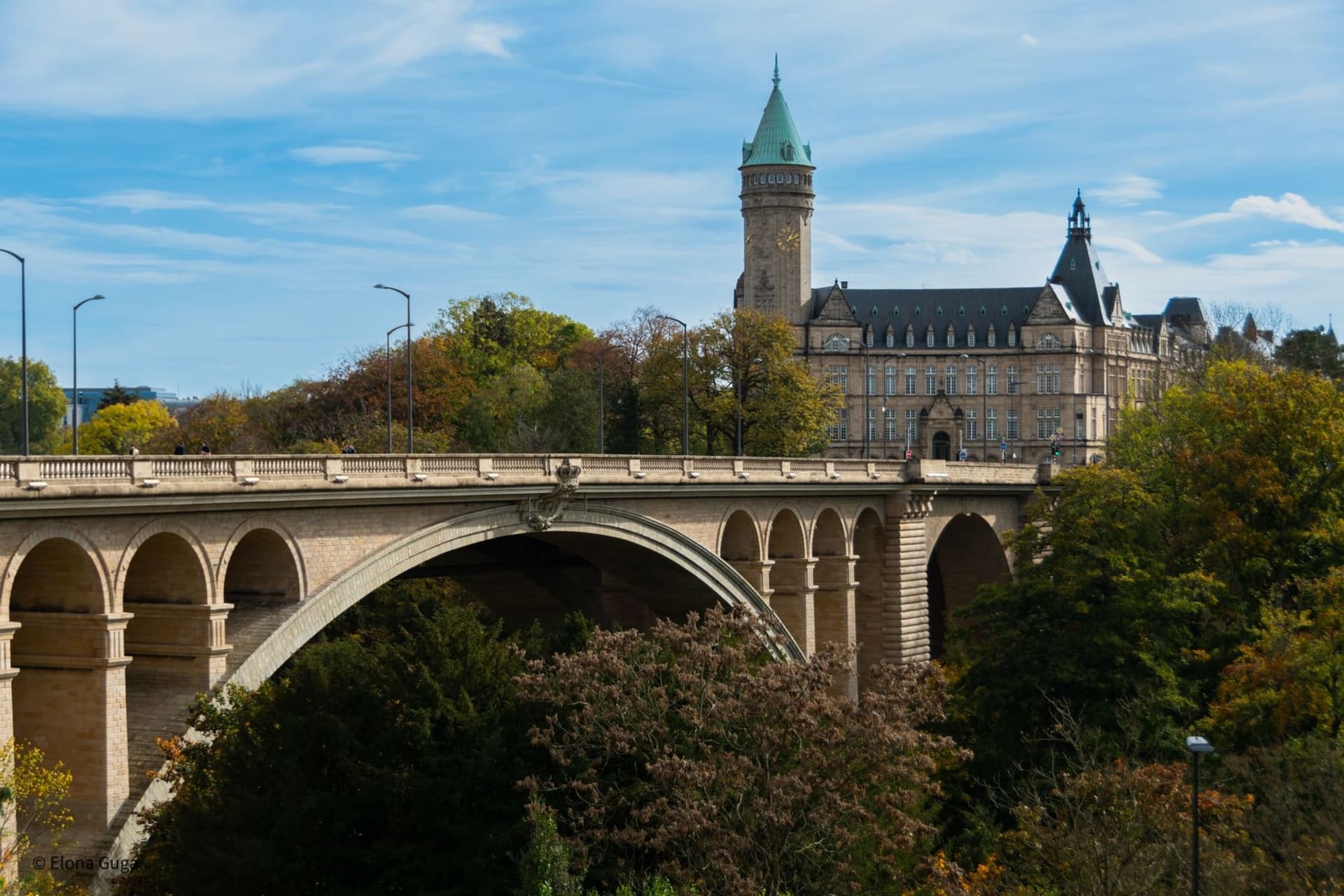
Built over dramatic gorges cut by the Alzette river, this small capital hides extraordinary medieval fortifications beneath a polished European skyline.
The train from Brussels drops you into a city that is smaller than you expect and stranger than you imagined. Luxembourg City sits on a plateau riddled with ravines, and within twenty minutes of arriving I was standing at the edge of the Chemin de la Corniche, looking down into a gorge so abrupt and verdant it felt geological — like the earth had simply decided to disagree with the city built on top of it.
What the Gorge Reveals
The Alzette has been carving through this plateau for millennia, and the result is a city with two personalities stacked vertically. Up top: the Grand-Rue, glassy bank headquarters, a cathedral with stained glass by Gérard Cyne that nobody talks about nearly enough. Down below, in the Grund quarter, the light turns amber before it turns golden, filtering through plane trees along the riverbank while locals sit outside the café terraces on Rue Münster with glasses of Riesling from the Moselle valley, unhurried.
I spent an entire afternoon in the Bock Casemates — the tunnels Napoleon’s engineers blew open and then blew partly shut again, twenty-three kilometers of galleries carved into the sandstone promontory. The smell inside is cold and mineral, the same smell as a cave, and the passages narrow without warning. At one opening I looked out through a window in the rock and realized I was staring straight down at the Alzette forty meters below, the river green and completely silent from up here.
The Surprise That Stopped Me
The unexpected thing was the Kirchberg plateau across the Adolphe Bridge — this gleaming EU quarter of curved glass that could be Rotterdam or Frankfurt — and how it made the old city feel even older by contrast. Lia and I walked across the bridge at dusk, the valley going purple beneath us, and agreed that most European capitals make some effort to reconcile their centuries. Luxembourg City doesn’t bother. It simply lets both exist, separated by a gorge that neither can cross.
We ate Bouneschlupp — the local green bean and potato soup — at a brasserie on Place d’Armes that had been there since well before anyone currently eating in it was born. Thick, smoky from a piece of smoked collar, unremarkable to look at and deeply correct to eat.
Getting the Timing Right
When to go: May and June bring long evenings when the Chemin de la Corniche stays warm past nine o’clock and the Grund terraces fill without becoming unbearable. September is quieter and the Moselle valley wine harvest begins within an hour’s drive — reason enough on its own.