Cheverny
"Cheverny smells of old wood and leather and something cooking from somewhere you can't quite locate. It smells lived in, which no other Loire château does."
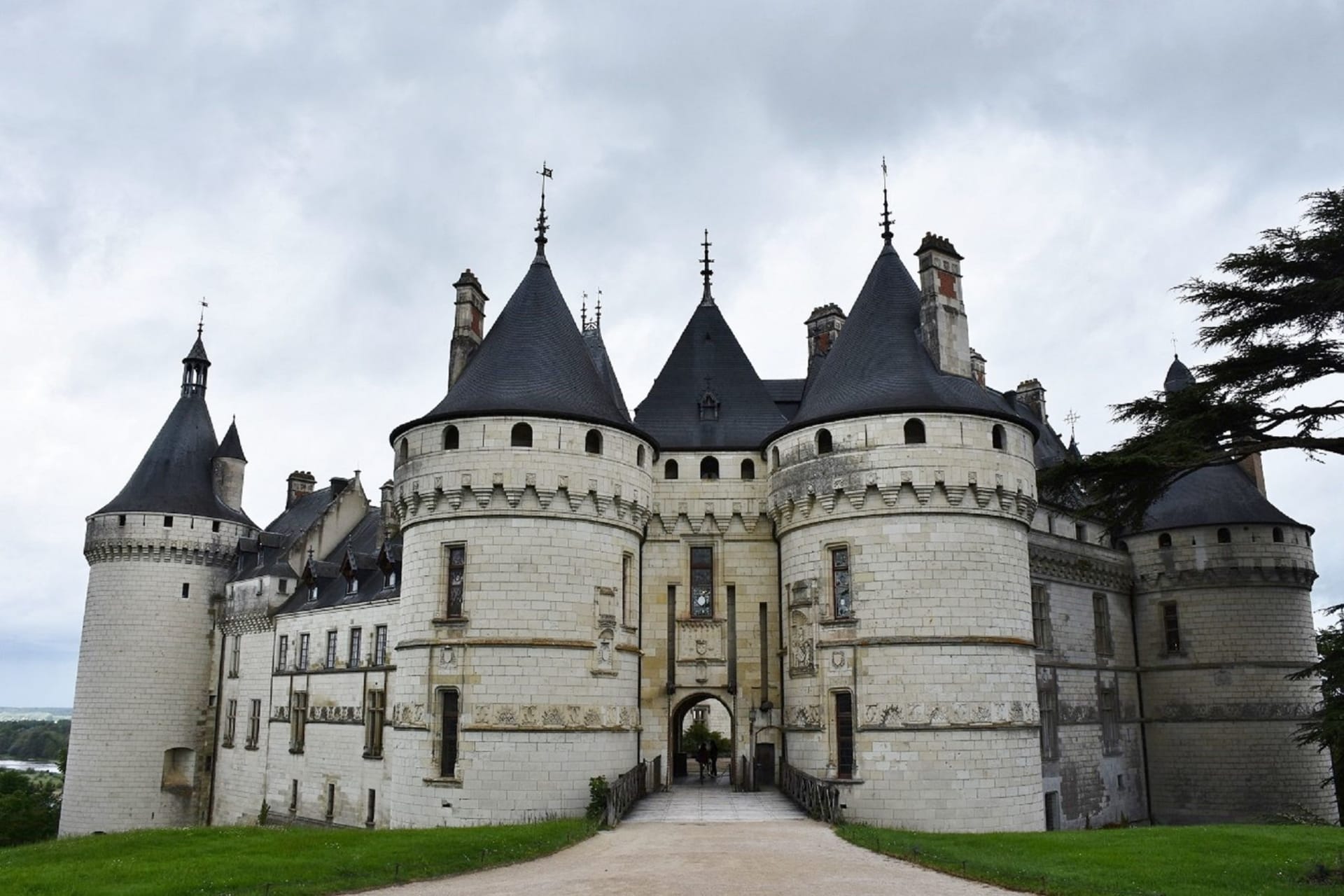
I drove to Cheverny through the Sologne forest on a grey October morning, following a road that passed through trees and then more trees and eventually came out into a clearing where the château stood: absolutely white, absolutely symmetrical, its classical seventeenth-century facade so perfectly balanced that it looks less like a building someone designed and more like a building that arranged itself out of sheer architectural logic. The formal garden in front is modest by Loire standards. The façade needs no embellishment.
What separates Cheverny from every other major Loire château is that the Hurault family has owned it continuously since 1634. They still live here — in an apartment in the left wing that remains private and closed to visitors. This arrangement is immediately legible when you walk inside. The royal châteaux, even the great ones, feel like well-maintained echoes of something absent. Cheverny feels like a house whose owners have just stepped out. The rooms are furnished with their original contents — Flemish tapestries that have hung on these walls for three hundred years, portraits of family members going back to the seventeenth century, a dining room set with silver and crystal that looks ready to be used rather than admired.

There is a King’s Chamber with a canopied bed and a painted ceiling and walls covered in Persian embroidered silk that a visitor in 1650 would have recognized and found perfectly current. There is a weapons room with an arrangement of muskets and swords that covers an entire wall in a decorative sunburst pattern, which is either menacing or theatrical depending on your perspective. There is a room where the family’s trophy stag heads are displayed with plaques noting the date and location of each hunt — not as a museum piece but as a record of continuing practice. The current viscount still hunts. The dogs are still here.
The kennels — the Orangerie des Chiens — house a pack of seventy French hunting hounds, and at five in the afternoon they are fed. This is not a gimmick: the daily feeding has gone on here for as long as the château has been occupied, and watching it involves standing at a fence while seventy dogs of immaculate breeding charge from their kennel as a collective mass of muscle and noise, fall upon their dinner, and finish in approximately ninety seconds. The silence afterward is remarkable. I was not the only visitor who stood at the fence saying nothing.

Hergé modeled Moulinsart — Tintin’s castle — on Cheverny, and the château leans into this gracefully with a small Tintin museum at the entrance, which is either the most appropriate or most incongruous thing depending on how you feel about Tintin. I found it charming. The connection is real — the same white classical symmetry, the same sense of a house taken seriously by its occupants. The Captain Haddock energy is also present in the hunting room, which I don’t think is accidental.
When to go: April and May for the gardens and spring light on the white facade. September and October for the hunting season energy and a visit that aligns with the domaine’s wine harvest — Cheverny and Cour-Cheverny appellations are produced from the estate vineyards and available at the cave beside the entrance. Avoid peak July and August afternoons; the château is intimate and feels crowded with large groups.