Stamsund
"In Stamsund I finally understood that a fishing village can be a verb, not a noun."
A working cod village on Vestvågøy where fishermen still chase the skrei, and rorbu cabins lean over a harbor that never quite sleeps.
We got off the ferry from Bodø a little seasick and a lot underdressed, and the first thing I noticed about Stamsund wasn’t the mountains — it was the smell. Salt, diesel, and something sweetly rotten drifting off the drying racks, the kind of smell that tells you a place still works for a living. Lia grabbed my arm and pointed at the harbor, where a handful of boats were unloading crates under a sky that couldn’t decide whether it was six in the evening or six in the morning. This wasn’t a village performing “authentic Norway” for us. It was just Tuesday.
We stayed in one of the old rorbu cabins right on the water, the kind fishermen have used since the Lofotfisket began drawing men north for the winter cod run centuries ago. Ours had been fixed up just enough — a woodstove, a loft bed, walls that still smelled faintly of tar — but the wooden pilings underneath still creaked with the tide at night, and I loved that they hadn’t sanded that away. Lia read by the window while I tried, badly, to identify which of the boats below were still active fishing vessels and which had been quietly retired into someone’s storage shed.
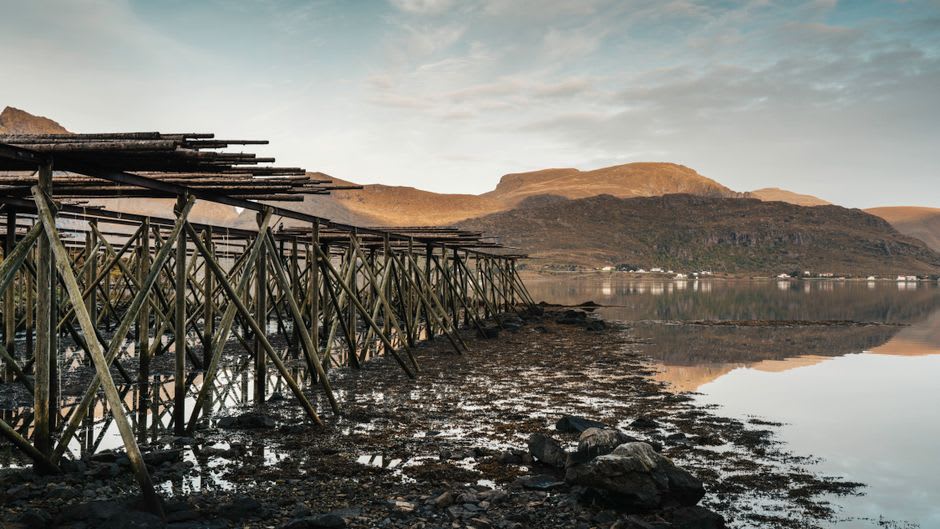
We’d come in June, so we missed the real chaos of the season — the weeks in February and March when the skrei arrive in their millions from the Barents Sea and Stamsund’s population multiplies with fishermen chasing the catch. An old man mending net outside his shed told me about it with the patience of someone who’s explained it to a hundred tourists before, gesturing at empty mooring spots that in winter, he said, would be stacked three boats deep. I regretted, a little, not seeing it — but the harbor still had its own rhythm, quieter, with gulls working the morning unload and kids jumping off the dock like it was any ordinary summer.
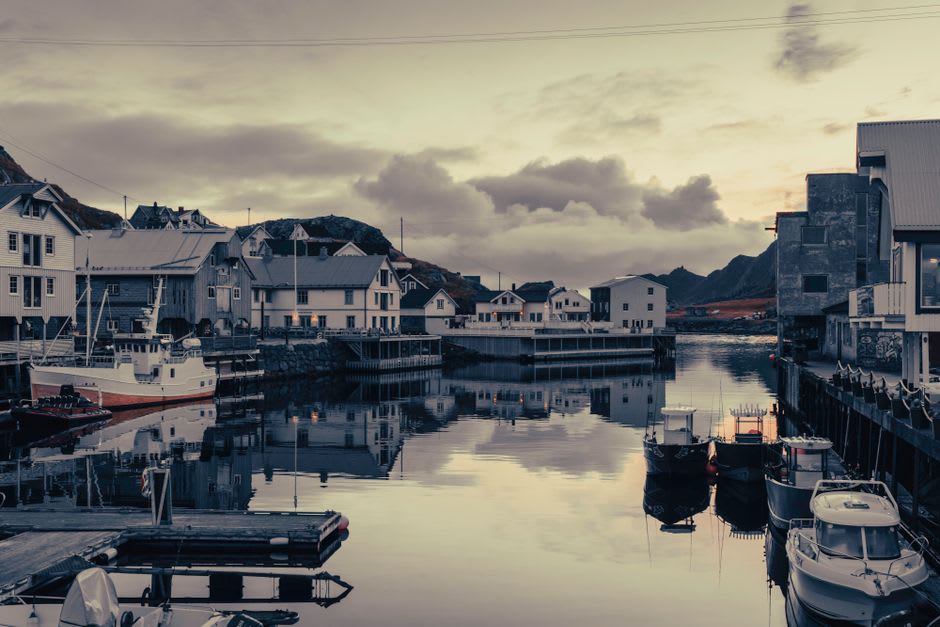
In the evenings we walked the gravel road along the water, past cabins where laundry hung between rorbu doorposts and someone’s radio leaked out an open window. There’s a hostel here run out of an old rorbu cluster that’s become something of a gathering point for travelers passing through on the Bodø ferry, and we ended up sharing a bottle of wine on its dock with two Norwegians and a German cyclist, none of us in any hurry to go inside while the light refused to fade.
When to go: aim for February through April if you want to see the cod season in full swing, boats crowding the harbor and racks heavy with drying skrei — or come June to August, like we did, for long light, quieter docks, and hikes into the hills above the village.
Keep exploring
More from Lofoten Islands
 lofoten-islands
 Svolvær
Lofoten's main town — a genuine working port with two rock spires above it and a war museum that quietly breaks your heart.
Explore lofoten-islands
 Trollfjord
A 2km sliver of water between cliffs a thousand meters high, where herring boats once fought and ferries still barely fit.
Explore lofoten-islands
 Unstad
The Arctic's most unlikely surf beach — a valley opening onto powerful Atlantic swells, where people in wetsuits wade out through December snow.
Explore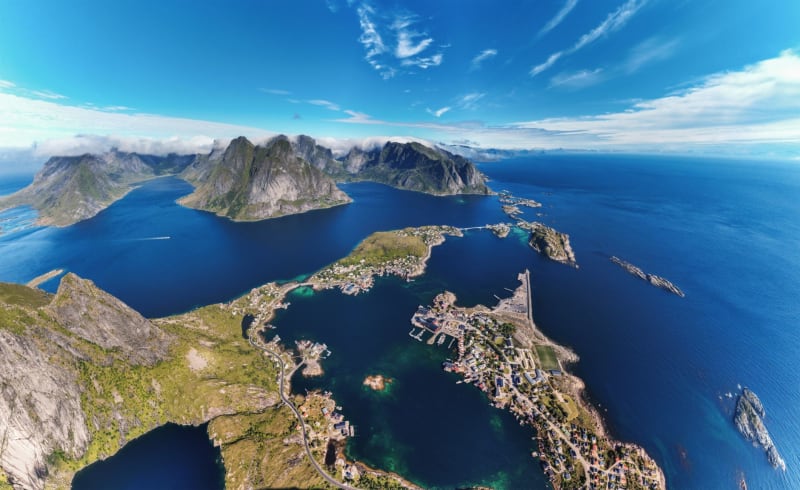 lofoten-islands
 Å i Lofoten
The last village at the end of the E10, where the road simply stops and the Norwegian Sea takes over everything.
Explore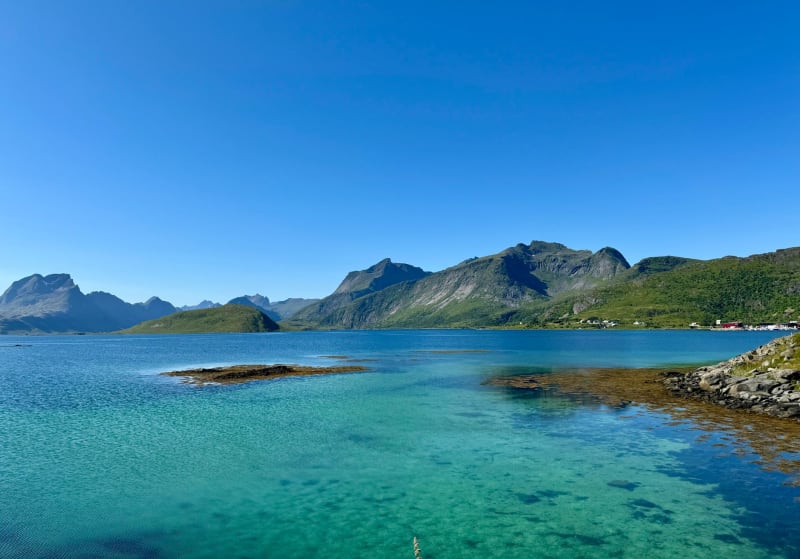 lofoten-islands
 Hamnøy
A tiny bridge village where a single row of red rorbu beside still water has become one of the most photographed spots in Norway.
Explore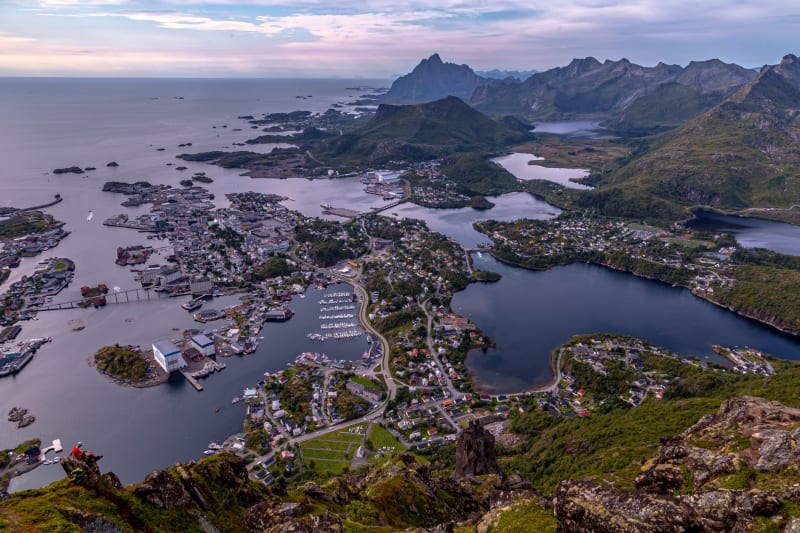 lofoten-islands
 Henningsvær
A fishing village scattered across tiny islands, connected by footbridges, with a football pitch that looks directly onto the open sea.
Explore