
Europe
Lofoten Islands
"I came for one week and spent three trying to understand why I couldn't leave."
Jagged peaks rising straight from the Norwegian Sea, red rorbu fishing huts clinging to rocks, and auroras that make you forget you are freezing — the Lofoten Islands exist at the edge of what seems possible.

The ferry from Bodø arrives at Moskenes in the middle of nowhere, which is to say it arrives exactly where you expected: at the foot of mountains so steep and sudden they look painted onto the sky. This is the Lofoten Islands, and the first twenty minutes tell you everything. The water is the color of cold glass. The fishing huts — the rorbu, those red and ochre wooden structures built on stilts above the sea — are exactly as beautiful as every photograph promised, which almost never happens. I stepped off the boat in early March with a wind that cut straight through my jacket and thought, yes, this is it. This is the place.
The Lofoten archipelago stretches about 160 kilometers above the Arctic Circle, and every kilometer offers something different. Reine is the famous one, the postcard village under a crown of jagged peaks, and it earns its reputation — though in high summer it earns it alongside several thousand other people. Å, at the very tip of the islands, is smaller and stranger, the end of the road in every sense. The E10 highway connecting the islands is one of the great drives in Europe, hopping between islands on bridges and causeways, mountains to your left, the Norwegian Sea to your right, stopping constantly because you cannot help it. In February, if you are lucky with clear skies and dark nights, the northern lights appear over the water with a violence that makes you understand why old sailors thought they were something supernatural.
The food here is stockfish — dried cod, hung on wooden racks along the coast since the medieval trade that made these islands wealthy. You will smell it before you see it: a rich, oceanic intensity hanging over the villages from January to April. Eat it reconstituted in a stew at a local restaurant in Henningsvær, the fishing village built across several small islands with a football pitch that looks directly onto the fjord. Drink the coffee thick and black. Accept that you will pay Norwegian prices for all of it and consider it fair.
When to go: February to April for northern lights, snow-covered peaks, and the stockfish drying season — dramatic and cold. June to August for the midnight sun, hiking, and warmer temperatures, with more tourists but extraordinary light that never fully disappears. September and October offer a quieter middle ground, autumn colors, and a real chance at the aurora.
What most guides get wrong: They treat Lofoten as a photography destination — arrive, shoot the rorbu at golden hour, leave. The islands reward staying. Rent a cabin for a week. Rent a bicycle instead of a car. Take the boats between villages rather than always driving. The light changes every hour and the weather changes every twenty minutes, which means the Lofoten you saw this morning no longer exists by afternoon. You need time to catch it properly.
Explore
Places in Lofoten Islands
 lofoten-islands
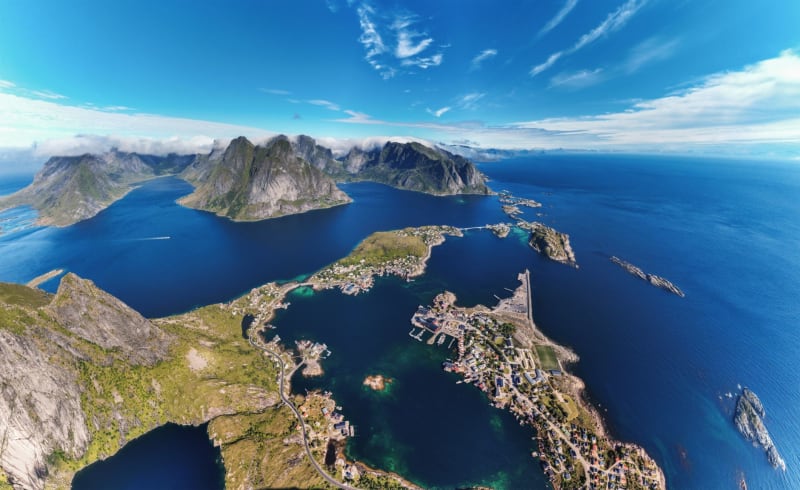
 Å i Lofoten
The last village at the end of the E10, where the road simply stops and the Norwegian Sea takes over everything.
Explore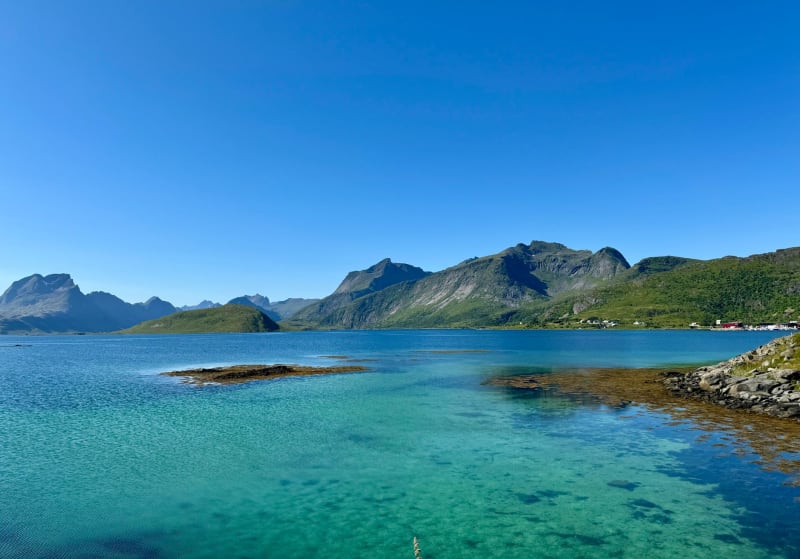 lofoten-islands
 Hamnøy
A tiny bridge village where a single row of red rorbu beside still water has become one of the most photographed spots in Norway.
Explore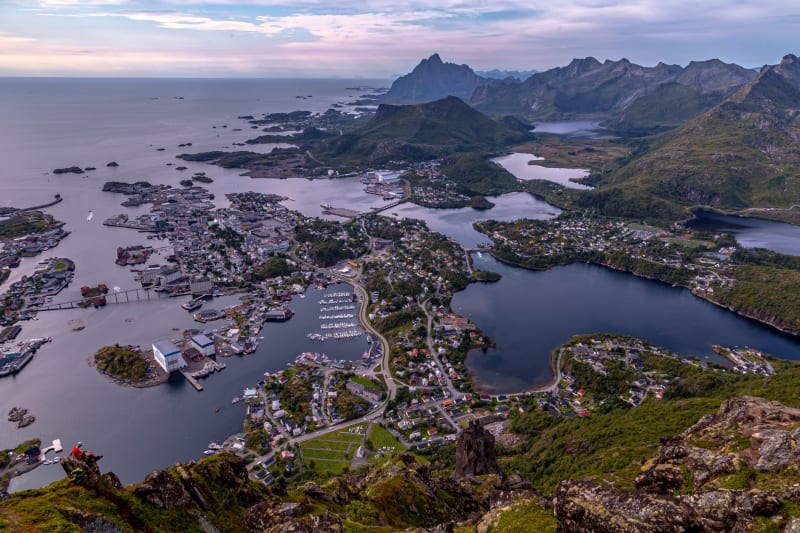 lofoten-islands
 Henningsvær
A fishing village scattered across tiny islands, connected by footbridges, with a football pitch that looks directly onto the open sea.
Explore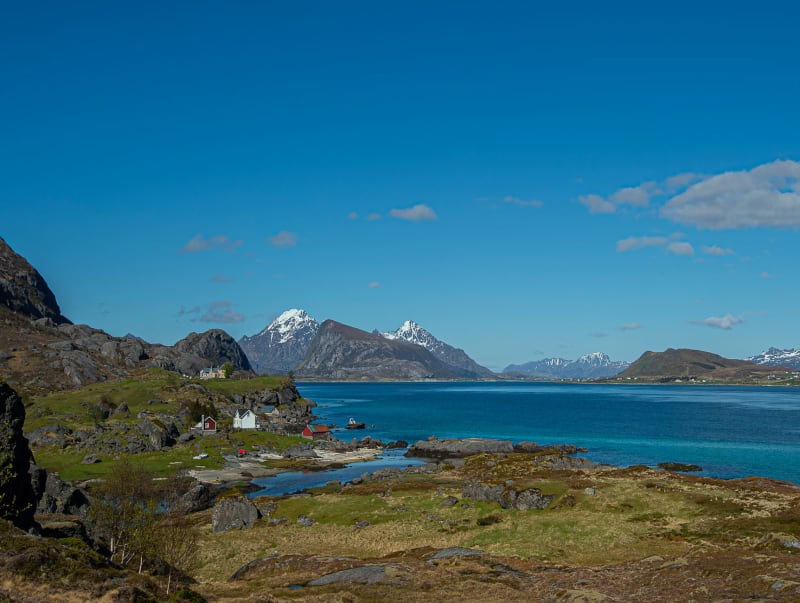 lofoten-islands
 Kabelvåg
Lofoten's oldest town, with a wooden cathedral, a world-class aquarium, and a harbour that still runs on the rhythm of the cod.
Explore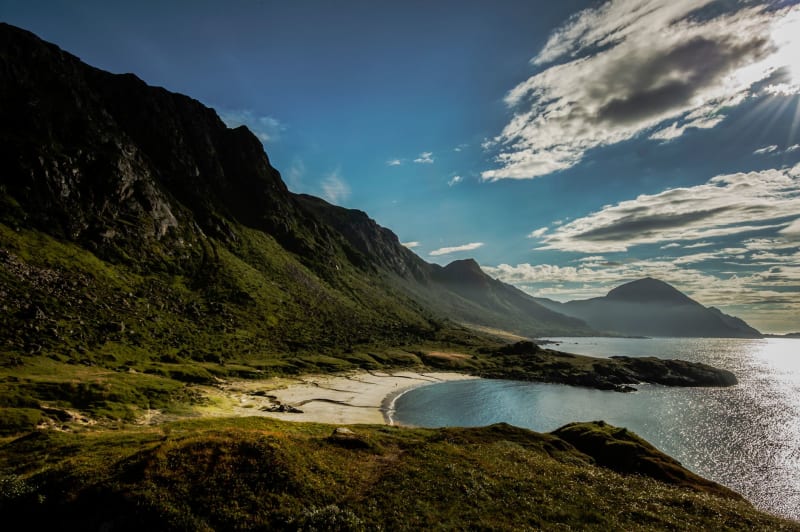 lofoten-islands
 Kvalvika Beach
A horseshoe of white sand wedged between black peaks, reachable only on foot, where the Arctic surf rolls in to an audience of almost nobody.
Explore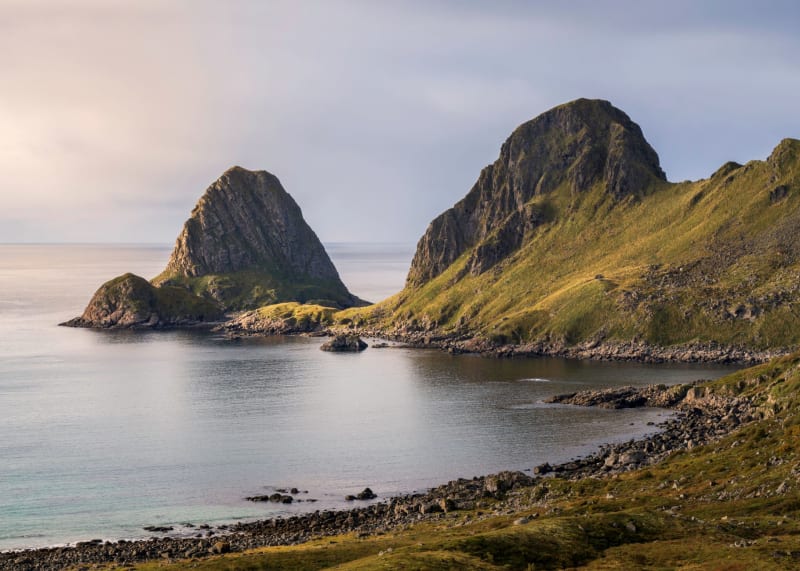 lofoten-islands
 Lofotr Viking Museum
A full-scale reconstruction of the largest Viking longhouse ever found, built on the exact spot where a chieftain ruled these islands 1,100 years ago.
Explore lofoten-islands
 Nusfjord
A nineteenth-century fishing village so intact it feels like the century never quite finished arriving — fog, rorbu, and the smell of old wood.
Explore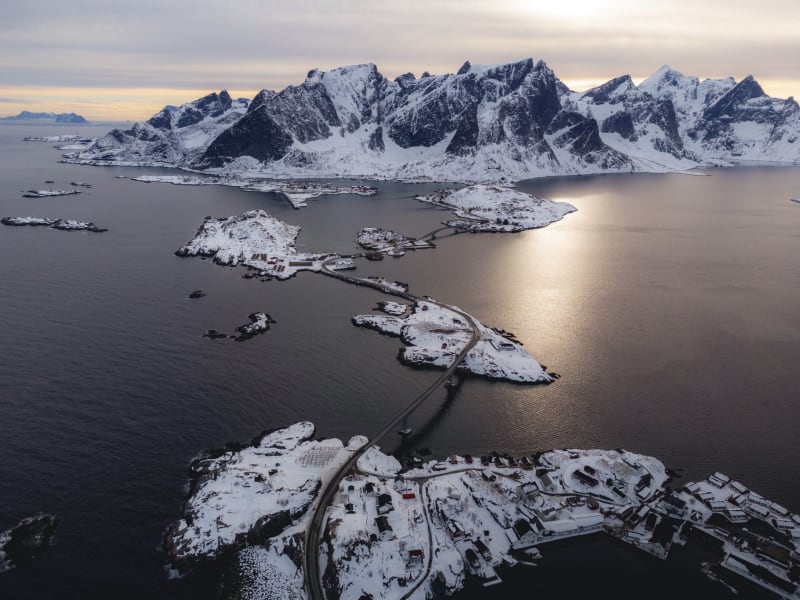 lofoten-islands
 Ramberg
A white sand beach in the Arctic that looks like it wandered in from the wrong latitude and decided to stay.
Explore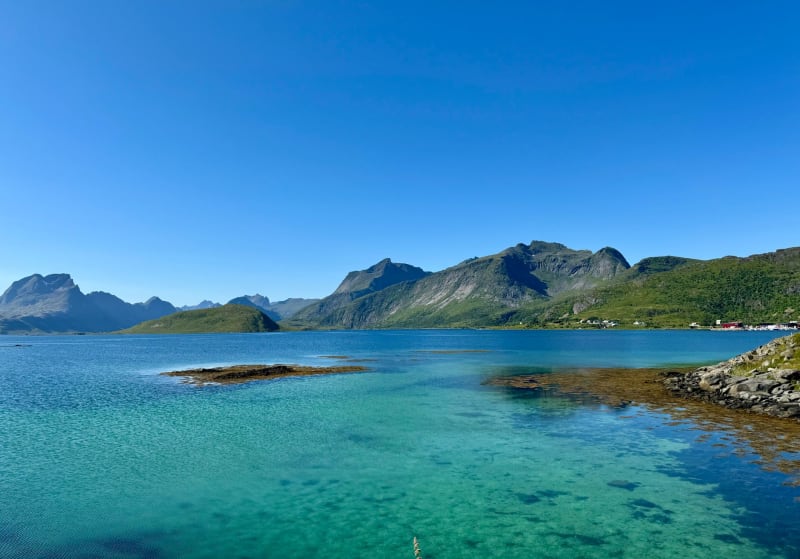 lofoten-islands
 Reine
The postcard village that earns every photograph — sharp peaks, red rorbu, and water so still it doubles the sky.
Explore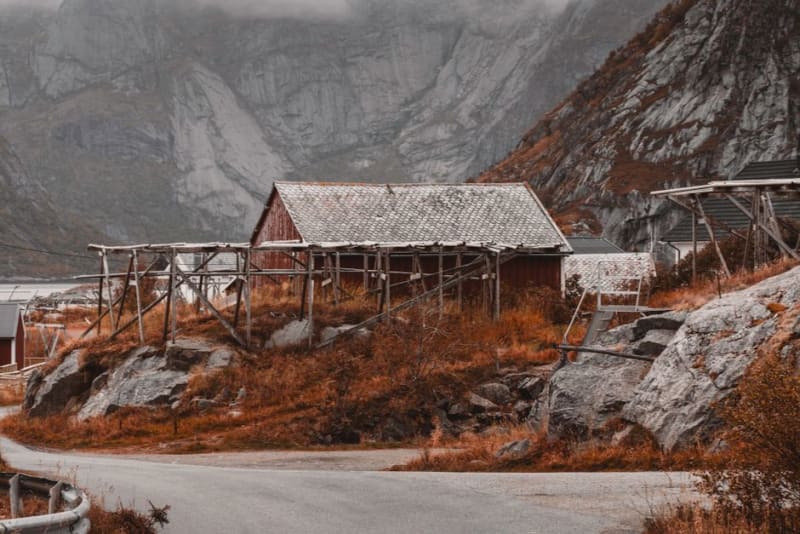 lofoten-islands
 Stamsund
A working cod village on Vestvågøy where fishermen still chase the skrei, and rorbu cabins lean over a harbor that never quite sleeps.
Explore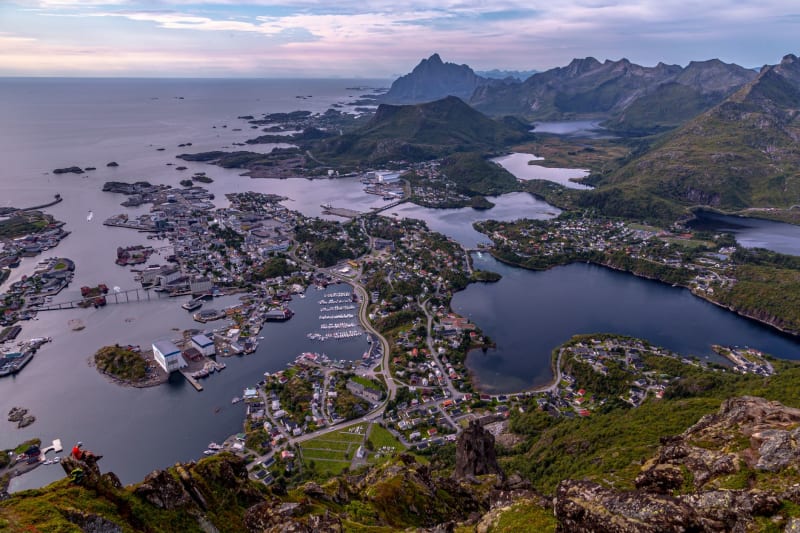 lofoten-islands
 Svolvær
Lofoten's main town — a genuine working port with two rock spires above it and a war museum that quietly breaks your heart.
Explore lofoten-islands
 Trollfjord
A 2km sliver of water between cliffs a thousand meters high, where herring boats once fought and ferries still barely fit.
Explore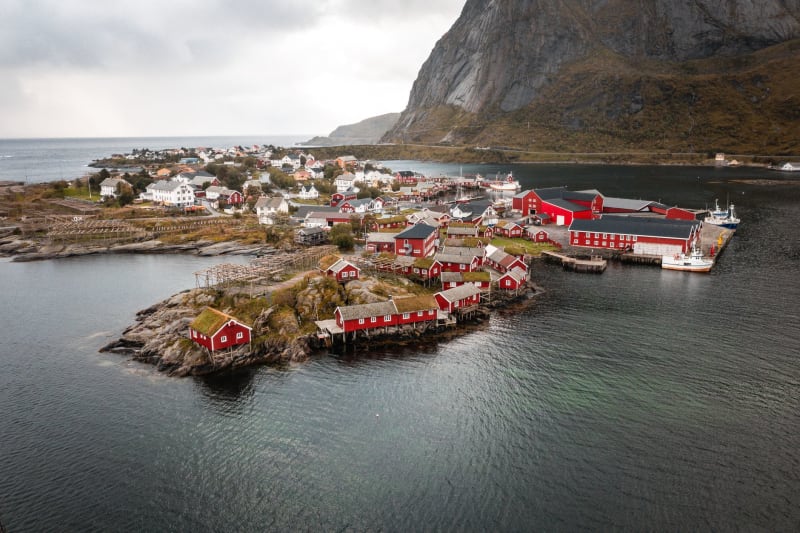 lofoten-islands
 Unstad
The Arctic's most unlikely surf beach — a valley opening onto powerful Atlantic swells, where people in wetsuits wade out through December snow.
Explore