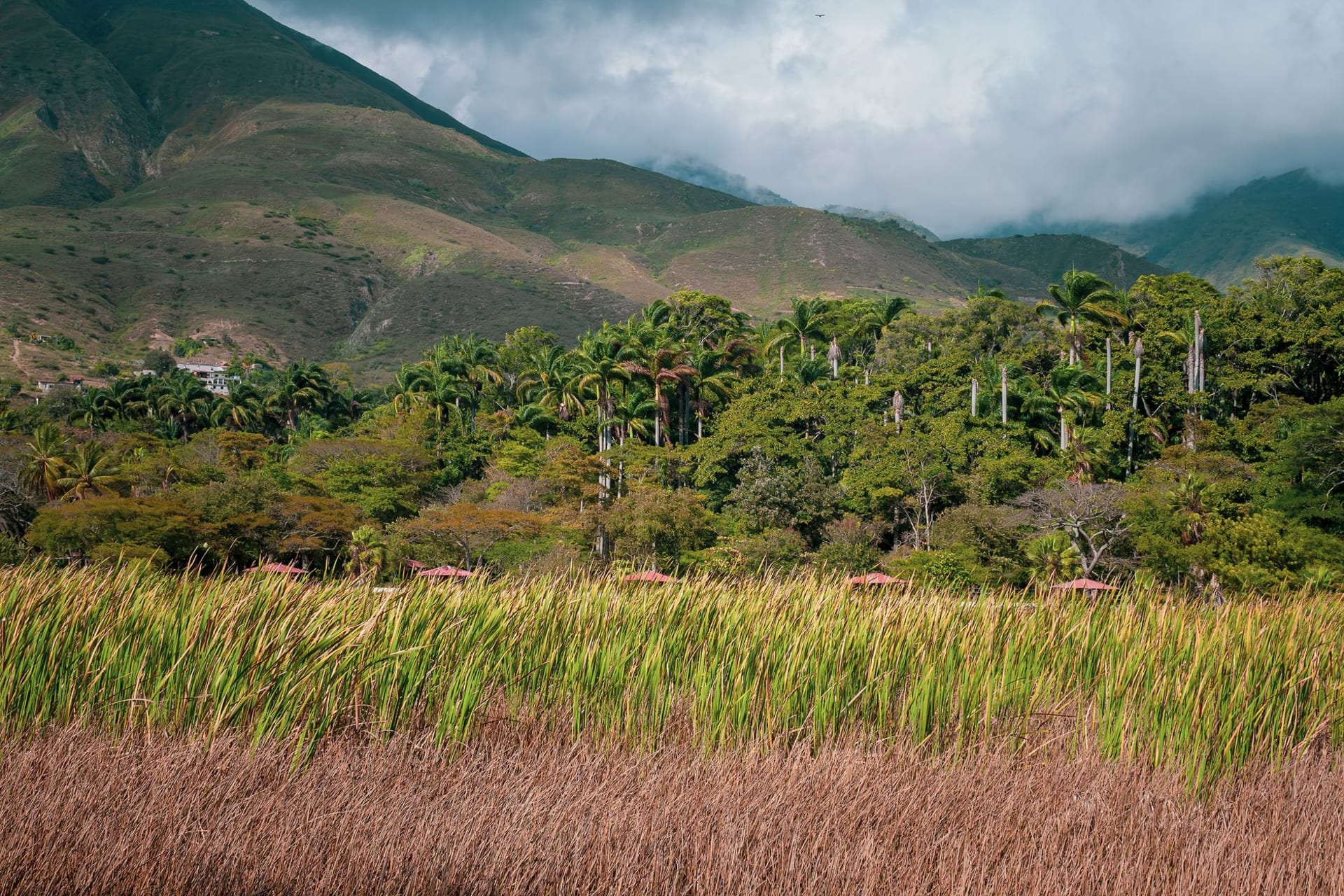
Mantecal
"Mantecal is the kind of place where you ask when the next bus leaves and the answer is Tuesday, possibly."
The road to Mantecal is one of those roads that tests your commitment. It runs south from San Fernando de Apure across flat land that becomes flatter, past cattle ranches where the fences are the only vertical interruption in the landscape, through small settlements that appear and disappear before you’ve had time to register them, and arrives — after several hours that feel longer — at a town of perhaps ten thousand people that sits on a slight rise above the surrounding savanna as if trying to stay visible above the seasonal floods. The bus I arrived on had a cracked windshield and an opinion about Venezuelan cumbia that it shared at high volume for the entire journey. The other passengers slept through it with a practiced ease.
Mantecal is not a place that sells itself. There is no tourist infrastructure, no wildlife lodge with four-wheel-drive vehicles and English-speaking naturalists. What there is instead is the authentic llanero culture that the managed hatos approximate but can never fully replicate — the cowboys who move cattle across the open savanna on horseback, the women who make queso de mano in the mornings and sell it wrapped in banana leaves, the bars where the joropo music starts at no predictable time and continues until the musicians run out of energy or the town runs out of beer, whichever comes second. I arrived on a Thursday evening and there was joropo music coming from somewhere before I’d even found a room.
The joropo is the soul of the Llanos in the way that the tango is the soul of Buenos Aires — not a performance for tourists but a vernacular music that people play because they learned it from their parents who learned it from theirs, and stopping would feel like forgetting something essential. The cuatro guitar, the maracas, and when available the arpa llanera — the harp — form the core of it, and the rhythm has a galloping quality that some ethnomusicologists have connected to the sound and movement of horses. True or not, once you’ve heard it you don’t easily forget it. I drank warm beer in a plastic chair in a courtyard in Mantecal and listened to three men play for two hours to an audience of maybe fifteen people, none of whom were tourists, and it was one of the more complete musical experiences I’ve had.
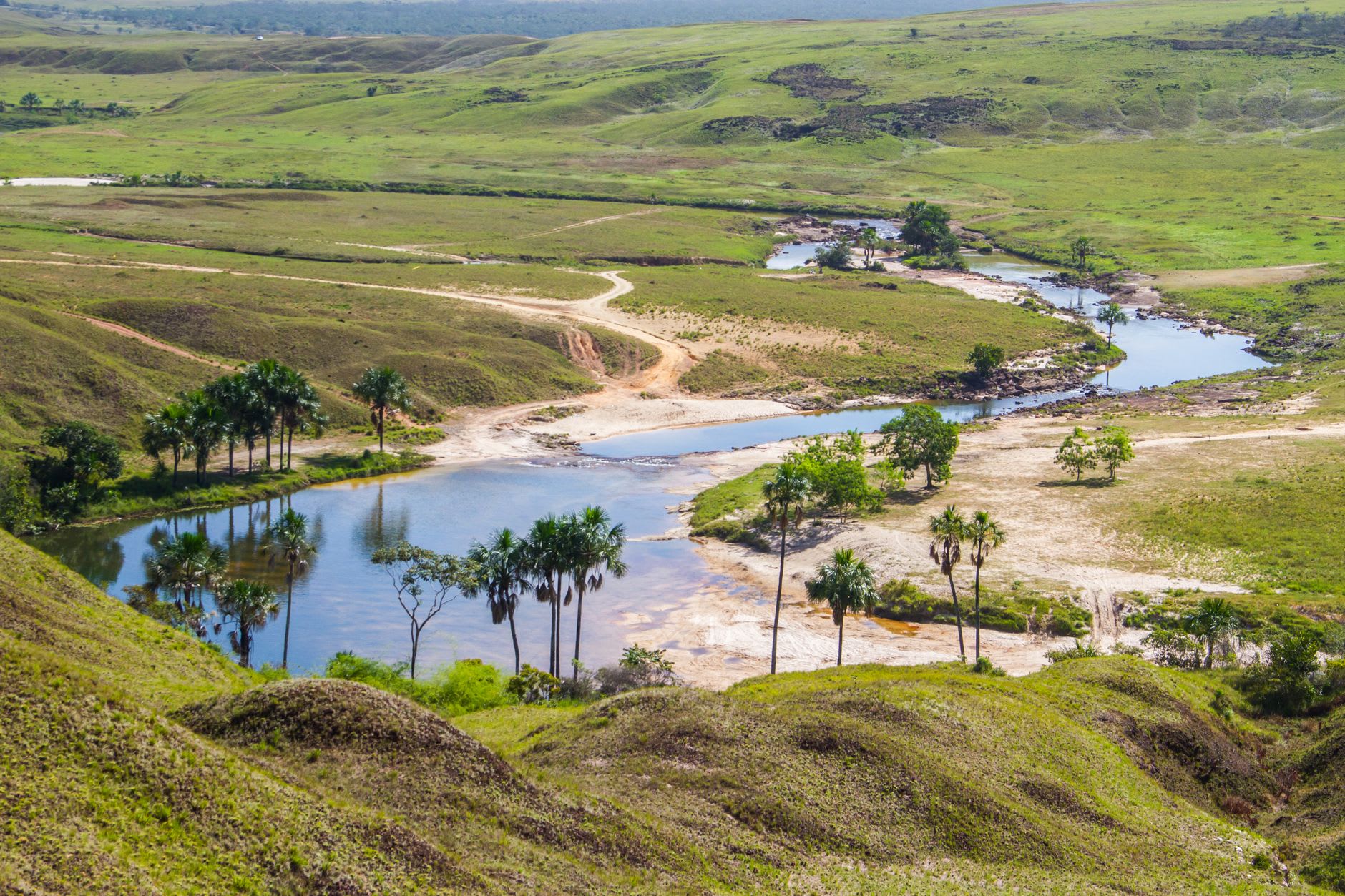
The surrounding landscape from Mantecal is the Llanos at its most abstract — in the dry season, an ocean of grass and sky with the occasional morichales, stands of moriche palms that grow along the underground water courses and serve as the Llanos’ most reliable landmark. Finding a driver willing to take you out into this landscape for a day is not difficult; finding one who speaks anything but rapid-fire llanero Spanish and is patient with the pace at which outsiders absorb what they’re seeing is slightly harder. I rode with a man named Froilán who had worked cattle in the region for forty years and who stopped the truck periodically to show me things I would have driven past without registering — a tayra hunting in the palm fronds, anaconda tracks in the dried mud of a caño, the specific posture of a tree hawk that meant it had already seen prey.
Finding accommodation in Mantecal is an exercise in improvisation — posadas (small guesthouses) come and go, and the best option is often whoever someone local suggests upon arrival. The food is straightforwardly llanero: beef in its many forms, arepas, black beans, river fish when available. There is a simplicity to eating here that feels honest rather than impoverished, as if the cuisine had arrived at exactly the form it needed and saw no reason to elaborate.
When to go: The dry season (December through March) makes the surrounding roads passable and concentrates wildlife around the remaining water. But Mantecal also has something to offer in the early rainy season — when the savanna floods to knee height and the landscape becomes a shallow inland sea and people move by dugout where they previously rode horses. This flooding version of the Llanos is harder to visit but more visually extraordinary, and Mantecal is one of the few places where you can actually experience it from within rather than watching it from a paved road.