Americas
Los Llanos
"Nothing prepares you for a horizon this flat, this alive, this completely indifferent to your presence."
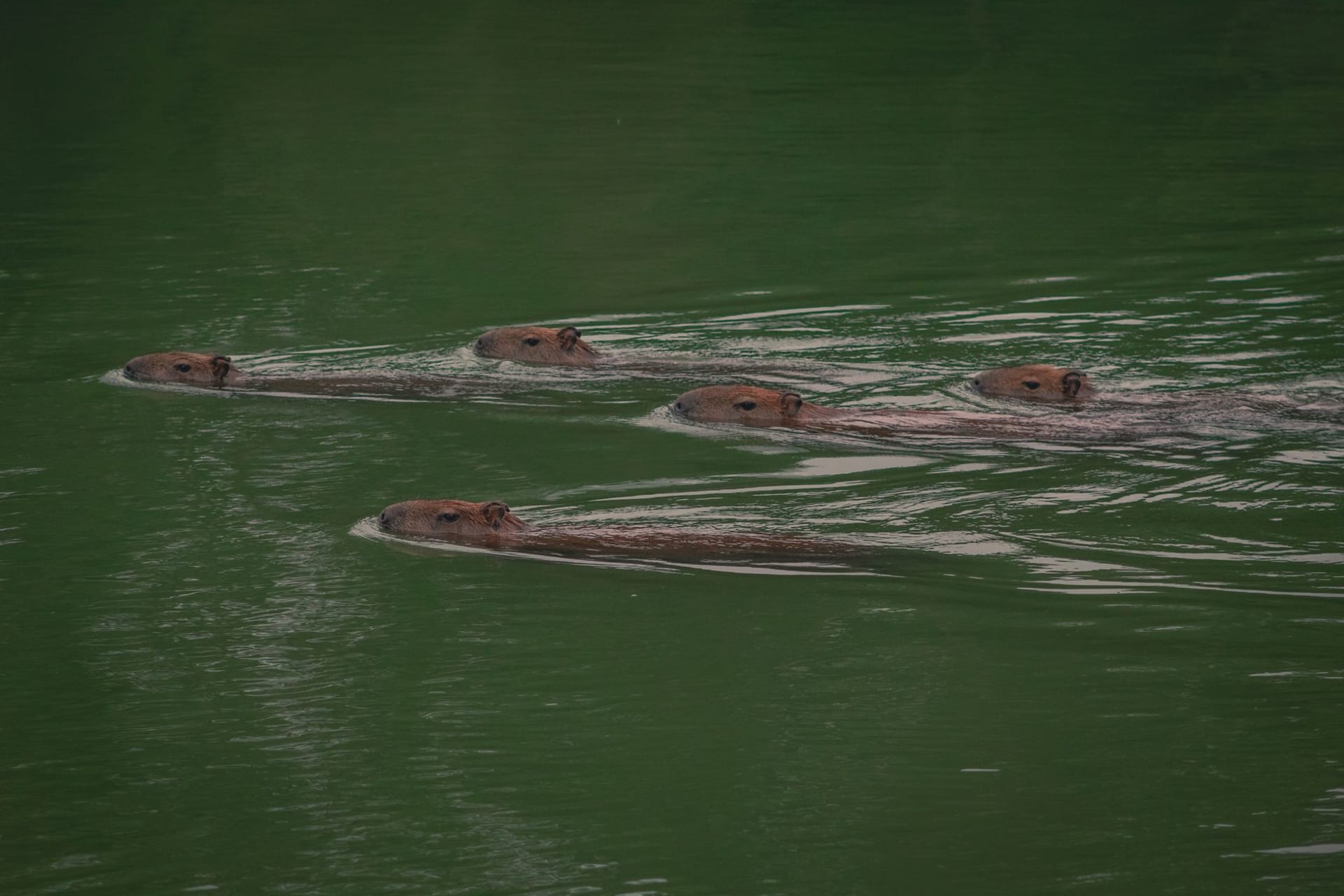
I arrived at the hato in the late afternoon, when the light was going orange and the egrets were wheeling in from the east by the thousands. The truck had been bouncing across a dirt track for two hours with nothing on either side but grassland and water — the kind of flat that makes you think about the curvature of the earth. Then the driver stopped, cut the engine, and said: look. A capybara family was crossing the track twenty metres ahead. Behind them, three caimans hadn’t moved from the bank. A jabiru stork walked past the whole scene like it had somewhere to be. The Llanos doesn’t build to a climax. It starts at full volume and stays there.
The Venezuelan Llanos is an inland wetland — over 300,000 square kilometres of it — that floods dramatically each rainy season and dries to cracked earth and waterholes by February. It’s the concentration effect that makes the dry season extraordinary: as the water retreats, every species in the ecosystem converges on the same shrinking pools. You ride out on horseback before dawn, and by the time the sun clears the horizon you’ve already seen anacondas thick as a man’s thigh, river dolphins surfacing in the brown water, and flocks of scarlet ibis that arrive like a red weather system. The local guides — llaneros who have worked these plains for generations — know where everything is with an intimacy that no GPS can replicate. They grew up reading this landscape the way sailors read water.
What strikes me most is the contrast between the apparent emptiness and the actual density of life. The Llanos looks, at first glance, like nothing — just grass and sky and the occasional palm tree. Then your eyes adjust. The Orinoco River forms the southern boundary of the western Llanos, and the smaller rivers that fan out from it are where the action concentrates. Hato El Cedral in Apure state is the classic entry point: a working cattle ranch that doubles as a wildlife reserve, where guests ride alongside llaneros who are just as likely to stop for an anaconda as for a stray cow. The food at these hatos is simple and honest — llanero cooking runs to beef, arepas, and a corn-based fermented drink called chicha that tastes like something between beer and pudding.
When to go: December through April is the dry season and the best window for wildlife. The waterholes shrink, the animals concentrate, and the roads stay passable. Avoid the rainy season (May–November) unless you want to see the Llanos in full flood — which is spectacular in a different, boat-based way, but harder to navigate.
What most guides get wrong: Everyone comes hoping to see a jaguar or an anaconda, and the pressure to deliver these headline animals can distort a visit. The real spectacle of the Llanos is avian. Over 300 bird species inhabit the region, and the sheer volume — the noise, the movement, the way a single tree can hold a hundred nesting herons — is something that no wildlife documentary adequately conveys. Bring binoculars as seriously as you bring sunscreen.