Ruggell
"I came for the birds. I stayed because the silence here is a different kind than you find anywhere else in the country."
The Ruggell nature reserve was not on my original itinerary. I found it by accident — driving the Rhine road north from Vaduz toward Austria, I saw a sign for a nature reserve and turned down a track out of curiosity. What I found was an extensive lowland wetland, the flood plain of the old Rhine, a landscape completely unlike the postcard Liechtenstein of castle and vineyard. Here the ground is wet and the willows are old and in late spring the bird noise is extraordinary.
The Ruggeller Riet — the official name for this peat bog and wetland complex — is one of the last remaining examples of what the Rhine plain looked like before systematic agriculture and flood control reshaped the entire region in the 19th and 20th centuries. The Rhine used to flood here regularly, depositing sediment and creating the kind of mosaic wetland habitat that waterfowl and breeding birds need. Now the floodplain is mostly farmed on both the Swiss and Liechtenstein sides, but this reserve has been protected and managed, and it shows. The lapwings I saw on a May morning were so numerous that their calls — a strange, wavering alarm sound — formed an almost continuous background.

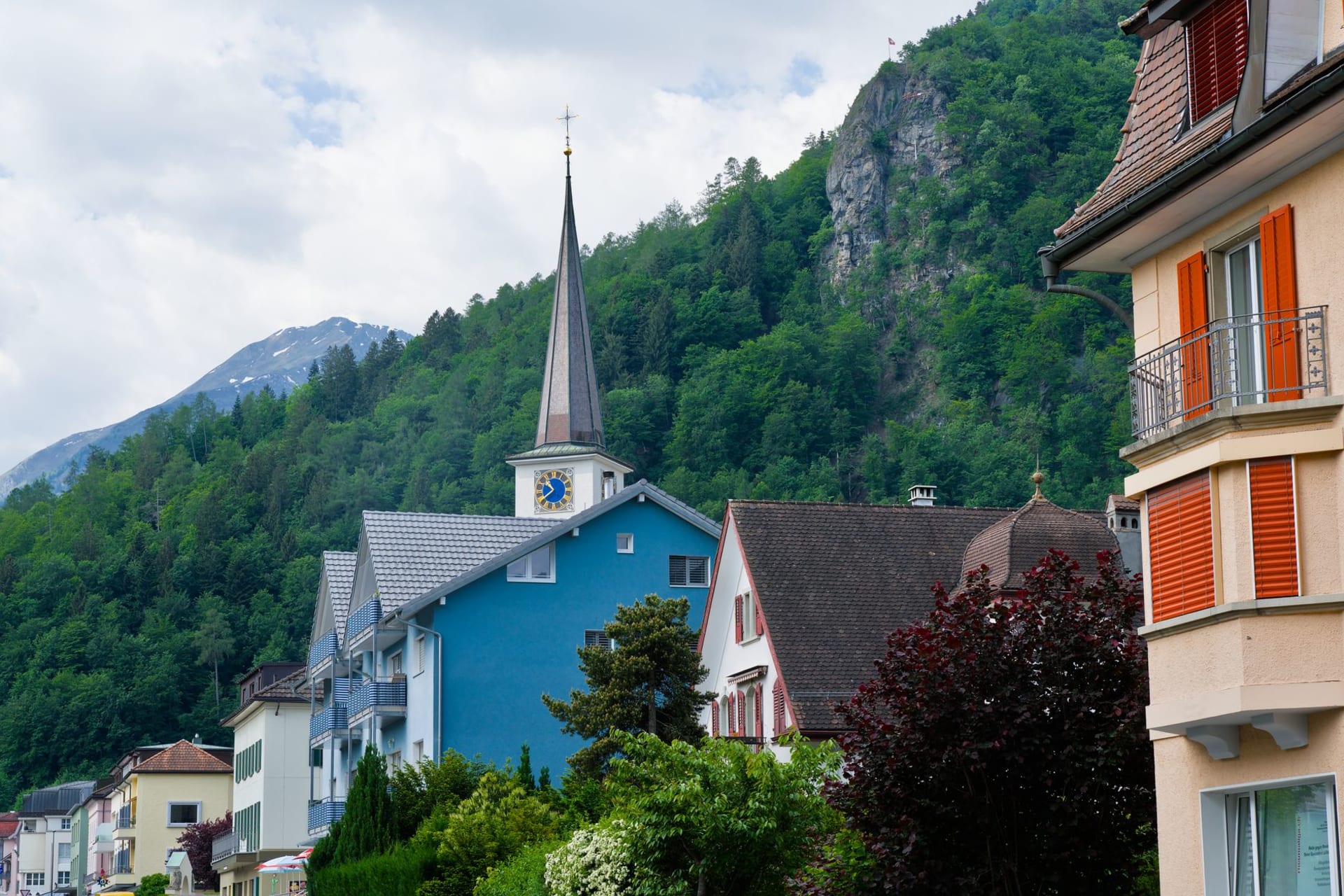
The village of Ruggell itself sits at the northern tip of the country, less than a kilometer from the Austrian border. It is, by Liechtenstein standards, ordinary — a residential village with a church and a few farms and the quiet confidence of a community that has never needed to be particularly interesting to visitors because visitors have always gone south. The farmhouses here are low and broad, different in style from the more mountainous architecture of Triesenberg above, adapted to a flat, river-adjacent landscape where flooding was once a seasonal certainty.
I walked the nature reserve on a damp morning when the mist was still low over the reeds. The boardwalked trail passes through reed beds and flooded willow scrub, past old irrigation channels now managed for wildlife. The smell of wet peat and water mint and something darker — decomposition, organic richness — was everywhere. There were no other visitors. A heron stood absolutely still at the edge of a ditch and let me get within four meters before it lifted off, and the slow beat of those grey wings across the pale water felt like the whole morning’s point.

The observation tower at the far end of the trail gives a view across the entire reserve and into Austria and Switzerland — on a clear day you see all three countries from a single spot, which is a slightly absurd geography that I found delightful. Below the tower, a pair of coots were raising a brood of chicks in a reed-fringed channel, and the chicks were that specific bright-orange-and-black that coot chicks always are, improbably vivid against the green.
When to go: April through June for migrating and breeding birds — lapwing, marsh harrier, various warblers, occasional rarities blown off course. The reserve is managed year-round and walkable in all seasons, but spring is the spectacle. Combine with a drive into neighboring Austria for lunch; the border crossing at Ruggell is unmarked and effortless.