Planken
"There are 400 people up here. They chose this deliberately, and honestly I see their point."
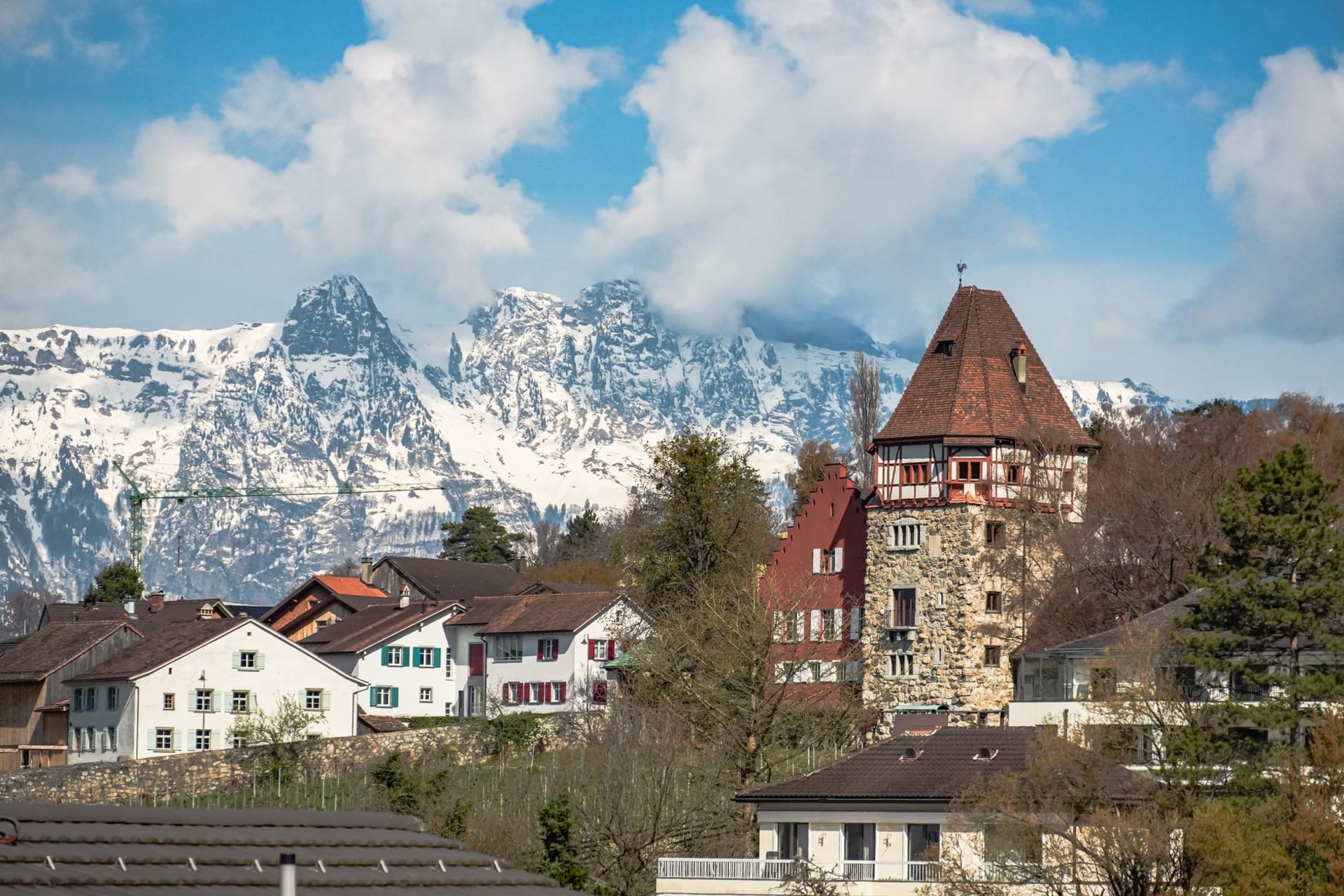
You have to want to go to Planken. The road up is narrow and steep and winds through forest until you emerge, quite suddenly, onto a small mountain ledge at 785 meters where about four hundred people have arranged their lives in a cluster of farmhouses and a church and very little else. The village has no supermarket. The post van comes up in the morning and there is a small cooperative shop that covers the essentials. Below, visible through gaps in the trees and from the meadow edge, the entire Rhine valley of Liechtenstein is laid out — Vaduz, Schaan, Triesen, the river — like a green and silver map.
I drove up on a June afternoon without knowing what to expect, having read only that Planken was the smallest and most isolated commune in the country. The village that met me was quiet in a way I haven’t quite replicated anywhere else in Liechtenstein. The church bell rang the hour. A cat watched me from a windowsill. Two children cycled past on a gravel path between farmhouses. There was no gift shop, no tourist office, no sign suggesting I take a particular walk — just the village being itself.

The views here are the thing people come for, when people come at all. The terrace on which the village sits faces west and southwest, which means in the late afternoon the light comes in at a low angle that turns everything it touches — the meadow grass, the whitewashed church facade, the distant water of the Rhine — a shade of gold that doesn’t exist earlier in the day. I sat on a wooden bench at the meadow edge for perhaps an hour watching this happen, which is either a waste of time or exactly the right use of it.
The hiking from Planken is serious and rewarding. The trail north connects into the Eschnerberg ridge system; the trail east heads up into higher Alpine territory. Most visitors who do come do so to walk rather than to see the village itself, and by nine in the morning the trailheads already have a few cars. But the village center, even on a Saturday in summer, maintains a residential quietness — it gives the impression that the locals have made a collective decision to let tourism exist at their margins without changing the core of things.

I ate a packed lunch on the meadow bench — bread and local cheese and an apple from a roadside stand I’d stopped at below — and watched a paraglider launch from the field above the village and catch a thermal over the valley. He circled three times, gaining height, and then drifted south toward Vaduz so slowly he seemed to be standing still. Below him the whole country was visible, all thirty kilometers of it, and from where I sat, Planken felt like the only reasonable place to watch it from.
When to go: June through September for comfortable walking and the best views. The road can be difficult after snowfall in winter and the village becomes genuinely quiet — this is not a place with winter tourism infrastructure, but hardy visitors willing to drive carefully report a certain stark Alpine beauty in January. Spring comes late at this altitude; the meadow flowers peak in late May and June.