Balzers
"Gutenberg Castle, zero visitors, Tuesday morning — sometimes the geography just works in your favor."
Balzers surprised me more than any other place in Liechtenstein. I drove south from Vaduz expecting a border village — a functional place where the country ends, nothing more — and instead found Gutenberg Castle sitting on a basalt plug above the valley floor with the conviction of something that has been there since the 11th century and intends to stay. The hill it sits on is volcanic, geologically distinct from the limestone of the surrounding ranges, and it rises from the flat valley floor with an abruptness that would look theatrical if it hadn’t obviously been there for millennia.
The castle is privately owned by the principality and opens for concerts and events in summer, but on the Tuesday morning I arrived it was simply closed and I walked around the base of the hill alone in complete quiet. The basalt walls of the castle looked almost black against the sky. Below, the village of Balzers was doing its morning things — a woman hanging laundry, a truck making a delivery to the small Spar. The ordinariness of the village made the castle above feel more dramatic, not less.

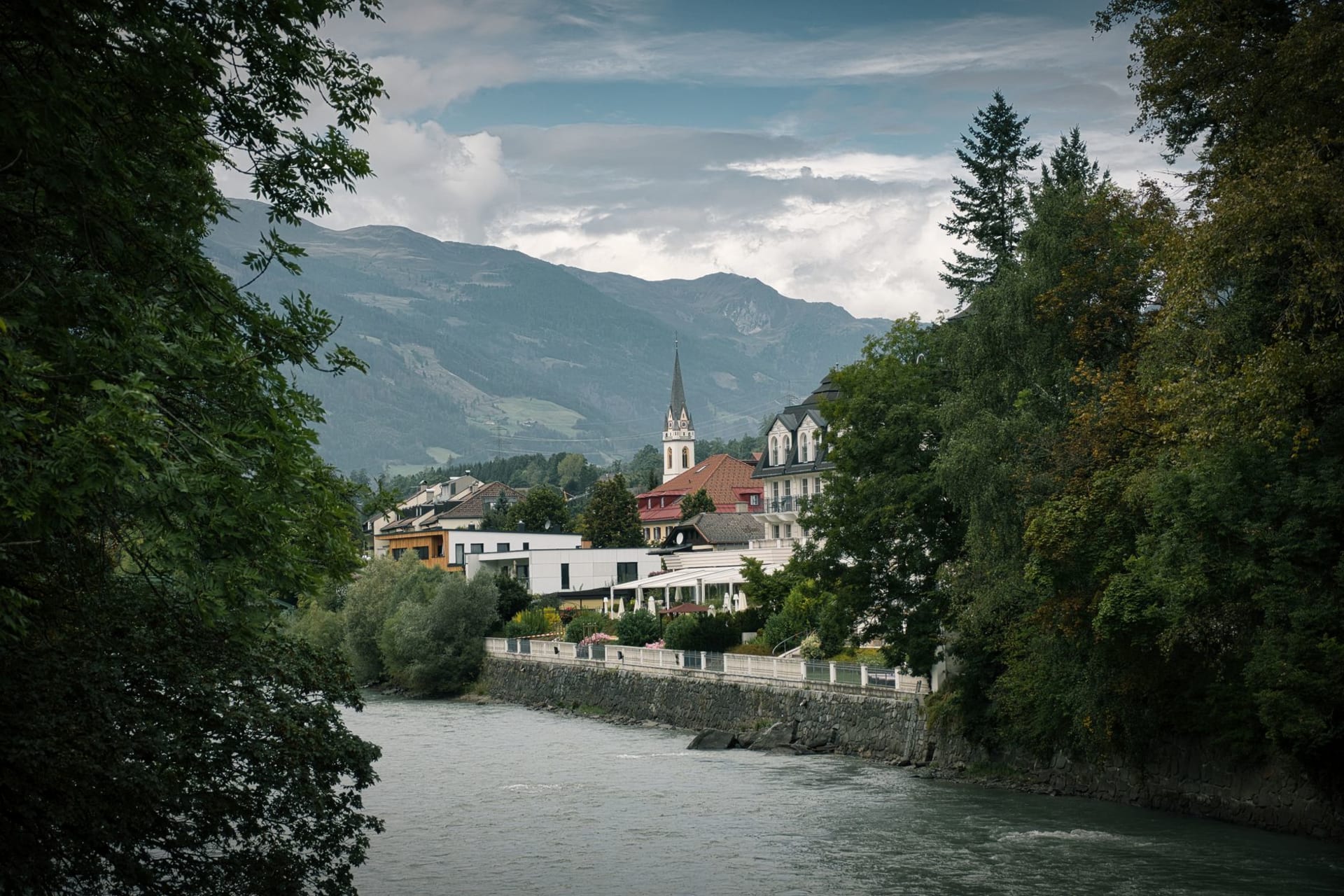
The parish church of St. Nicholas in the village center has a painted facade that gives it a slightly Italian flavor, which makes sense — Balzers is the southernmost point of the country and the cultural air here feels slightly warmer, slightly more Mediterranean than the more Germanic villages to the north. The border with Switzerland is about a kilometer south, unmarked, and I walked past it without noticing until a sign told me I was in the canton of St. Gallen.
What I hadn’t expected was the vineyard. Walking the loop path around the castle hill, I passed through rows of Pinot Noir vines that cling to the lower volcanic slopes with an impressive determination. The soil here is rich and dark, different from the lighter soils further north, and it shows in the wine — I tasted a bottle later that evening that had a depth and earthiness I associated more with Burgundy than with a microstate between Austria and Switzerland.

The village has a Roman history too, though you’d barely know it now. Finds from the area suggest settlement going back to the Bronze Age, and Roman-era objects have turned up in the surrounding fields. Balzers sits at what was once a crossing point on old Alpine routes. The road south through here — now a smooth federal highway — has been carrying people and goods for at least two thousand years, and standing by the castle in the morning light you can feel that depth of use without it becoming heavy.
When to go: Spring and early summer bring wildflowers to the slopes around the castle hill. The Gutenberg Festival in summer draws musicians and theater companies to the castle courtyard — checking the schedule in advance is worth it. October is quieter and the vineyards turn color. Balzers is easy to combine with a crossing into Swiss St. Gallen if you’re touring the region by car.