Sehlabathebe National Park
"Three days without another tourist, without phone signal, without noise that wasn't wind or water. I'd forgotten that was possible."
I will be direct about how difficult it is to reach Sehlabathebe: the road from Qacha’s Nek — the nearest town with a fuel station and a working ATM — is forty kilometres of track that drops into riverbeds, climbs over rock shelves, and treats the concept of road surface as a loose aspiration. A 4x4 is not optional. Neither, I would argue, is a sense of humour about vehicle clearance. My driver, a man named Thabang who had made this journey probably two hundred times and still approached it with visible enjoyment, pointed out a stretch near the third river crossing where, he said, you had to be either brave or foolish to continue after heavy rain. He said this while continuing to drive.
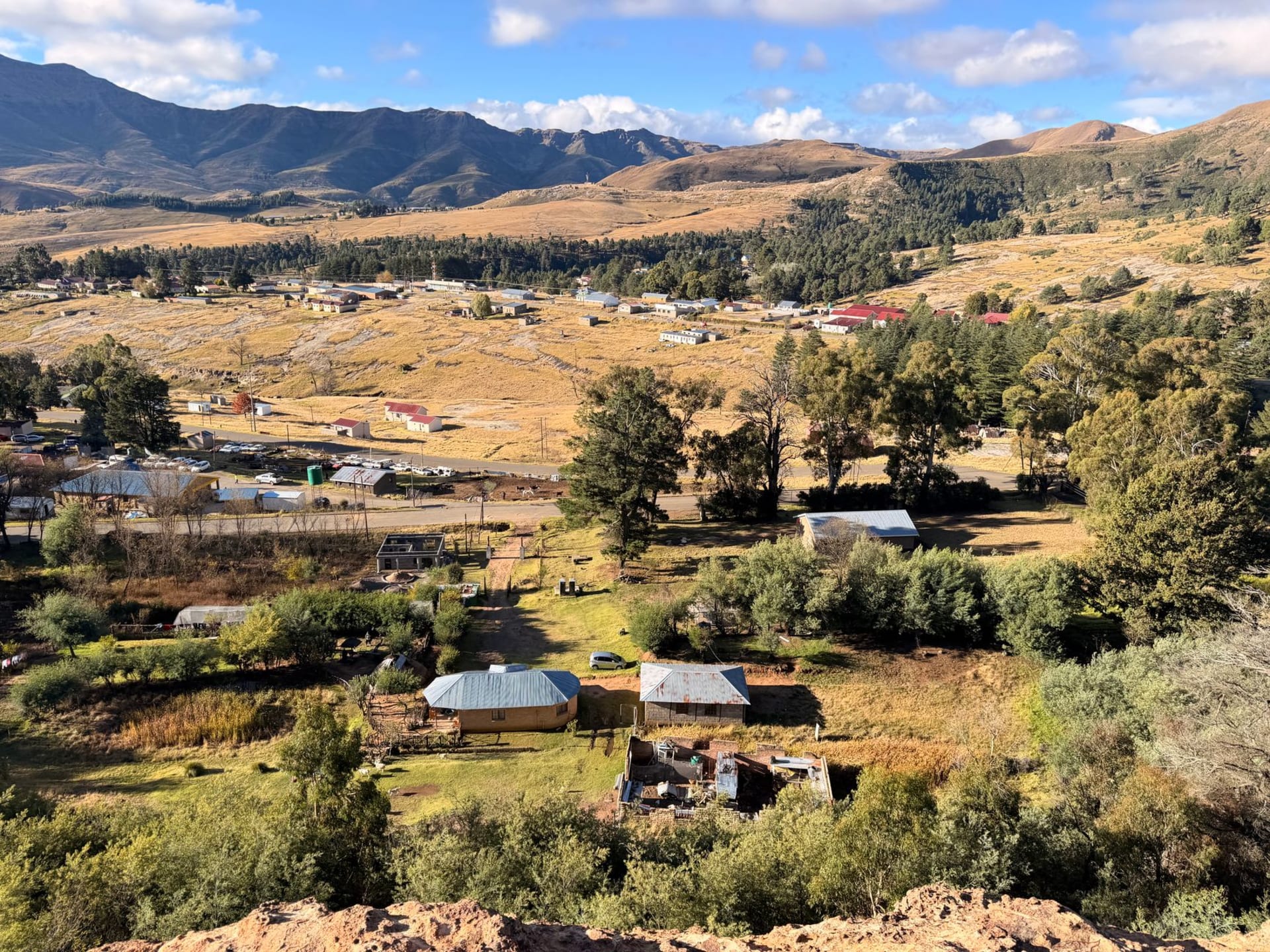
What Sehlabathebe offers in exchange for the effort is a completeness of solitude that has become rare enough to feel like a discovery. The park sits in the extreme southeastern corner of Lesotho, pressed against the Drakensberg escarpment and the South African border, and it receives perhaps a few hundred visitors in an entire year. In three days there, I met exactly zero other tourists. The park rangers, both of whom seemed slightly surprised by my arrival, made up for this by being extraordinarily generous with their time and knowledge.

The painted caves are why I had come. The San Bushmen who inhabited this landscape for thousands of years before Bantu-speaking farmers arrived left their art in overhang shelters throughout the Maluti-Drakensberg massif, and several of the finest accessible sites are within the park’s boundaries. A ranger named Lebohang walked me to two of them — the paintings in ochre and red haematite showing eland, antelope, human figures in motion, and the composite shamanic images that archaeologists of rock art spend their careers decoding. The eland in particular: this animal recurs across thousands of sites and thousands of years because in San cosmology it carries a specific spiritual weight, connecting the living world to the trance state of the healer. Standing in the cave looking at an eland painted by someone who died before any European set foot in southern Africa, understanding even partially what it meant to the painter — that was a long moment.
The park’s landscape is plateau grassland at its most expansive: rolling swells of highland grass broken by sandstone outcrops and the occasional stream cutting a clear line through the amber. In November the wildflowers come — everlastings, mountain orchids, red-hot pokers at the stream edges — and the plateau, already vast, becomes extraordinarily beautiful. Blesbok and eland graze in herds that disappear over ridges and reappear half an hour later having covered more ground than seems possible.

Nights at the park lodge are cold and profoundly dark. The Milky Way is visible with a clarity that feels excessive — as though the sky is showing off. I lay in the grass outside the lodge for an hour the first night and counted satellites until I lost count. No phone signal anywhere in the park. No ambient light from any direction. The absence of noise, after a while, starts to feel like a presence of its own.
When to go: October through April — the summer months bring wildflowers and full rivers. The park is officially open year-round but June through August sees roads that can become impassable after snow. Book the park lodge well in advance; it has limited accommodation. Bring all food from Qacha’s Nek or further, as there is nothing to buy inside the park.