Africa
Lesotho
"I crossed into a country that sits entirely above the clouds."
I arrived from South Africa through a border post that looked more like a rural bus stop than an international crossing. A small stamp, a brief exchange with a customs officer who seemed genuinely curious about why I was there, and then the road climbed — steeply, immediately — and everything changed. The air thinned. The landscape went raw and open. The cows standing on the ridge line looked like a painting. I was in Lesotho, the Mountain Kingdom, fully encircled by South Africa yet utterly unlike it, and I remember thinking: no one told me it would look like this.
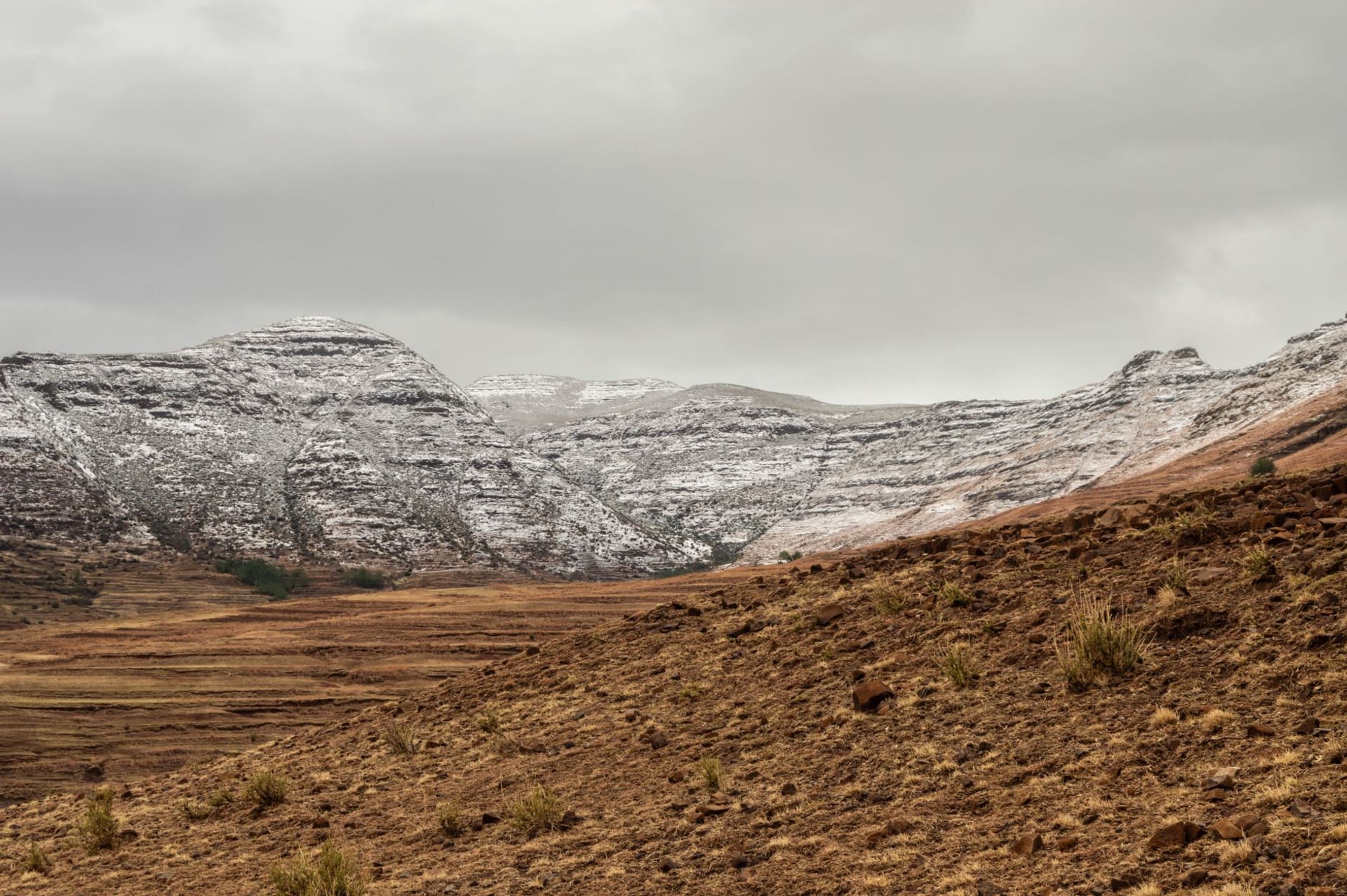
What strikes you first is the elevation. The entire country sits above 1,000 metres, with the central highlands pushing past 3,000. In summer, that means cool afternoons and thunderstorms that roll in fast across the plateau. In winter — June through August — it means genuine snow, which is a sentence few people expect to write about southern Africa. The village of Semonkong, a few hours south of the capital Maseru by a road that loosens your fillings, sits below the Maletsunyane Falls, one of the highest single-drop waterfalls on the continent. I walked there at dusk with three local kids who’d appointed themselves my unofficial guides, and we stood at the lip of the gorge as the mist rose up from the bottom and the cold set in and I thought: this is the kind of place that cures you of needing other places to be famous.
The Basotho people are the reason to stay longer than a night. The traditional blankets — Seana Marena, worn draped over the shoulders in specific patterns that carry social meaning — are everywhere: on horseback, in markets, on elderly women walking the steep dirt tracks between villages. Mokorotlo, the conical straw hat that appears on the national flag, sits on heads across the country with a matter-of-factness that no tourism board could manufacture. Food is simple and filling: papa (maize porridge) with braised vegetables, grilled lamb that tastes of the highland grass, a mug of ginger tea hot enough to burn your lip. I ate well at a small guesthouse in Malealea where dinner was whatever the family was having, served by candlelight when the generator cut out.
When to go: October to April for hiking and green landscapes. June to August if you want snow and the surreal experience of skiing at Afriski Mountain Resort — yes, that is a real place, and it is wonderfully absurd in the best way. Avoid March to May if you’re planning highland treks, as the rains can make passes impassable.
What most guides get wrong: They treat Lesotho as a day-trip from South Africa — cross the border, look around, drive back to your lodge in time for sundowners. That is a waste. The country reveals itself slowly, on its own schedule. The highlands are not accessible without a 4x4 or a horse, and the pony-trekking routes near Malealea and Semonkong are not tourist activities — they are the actual infrastructure. Three or four days is the minimum to feel even the edge of this place. Most visitors never feel it at all.